Kingdom
Early Pandyas
The southernmost of the muvendar, centred on Madurai; a Pandya king is named in Tamil-Brahmi inscriptions at Mangulam.
The Map Check
Geographic extent
Largest recorded extent, from Cliopatria (Seshat Global History Databank, CC BY 4.0) — drawn as published. Open the atlas to see how it changed over time. Points are the places Indophile uses to locate the polity.
Places that locate this polity
| Place | Role | Counted |
|---|---|---|
| Madurai | capital | whole period |
| Korkai | port | whole period |
| Mangulam | inscription | whole period |
A fuller account of this entity is in preparation. The connected entries below are already in the archive.
Connected to Early Pandyas
The wider world of this polity
Early Cholas
One of the three crowned lineages (muvendar) of early Tamilakam, associated with the Kaveri delta in Sangam literature.
Early Cheras
The muvendar lineage of the western coast, associated with the pepper trade through ports such as Muziris.
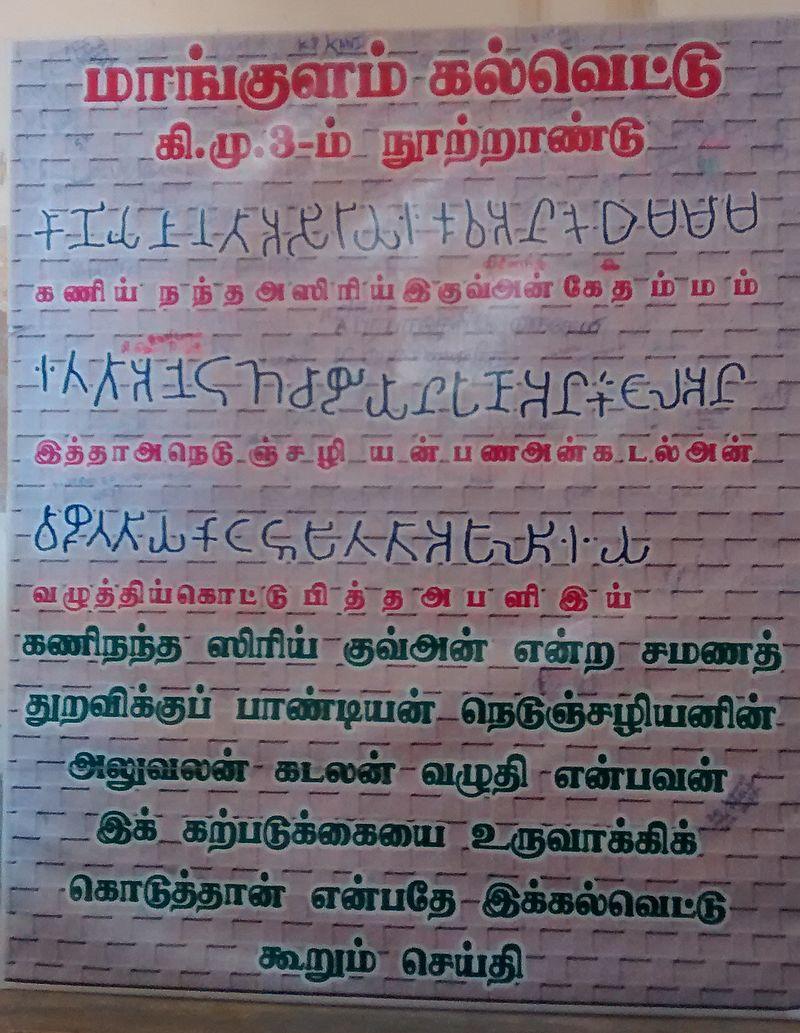
Mangulam
Natural caverns near Madurai with Tamil-Brahmi inscriptions recording gifts of rock beds to Jain monks, one naming a Pandya king Nedunchezhiyan.
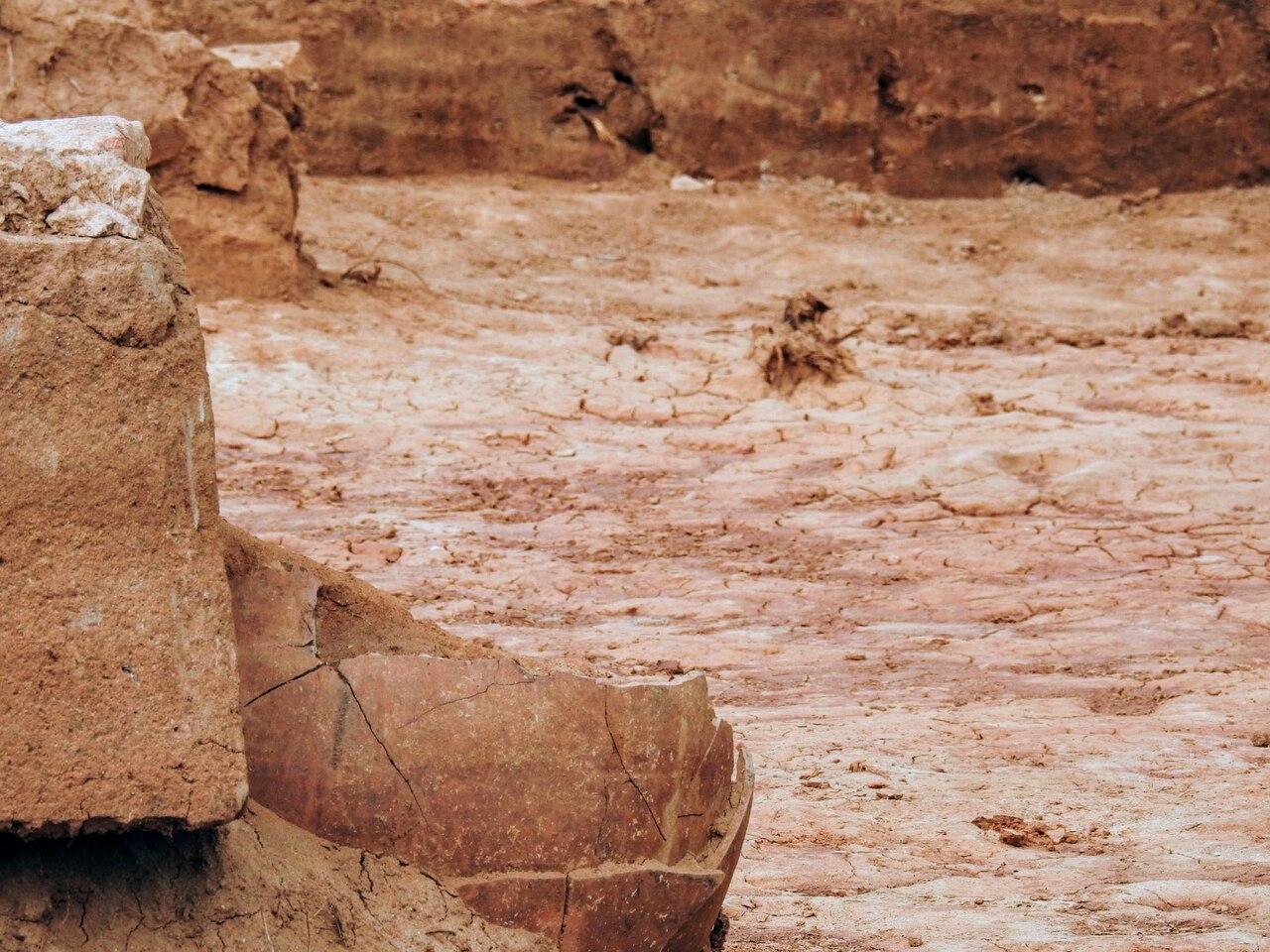
Keeladi
An Early Historic urban settlement on the Vaigai with brick structures, ring wells and potsherds inscribed in Tamil-Brahmi.
Tamil-Brahmi
An adaptation of Brahmi to write Old Tamil, found in cave inscriptions and on pottery across Tamil Nadu and beyond.
Later Pandyas
A Pandya revival that, under Jatavarman Sundara Pandya (r. 1251–1268), became the leading power of the south; Marco Polo described their port Kayal.
Pandyas of Madurai (early medieval)
The Pandya line revived under Kadungon around the end of the 6th century and contested the far south with the Pallavas and Cheras. Parantaka I Chola took Madurai in the early 10th century, and Pandya country stayed under Chola control until the 13th-century revival.
Korkai
The early port of the Pandyas, famed for pearl fishing and named by Greek writers; its former shoreline now lies inland.
Sources & Further Reading
Sources & further reading
- inscription corpusMahadevan, I. (2003). Early Tamil Epigraphy: From the Earliest Times to the Sixth Century A.D.. Harvard Oriental Series 62. Harvard University Press / Cre-A.
- inscription corpusHultzsch, E. (1925). Inscriptions of Asoka. Corpus Inscriptionum Indicarum, Vol. I (new edition). Clarendon Press.