Archaeological site
Keeladi
Also: Keezhadi · Kilati
An Early Historic urban settlement on the Vaigai with brick structures, ring wells and potsherds inscribed in Tamil-Brahmi.
The Map Check
Location and neighbouring sites
From the Trenches
Excavation history
2015–2017
K. Amarnath Ramakrishna and team
Archaeological Survey of India
2018 onward
Tamil Nadu State Department of Archaeology
Important findings
- Brick walls and floors
- Terracotta ring wells
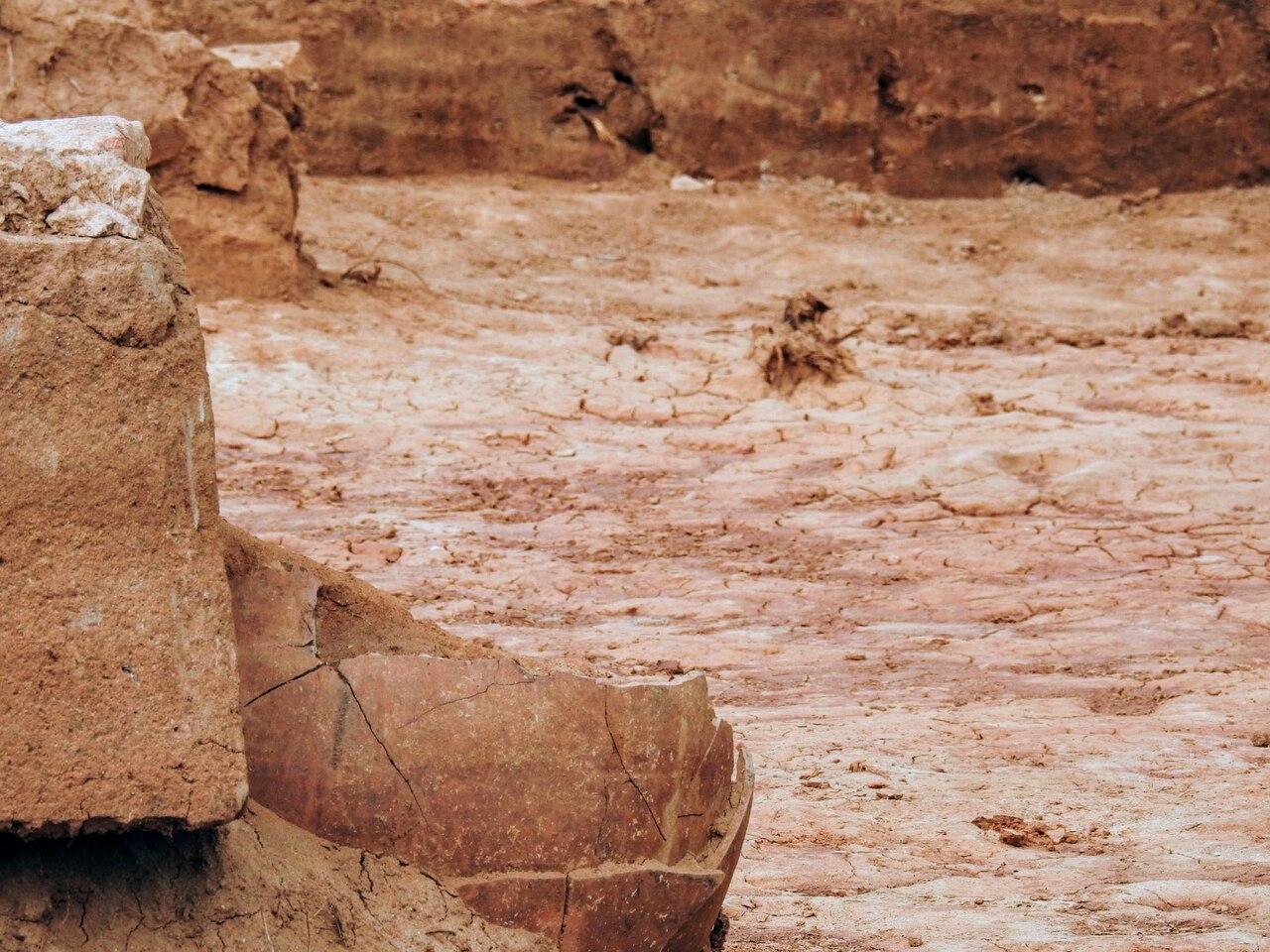
- Tamil-Brahmi inscribed potsherds
- Graffiti marks on pottery
What We Still Don't Know
What we still don't know
DebatedUnresolved questions and competing interpretations
The state archaeology department reported AMS dates reaching into the 6th century BCE. How these dates relate to the Tamil-Brahmi sherds — and therefore to the chronology of writing in the south — is under active discussion.
Connected to Keeladi
Connected to this site
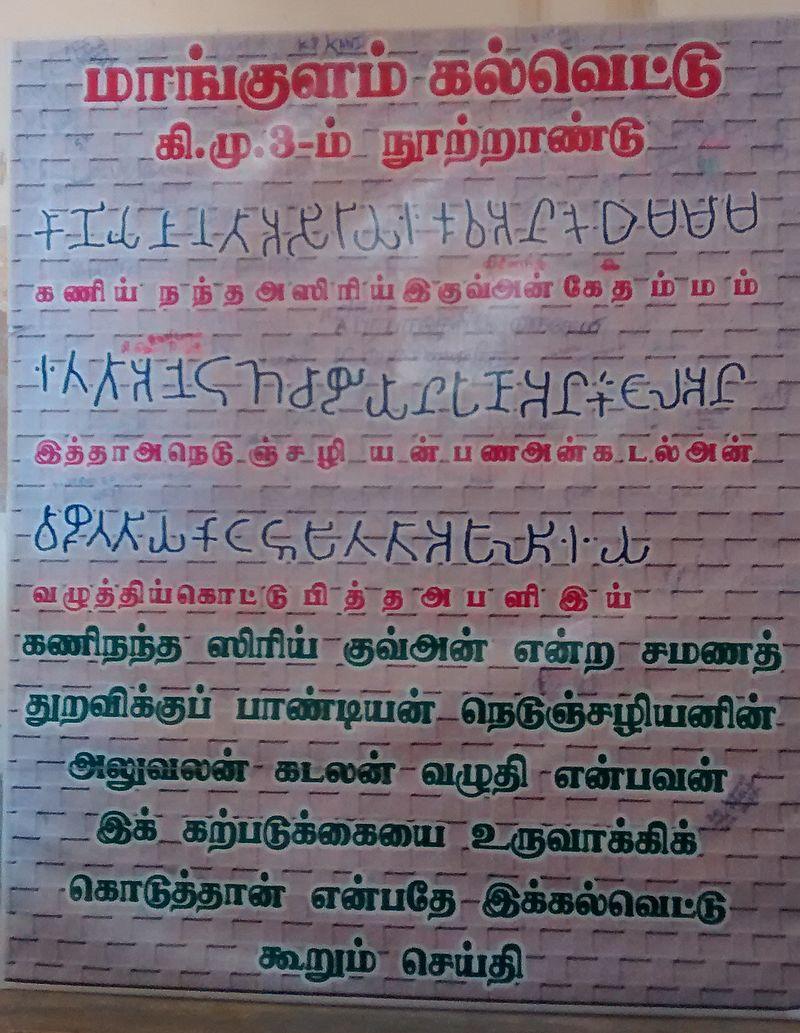
Tamil-Brahmi
An adaptation of Brahmi to write Old Tamil, found in cave inscriptions and on pottery across Tamil Nadu and beyond.
Early Pandyas
The southernmost of the muvendar, centred on Madurai; a Pandya king is named in Tamil-Brahmi inscriptions at Mangulam.
Konthagai
The burial ground of the Keeladi cluster: a field of urn burials, some with skeletal remains suitable for scientific study, excavated with Keeladi since 2020.
Agaram
A habitation site within the Keeladi cluster with ring wells, terracotta and bead finds.
Manalur
A site of the Keeladi cluster on the Vaigai, investigated for industrial activity including furnaces.
Alagankulam
A port near the mouth of the Vaigai with Roman amphora sherds, rouletted ware and Tamil-Brahmi graffiti — the sea outlet of the Keeladi hinterland.
Kodumanal
An Iron Age industrial village on the Noyyal with iron-smelting, gemstone (beryl and quartz) working, megalithic cist burials and Tamil-Brahmi inscribed sherds.
South Indian Iron Age – Megalithic culture
A long-lived tradition of monumental burial across the peninsula — cists, dolmens, stone circles, urn fields, rock-cut chambers and umbrella stones — associated with iron, Black-and-Red Ware and, later, early writing and trade.
Sources & Further Reading
Sources & further reading
- excavation reportTamil Nadu State Department of Archaeology (2019). Keeladi: An Urban Settlement of Sangam Age on the Banks of River Vaigai. Government of Tamil Nadu.