Period 05 of 16
Mahajanapadas
Also: Second Urbanisation · Sixteen Mahajanapadas · Shramana period
Early states, fortified cities, coinage and new religious movements — Buddhism, Jainism and the Ajivikas — emerge in the Ganga valley, with kingdoms and assembly-governed republics side by side.
Major developments
- 01Buddhist and Jain texts list sixteen great janapadas
- 02Kingdoms such as Magadha and Kosala alongside gana-sanghas such as the Vajji confederacy
- 03Northern Black Polished Ware and fortified urban centres
- 04Punch-marked silver coinage
- 05Achaemenid control of the northwest; Alexander's campaign (327–325 BCE)
The Map Check
Where this period happened
Click a point to open its record. Boundaries at 461 BCE from Cliopatria (Seshat), CC BY 4.0.
Polities & cultures
Civilisations, kingdoms and republics
Kuru
A polity of the later Vedic period in the upper Ganga–Yamuna region, which later Vedic texts associate with the codification of ritual and early forms of kingship.
Panchala
A janapada east of the Kurus in the Ganga–Yamuna doab, later divided into northern and southern Panchala.
Kosala
A powerful kingdom of the middle Ganga plain in the age of the Buddha, eventually absorbed by Magadha.
Magadha
The kingdom of south Bihar that expanded, through conquest and alliance, to become the core of successive Nanda and Mauryan empires.
Avanti
A mahajanapada of the Malwa plateau, controlling routes between the Ganga valley, the western coast and the Deccan.
Vajji (Vrijji) Confederacy
A gana-sangha — a polity governed by an assembly of clan heads rather than a hereditary monarch — centred on Vaishali, with the Licchavis as its leading clan.
South Indian Iron Age – Megalithic culture
A long-lived tradition of monumental burial across the peninsula — cists, dolmens, stone circles, urn fields, rock-cut chambers and umbrella stones — associated with iron, Black-and-Red Ware and, later, early writing and trade.
Gandhara
A mahajanapada of the Peshawar valley and Taxila region, later an Achaemenid province before Alexander's campaign.
Kashi
A mahajanapada centred on Varanasi, absorbed by Kosala and then Magadha.
Vatsa
A mahajanapada with its capital at Kausambi, known for its massive ramparts.
Anga
A mahajanapada east of Magadha, centred on Champa near modern Bhagalpur, annexed by Magadha under Bimbisara according to tradition.
Malla
A gana-sangha whose territory included Kushinagara, where Buddhist tradition places the Buddha's death.
Shakya
The gana-sangha into which the Buddha was born, according to Buddhist tradition. The location of its town Kapilavastu is debated between Tilaurakot (Nepal) and Piprahwa (India).
Surasena
A mahajanapada centred on Mathura.
Matsya
A mahajanapada with its centre at Viratanagara (Bairat), later the site of an Ashokan edict.
Assaka (Ashmaka)
The only mahajanapada placed south of the Vindhyas in Buddhist lists. Its centre is uncertain; Bodhan in Telangana is one proposed location.
Anuradhapura Kingdom
The first great Sri Lankan kingdom, centred on Anuradhapura, whose history is recorded in the Pali chronicles (Dipavamsa, Mahavamsa) and in Brahmi inscriptions. Its early dates follow the chronicles' chronology.
Nanda dynasty
Rulers of Magadha before the Mauryas, remembered in Indian and Greek accounts for a very large army and great wealth. Their own dates rest on later king-lists and are approximate; Chandragupta Maurya overthrew them around 321 BCE.
Kalinga
Coastal region between the Mahanadi and Godavari deltas. Ashoka's Thirteenth Rock Edict records its conquest in his eighth regnal year, about 261 BCE, and the suffering the war caused; the Mauryan administration then governed it from Tosali. Its political form before the conquest is poorly documented.
From the trenches
Archaeological sites
Atranjikhera
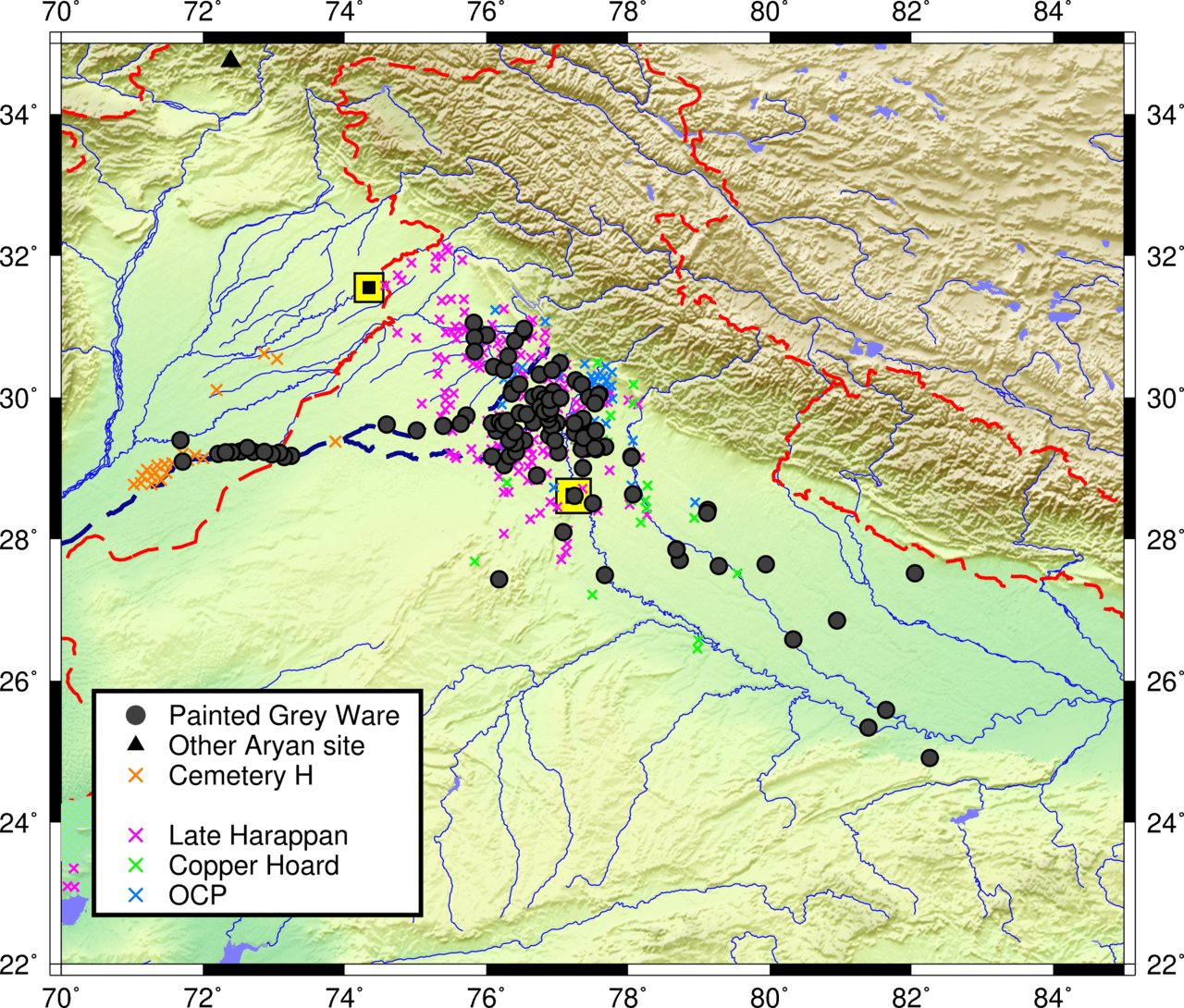
A multi-period mound in the upper Ganga plain whose Painted Grey Ware levels yielded early iron objects and were central to debates on the beginnings of iron in north India.
Kausambi
Capital of the Vatsa mahajanapada, with massive earthen and brick ramparts.
Rajagriha (Rajgir)
The early capital of Magadha, ringed by hills and a long dry-stone wall, closely associated with the Buddha and Mahavira in early texts.
Pataliputra
Capital of Magadha from the late 5th or 4th century BCE and of the Mauryan Empire. Its remains lie beneath modern Patna.
Taxila
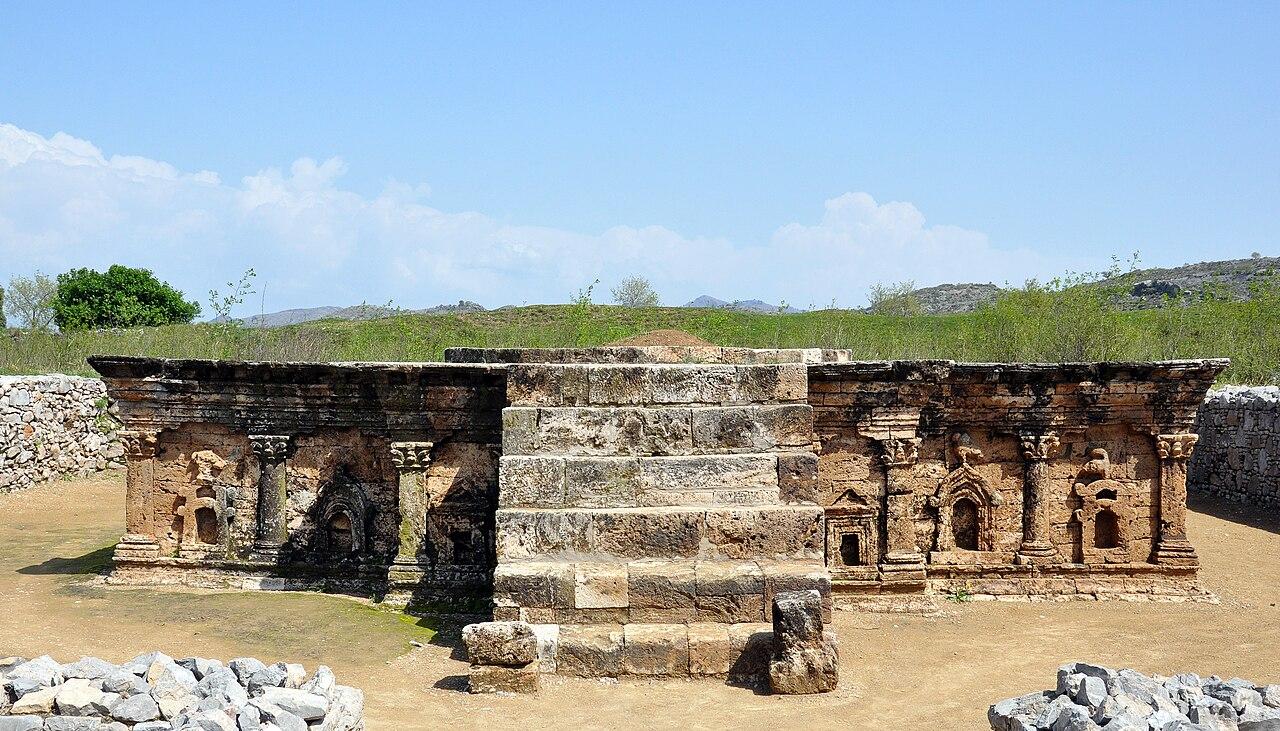
A cluster of cities and Buddhist monasteries at the crossroads of South and Central Asia, successively under Achaemenid, Mauryan, Indo-Greek, Saka-Parthian and Kushan rule.
Keeladi
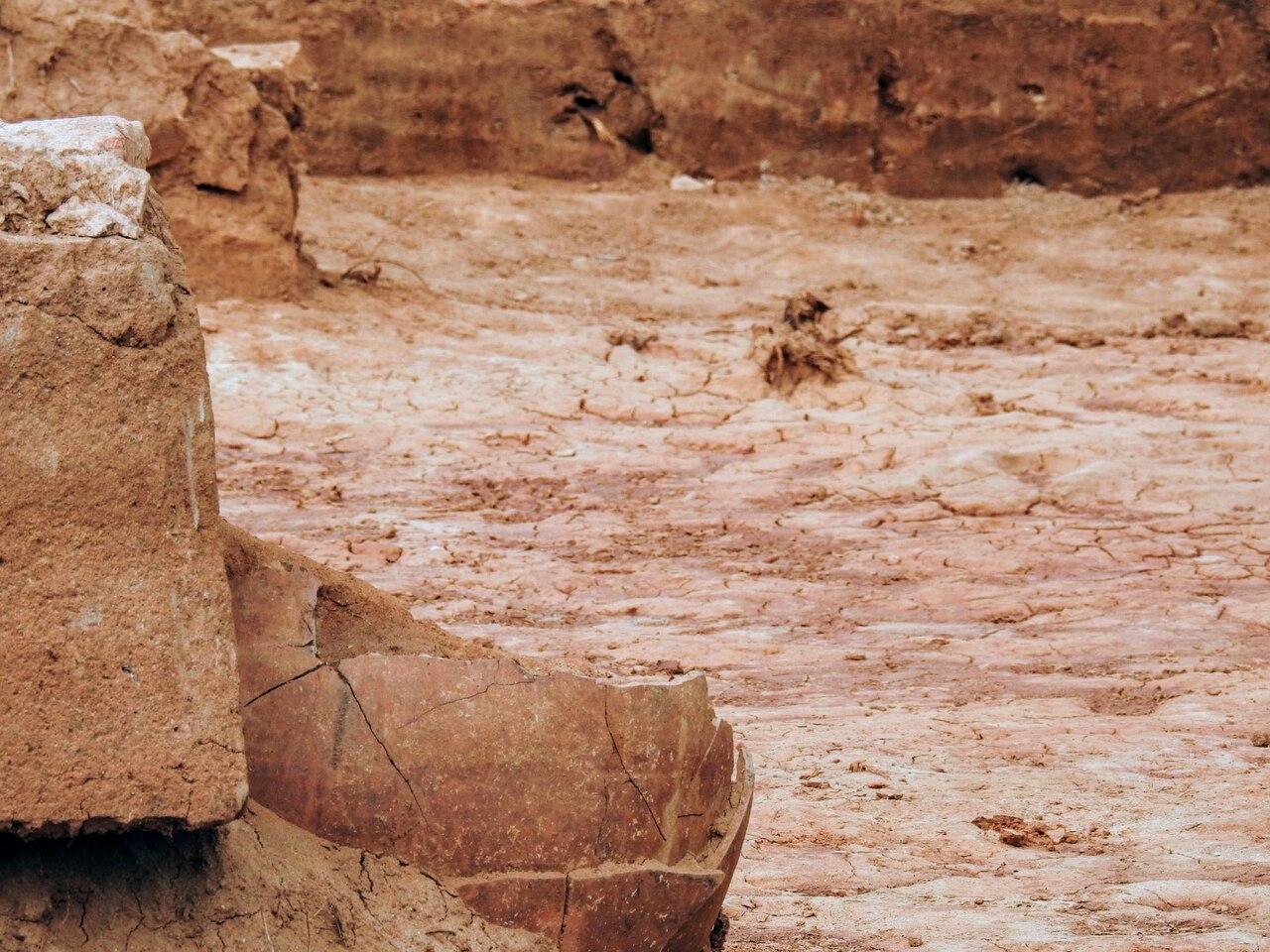
An Early Historic urban settlement on the Vaigai with brick structures, ring wells and potsherds inscribed in Tamil-Brahmi.
Adichanallur
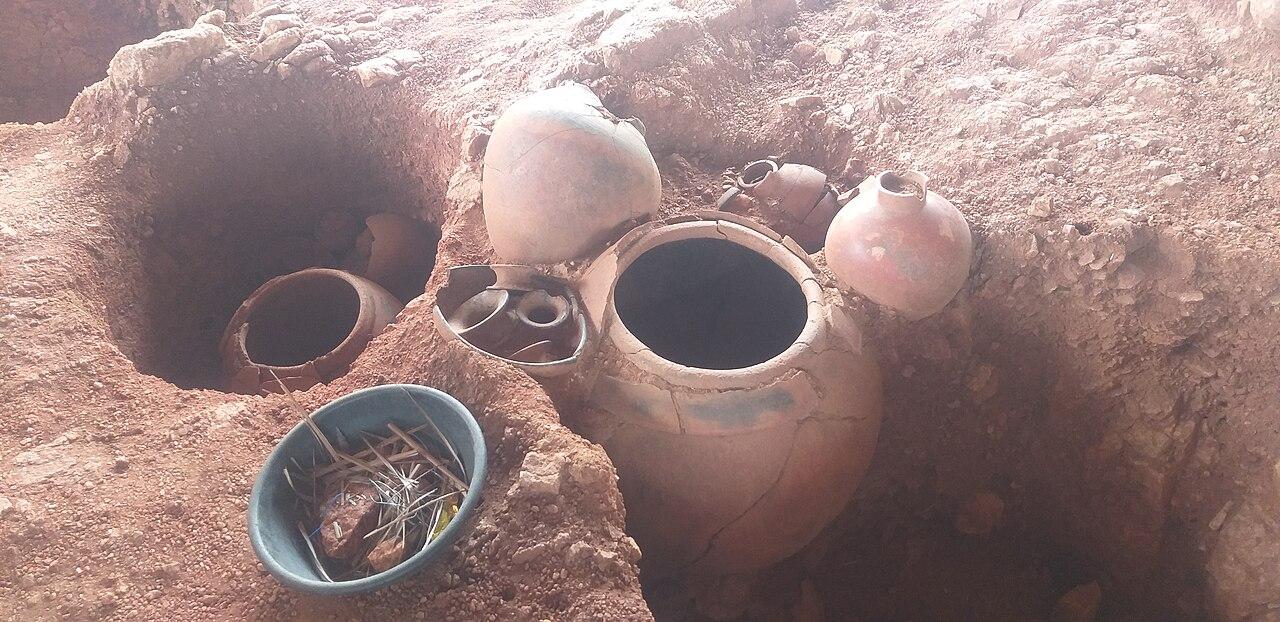
An extensive urn-burial site on the Tamirabarani river with iron objects, bronze and pottery.
Hastinapura
A mound in the upper Ganga valley with Painted Grey Ware levels, excavated by B. B. Lal in 1950–52 and associated in tradition with the Kurus.
Ahichchhatra
Capital of northern Panchala, with fortifications and a long early historic sequence.
Chronology
Events
Battle of the HydaspesEvent326 BCE(Secure date)Conclusions
What the evidence supports
- Kingdoms and assembly-governed republics coexisted in the Ganga valley, alongside coinage, fortified cities and new religious movements.
- Magadha grew to dominate the region by the 4th century BCE.
Still open
What we still don't know
- The dates of the Buddha and Mahavira; the extent and nature of early state control.
Connected to Mahajanapadas
Continue exploring
Magadha
The kingdom of south Bihar that expanded, through conquest and alliance, to become the core of successive Nanda and Mauryan empires.
Kosala
A powerful kingdom of the middle Ganga plain in the age of the Buddha, eventually absorbed by Magadha.
Avanti
A mahajanapada of the Malwa plateau, controlling routes between the Ganga valley, the western coast and the Deccan.
Vajji (Vrijji) Confederacy
A gana-sangha — a polity governed by an assembly of clan heads rather than a hereditary monarch — centred on Vaishali, with the Licchavis as its leading clan.
Kuru
A polity of the later Vedic period in the upper Ganga–Yamuna region, which later Vedic texts associate with the codification of ritual and early forms of kingship.
Panchala
A janapada east of the Kurus in the Ganga–Yamuna doab, later divided into northern and southern Panchala.
Siddhartha Gautama, the Buddha
Founder of Buddhism. Born, according to tradition and Ashoka's Lumbini inscription, at Lumbini; his dates are debated.
Vardhamana Mahavira
The 24th tirthankara of the Jain tradition and a contemporary of the Buddha in the middle Ganga valley.
Sources & Further Reading
Sources & further reading
- bookSingh, U. (2008). A History of Ancient and Early Medieval India: From the Stone Age to the 12th Century. Pearson Longman.
- bookThapar, R. (2002). Early India: From the Origins to AD 1300. Allen Lane / University of California Press.
- bookConingham, R. & Young, R. (2015). The Archaeology of South Asia: From the Indus to Asoka, c. 6500 BCE–200 CE. Cambridge University Press.