Period 04 of 16
Vedic and Early Iron Age
Also: Vedic period · Iron Age · Painted Grey Ware · PGW
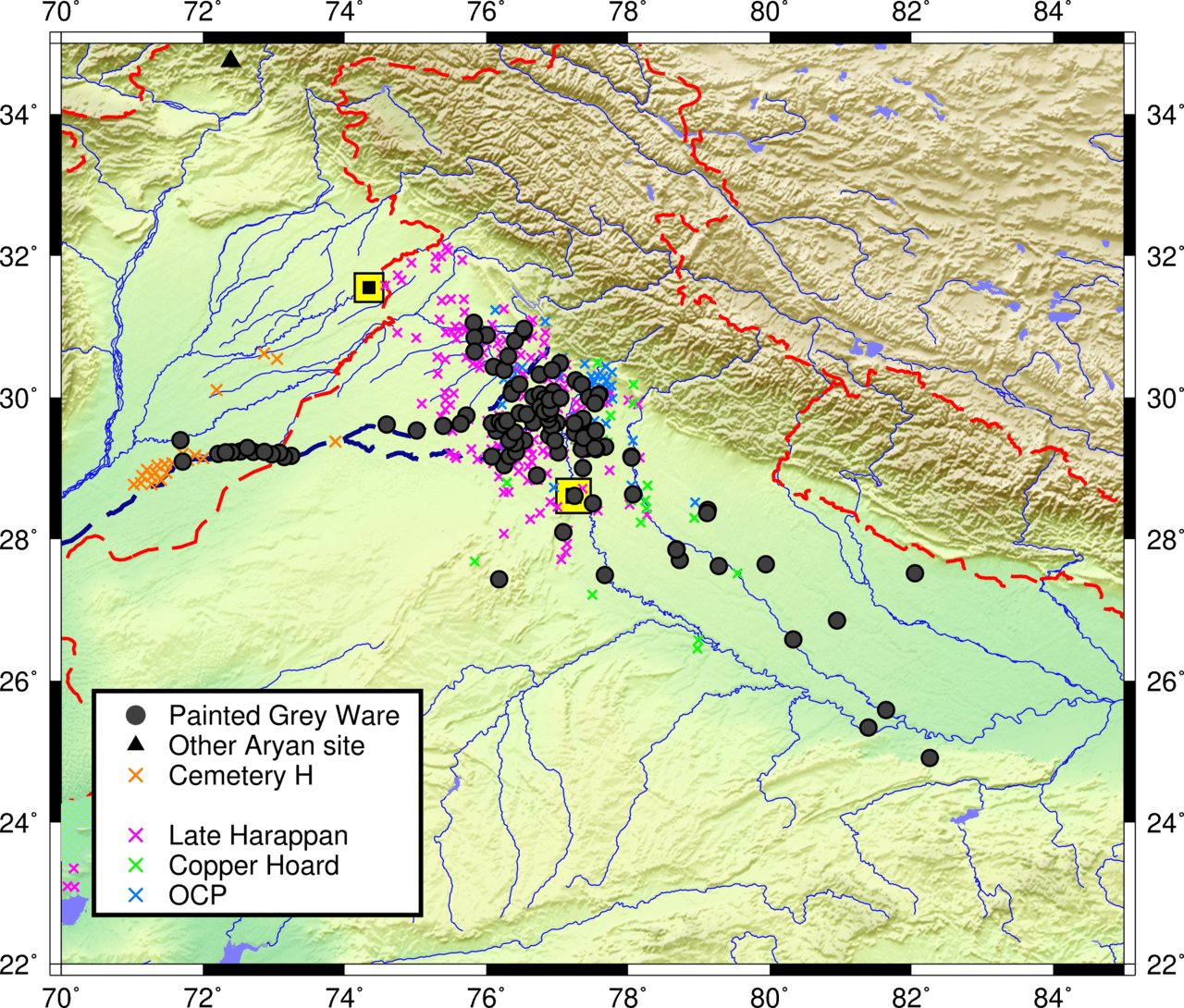
The composition of the Vedic texts, the spread of iron and the Painted Grey Ware culture of the Ganga–Yamuna plain. Textual and archaeological evidence are distinct and do not map neatly onto each other.
Major developments
- 01Composition and oral transmission of the Rigveda, followed by later Vedic texts
- 02Iron objects appear in several regions from the late 2nd millennium BCE
- 03Painted Grey Ware settlements spread across the upper Ganga plain
- 04Megalithic burial traditions develop in peninsular India
- 05Emergence of the Kuru and Panchala polities described in later Vedic texts
The Map Check
Where this period happened
Click a point to open its record. Boundaries at 1050 BCE from Cliopatria (Seshat), CC BY 4.0.
The Historical Record
Texts and trenches
DebatedInscriptions, texts, coins and other primary sources
The Vedic corpus was transmitted orally for centuries before being written down. Its internal relative chronology — Rigveda earlier, later Vedic texts after — is broadly agreed; absolute dates are estimates.
Archaeologists have often correlated later Vedic texts with Painted Grey Ware sites. Such correlations are interpretive: pottery does not identify a language or a text.
SourcesWitzel 1995; Erdosy 1995; Singh 2008
Polities & cultures
Civilisations, kingdoms and republics
Painted Grey Ware Culture
An Iron Age archaeological culture of the Ganga–Yamuna plain, named after its fine grey pottery with black painted designs.
Kuru
A polity of the later Vedic period in the upper Ganga–Yamuna region, which later Vedic texts associate with the codification of ritual and early forms of kingship.
Panchala
A janapada east of the Kurus in the Ganga–Yamuna doab, later divided into northern and southern Panchala.
South Indian Iron Age – Megalithic culture
A long-lived tradition of monumental burial across the peninsula — cists, dolmens, stone circles, urn fields, rock-cut chambers and umbrella stones — associated with iron, Black-and-Red Ware and, later, early writing and trade.
Swat protohistoric graves ('Gandhara Grave Culture')
Late Bronze and Iron Age cemeteries of the Swat and Peshawar valleys, the source of the earliest direct ancient-DNA evidence for steppe-related ancestry in South Asia.
Gandhara
A mahajanapada of the Peshawar valley and Taxila region, later an Achaemenid province before Alexander's campaign.
Kashi
A mahajanapada centred on Varanasi, absorbed by Kosala and then Magadha.
Vatsa
A mahajanapada with its capital at Kausambi, known for its massive ramparts.
Anga
A mahajanapada east of Magadha, centred on Champa near modern Bhagalpur, annexed by Magadha under Bimbisara according to tradition.
Malla
A gana-sangha whose territory included Kushinagara, where Buddhist tradition places the Buddha's death.
Shakya
The gana-sangha into which the Buddha was born, according to Buddhist tradition. The location of its town Kapilavastu is debated between Tilaurakot (Nepal) and Piprahwa (India).
Surasena
A mahajanapada centred on Mathura.
Matsya
A mahajanapada with its centre at Viratanagara (Bairat), later the site of an Ashokan edict.
Assaka (Ashmaka)
The only mahajanapada placed south of the Vindhyas in Buddhist lists. Its centre is uncertain; Bodhan in Telangana is one proposed location.
From the trenches
Archaeological sites
Atranjikhera
A multi-period mound in the upper Ganga plain whose Painted Grey Ware levels yielded early iron objects and were central to debates on the beginnings of iron in north India.
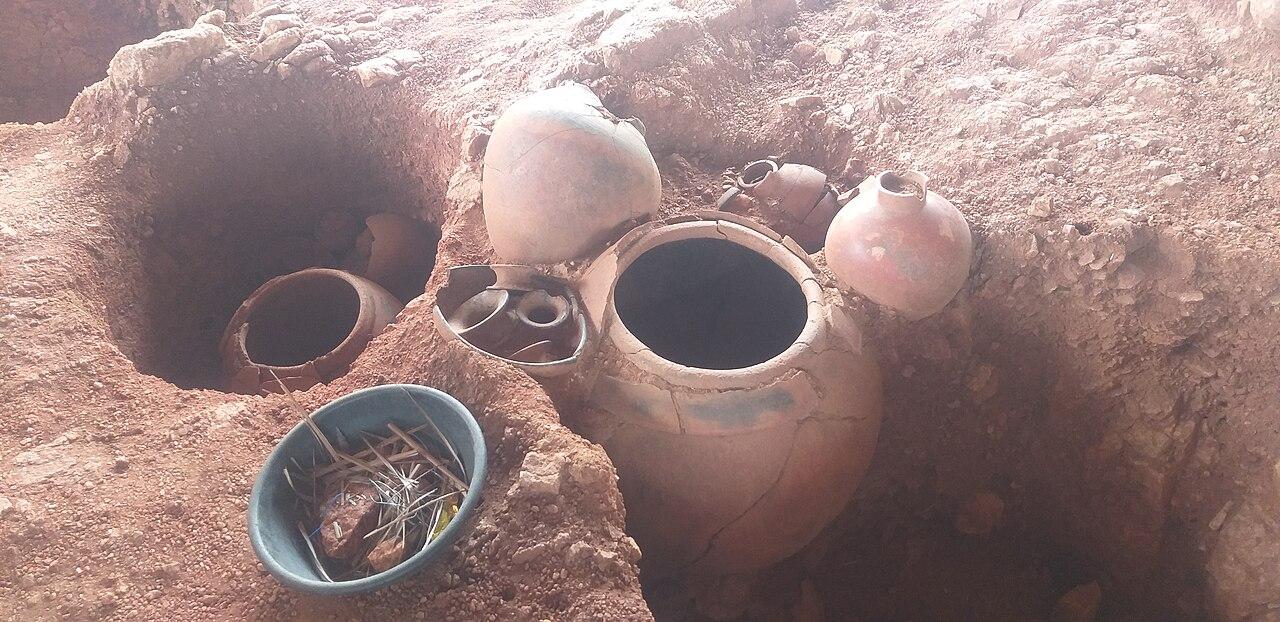
Adichanallur
An extensive urn-burial site on the Tamirabarani river with iron objects, bronze and pottery.
Hastinapura
A mound in the upper Ganga valley with Painted Grey Ware levels, excavated by B. B. Lal in 1950–52 and associated in tradition with the Kurus.
Ahichchhatra
Capital of northern Panchala, with fortifications and a long early historic sequence.
Hire Benakal
One of the largest megalithic necropolises in South India, with hundreds of dolmens, cists and other stone monuments on a granite hill.
Sivagalai
An urn-burial and habitation complex on the Tamirabarani near Adichanallur. A 2025 state report published very early radiometric dates for iron here, which await independent scrutiny.
Junapani
A field of megalithic stone circles near Nagpur, part of the Vidarbha megalithic tradition known for horse ornaments and iron.
Porkalam
A Kerala Iron Age site with a rock-cut burial cave and stone monuments typical of the region's distinctive megaliths — umbrella stones and hood stones.
Swat protohistoric graveyards
Cemeteries in the Swat valley of the late 2nd and early 1st millennia BCE whose individuals provided direct ancient-DNA evidence for steppe-related ancestry in South Asia.
Chronology
Events
Steppe-related ancestry reaches South AsiaEvent2nd millennium BCE(Approximate)Indo-Aryan gods in a Mitanni treatyEventc. 14th century BCE(Approximate)Iron in the Ganga plainEventlate 2nd – early 1st millennium BCE(Debated)Megalithic burial spreads across the peninsulaEventlate 2nd – 1st millennium BCE(Debated)Artefacts, scripts & research
SanskritScript / languageVedic Sanskrit from the 2nd millennium BCE (conventional)(Debated)Conclusions
What the evidence supports
- Steppe-related ancestry is present in the northwest by the late 2nd millennium BCE, consistent with the arrival of Indo-Aryan speakers.
- Iron and Painted Grey Ware spread across the Ganga plain; megalithic burial spread across the peninsula.
Still open
What we still don't know
- Absolute dates for the Vedic texts; how texts relate to archaeological cultures; the start of iron in the south.
Connected to Vedic and Early Iron Age
Continue exploring
Painted Grey Ware Culture
An Iron Age archaeological culture of the Ganga–Yamuna plain, named after its fine grey pottery with black painted designs.
Kuru
A polity of the later Vedic period in the upper Ganga–Yamuna region, which later Vedic texts associate with the codification of ritual and early forms of kingship.
Panchala
A janapada east of the Kurus in the Ganga–Yamuna doab, later divided into northern and southern Panchala.
Steppe pastoralist-related ancestry
Ancestry related to Middle–Late Bronze Age populations of the Eurasian steppe, detected in Swat valley genomes by the late 2nd millennium BCE.
South Indian Iron Age – Megalithic culture
A long-lived tradition of monumental burial across the peninsula — cists, dolmens, stone circles, urn fields, rock-cut chambers and umbrella stones — associated with iron, Black-and-Red Ware and, later, early writing and trade.
Swat protohistoric graves ('Gandhara Grave Culture')
Late Bronze and Iron Age cemeteries of the Swat and Peshawar valleys, the source of the earliest direct ancient-DNA evidence for steppe-related ancestry in South Asia.
Gandhara
A mahajanapada of the Peshawar valley and Taxila region, later an Achaemenid province before Alexander's campaign.
Kashi
A mahajanapada centred on Varanasi, absorbed by Kosala and then Magadha.
Sources & Further Reading
Sources & further reading
- bookSingh, U. (2008). A History of Ancient and Early Medieval India: From the Stone Age to the 12th Century. Pearson Longman.
- journal articleWitzel, M. (1995). Early Sanskritization: Origins and Development of the Kuru State. Electronic Journal of Vedic Studies 1(4).
- bookErdosy, G. (ed.) (1995). The Indo-Aryans of Ancient South Asia: Language, Material Culture and Ethnicity. Walter de Gruyter.
- excavation reportGaur, R. C. (1983). Excavations at Atranjikhera: Early Civilization of the Upper Ganga Basin. Motilal Banarsidass.