Archaeological site
Swat protohistoric graveyards
Also: Gandhara Grave Culture · Aligrama · Katelai · Loebanr · Butkara
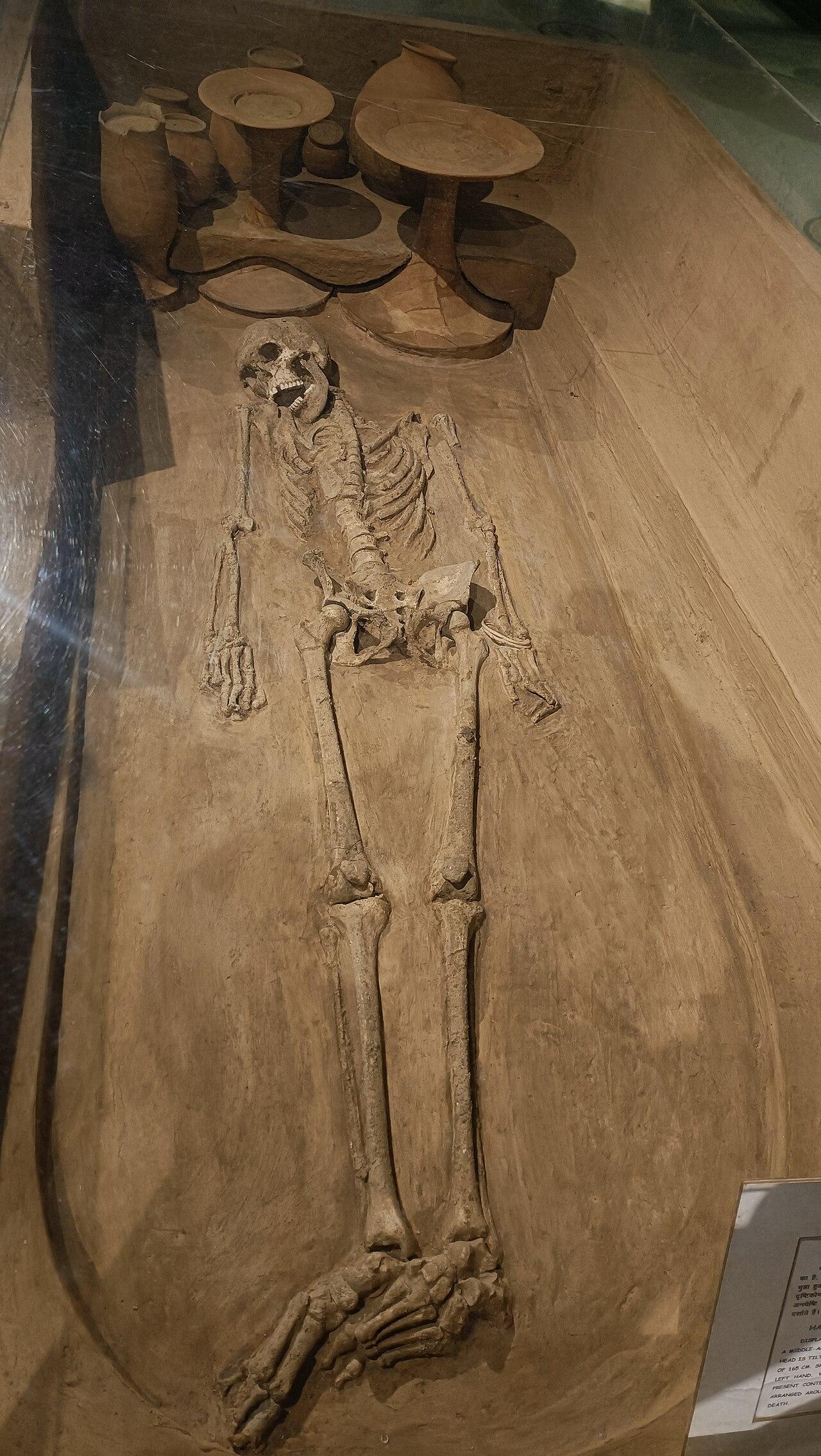
Cemeteries in the Swat valley of the late 2nd and early 1st millennia BCE whose individuals provided direct ancient-DNA evidence for steppe-related ancestry in South Asia.
The Map Check
Location and neighbouring sites
From the Trenches
Excavation history
1960s onward
G. Stacul and colleagues
Italian Archaeological Mission (IsMEO)
Important findings
- Flexed inhumations and cremations in stone-lined graves
- Grey and red wares
- Copper and later iron objects
Connected to Swat protohistoric graveyards
Connected to this site
The formation of human populations in South and Central Asia
A large ancient DNA study proposing how ancestry related to Iranian-plateau groups, AASI and steppe pastoralists combined to form South Asian populations.
Steppe pastoralist-related ancestry
Ancestry related to Middle–Late Bronze Age populations of the Eurasian steppe, detected in Swat valley genomes by the late 2nd millennium BCE.
The Indo-Aryan migration
The model that Indo-Aryan languages entered South Asia from Central Asia in the 2nd millennium BCE, carried by people with steppe-related ancestry who mixed with existing populations — not an 'invasion' or a single event.
Swat protohistoric graves ('Gandhara Grave Culture')
Late Bronze and Iron Age cemeteries of the Swat and Peshawar valleys, the source of the earliest direct ancient-DNA evidence for steppe-related ancestry in South Asia.
Peopling the Subcontinent: Migrations Old and New
Foragers, farmers, steppe herders and seafarers — what genetics, language and archaeology each contribute.
Sources & Further Reading
Sources & further reading
- excavation reportStacul, G. (1987). Prehistoric and Protohistoric Swāt, Pakistan (c. 3000–1400 B.C.). IsMEO.record unverified
- journal articleNarasimhan, V. M. et al. (2019). The formation of human populations in South and Central Asia. Science 365(6457): eaat7487. doi:10.1126/science.aat7487