Period 03 of 16
Indus Valley Civilisation
Also: Harappan Civilisation · Indus Civilization · Harappan · Bronze Age · Sindhu-Sarasvati
Between roughly 2600 and 1900 BCE, cities with planned streets, standardised weights and a still-undeciphered script spread across a vast area from Balochistan to the upper Ganga plain and Gujarat.
Major developments
- 01Regional Early Harappan cultures integrate into a widely shared urban tradition
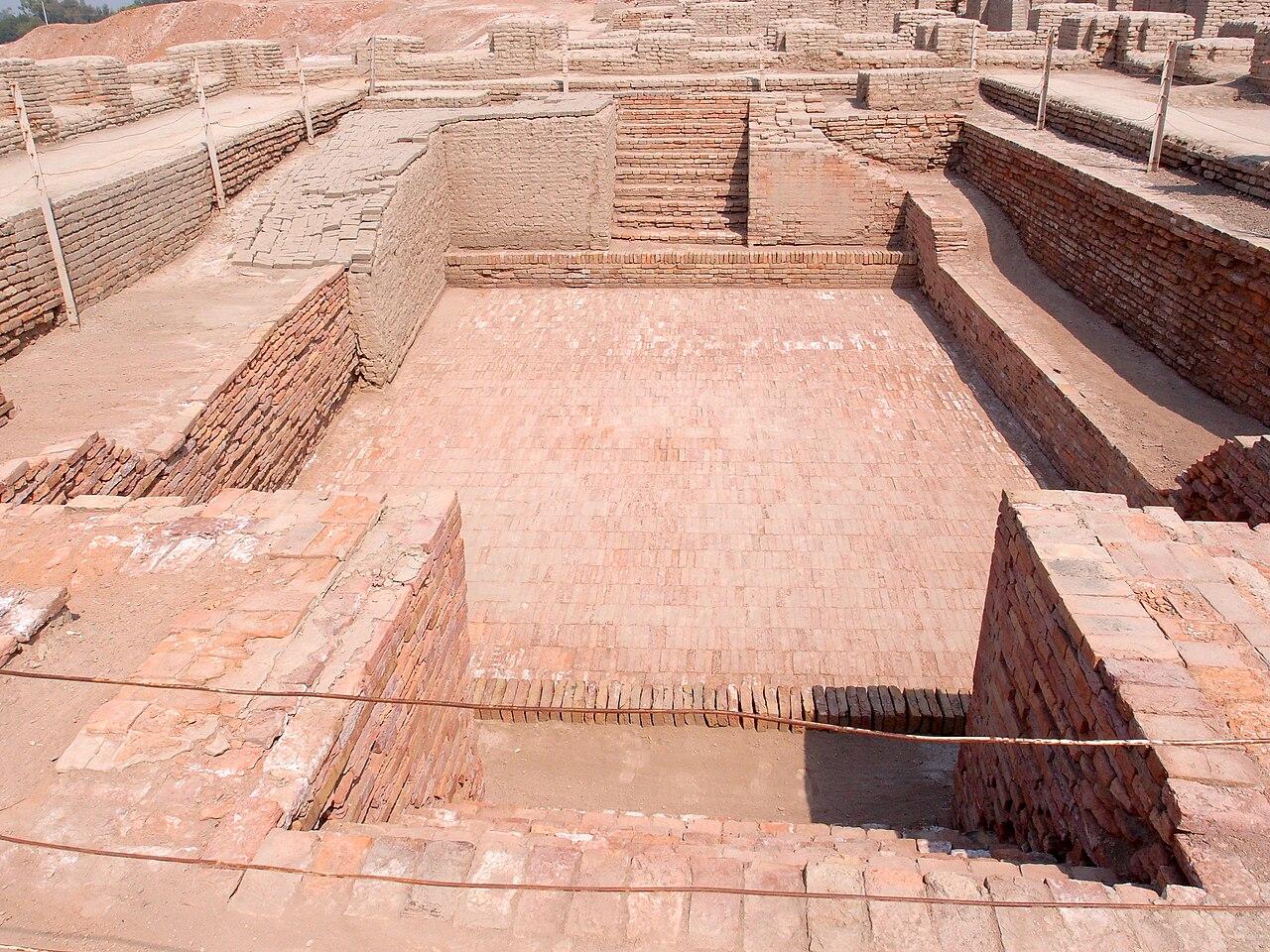
- 02Baked-brick cities with drainage at Mohenjo-daro, Harappa, Dholavira and Rakhigarhi
- 03Standardised cubical chert weights and seals bearing Indus signs
- 04Maritime contact with the Gulf and Mesopotamia
- 05Deurbanisation from c. 1900 BCE and a shift of settlement eastward
The Map Check
Where this period happened
Click a point to open its record. Boundaries at 2300 BCE from Cliopatria (Seshat), CC BY 4.0.
Polities & cultures
Civilisations, kingdoms and republics
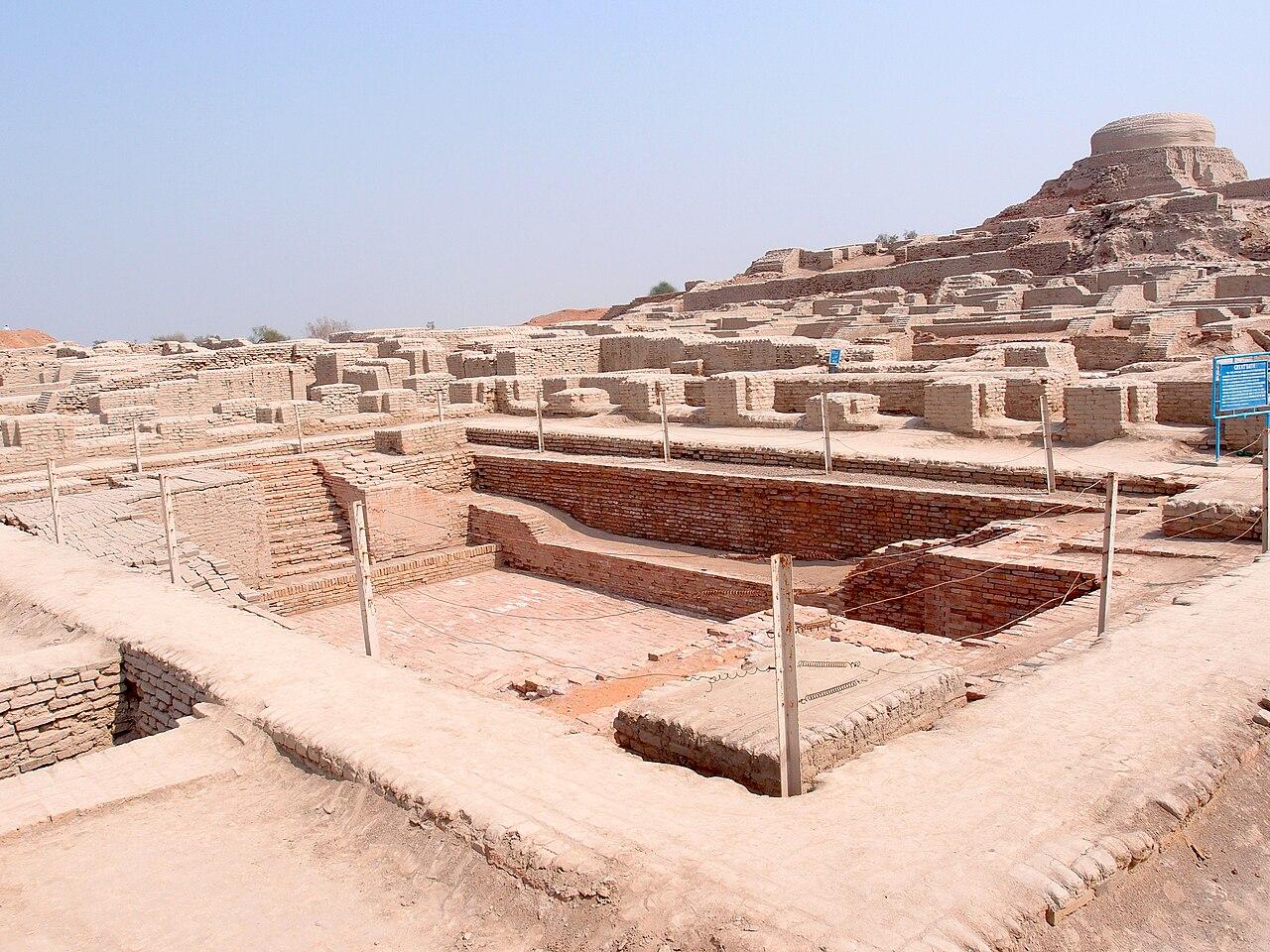
Indus Valley Civilisation
A Bronze Age urban tradition spanning more than a million square kilometres, known for planned cities, standardised weights, craft specialisation and an undeciphered script.
Bactria–Margiana Archaeological Complex (BMAC)
A Bronze Age urban culture of southern Central Asia, in contact with the Indus world, through which some models route Indo-Iranian speakers.
From the trenches
Archaeological sites
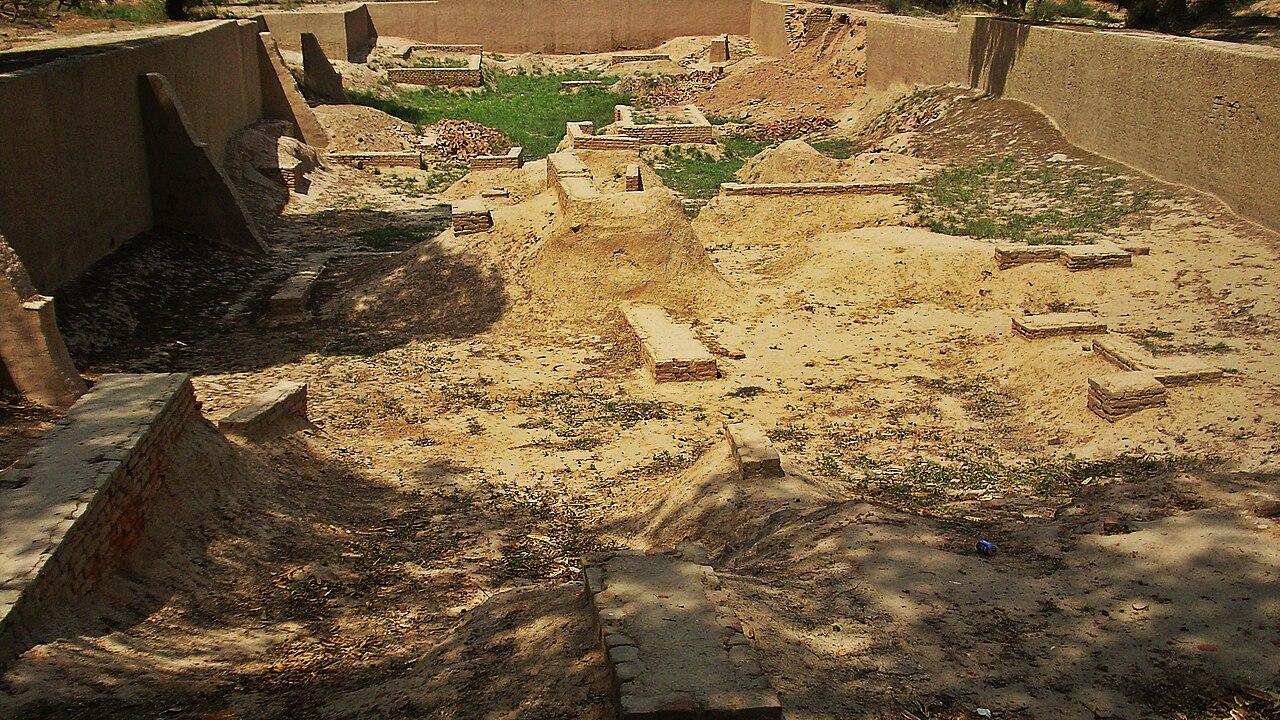
Harappa
The first Indus city to be excavated, giving its name to the Harappan civilisation. A long occupation sequence from the Ravi phase to the Late Harappan period.
Mohenjo-daro
The largest excavated Indus city, laid out on a citadel mound and a lower town with baked-brick houses, wells, covered drains and the Great Bath.
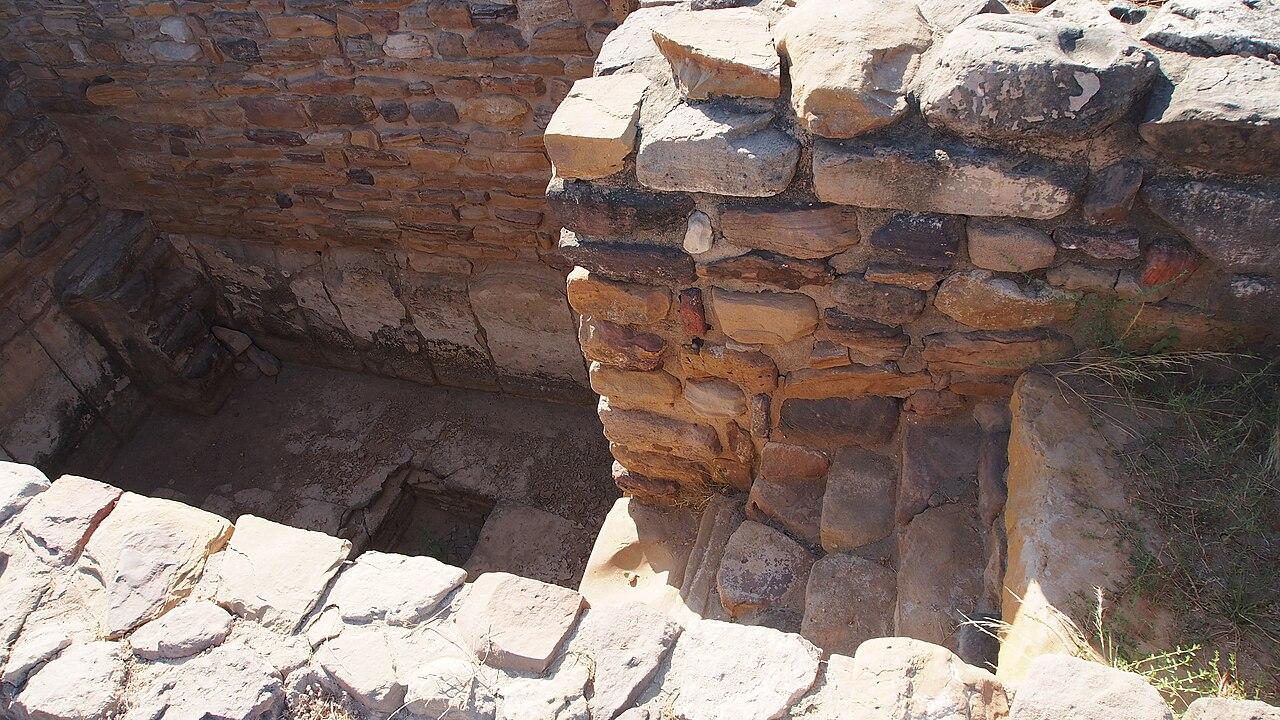
Dholavira
A walled Harappan city on Khadir Bet in the Rann of Kutch, notable for its stone architecture and a sophisticated system of reservoirs for capturing seasonal water.
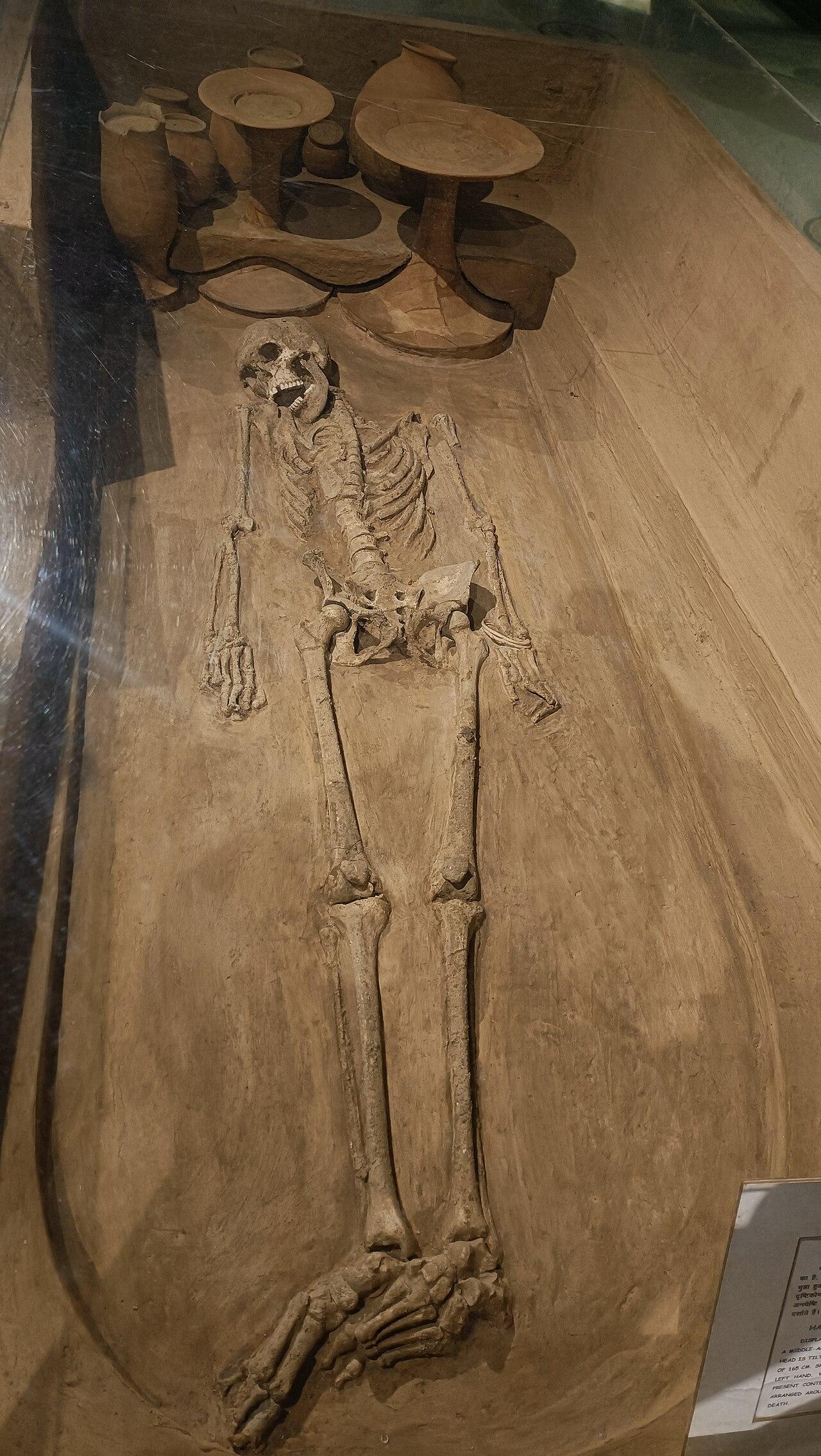
Rakhigarhi
One of the largest Harappan settlements, in the Ghaggar basin of Haryana. Its cemetery produced the first published ancient genome from an Indus-associated individual.
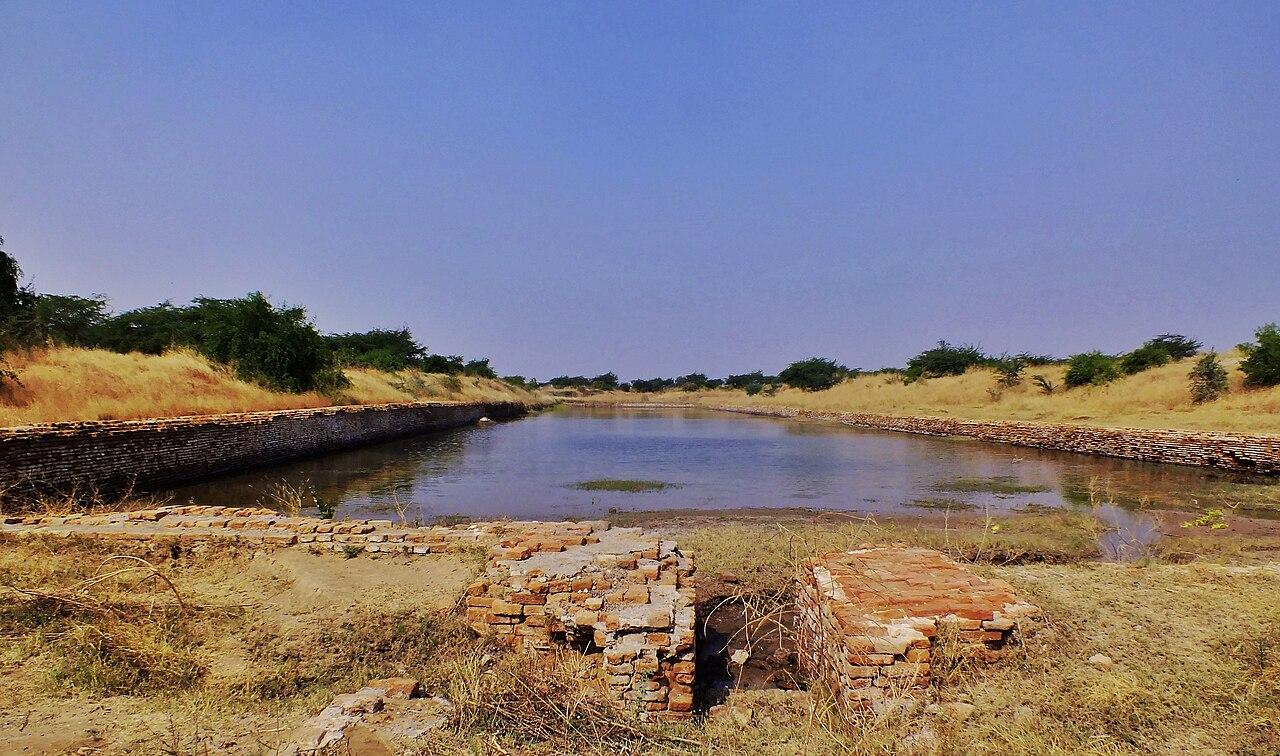
Lothal
A small Harappan town near the Gulf of Khambhat with a bead-making quarter and a large brick basin interpreted by its excavator as a dockyard.
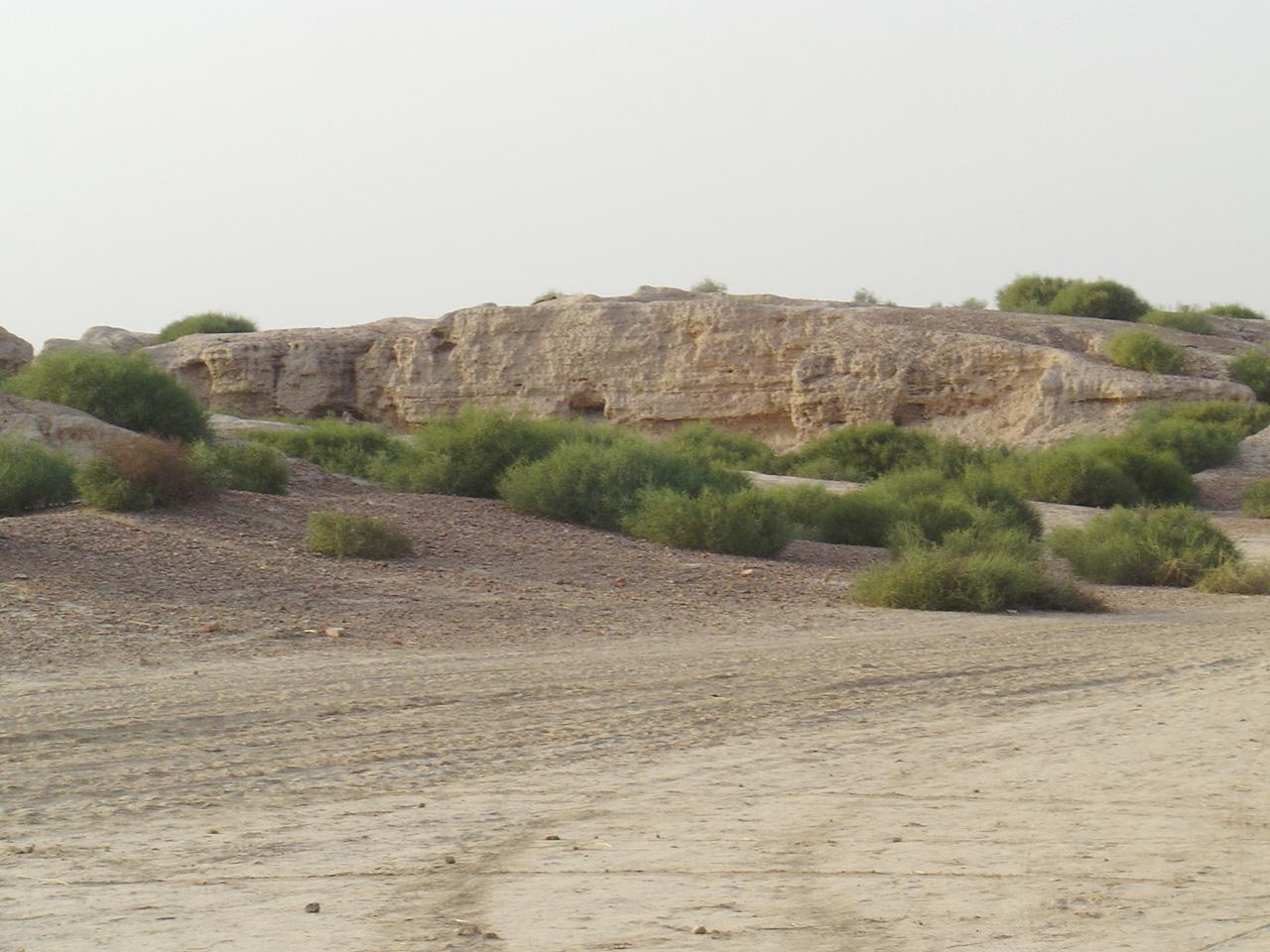
Kalibangan
A Harappan town on the dry bed of the Ghaggar with an Early Harappan settlement beneath it, including a ploughed field surface.
Shortughai
A Harappan settlement far to the north, near the Amu Darya — usually interpreted as a trading outpost linked to lapis lazuli sources in Badakhshan.
Sutkagan Dor
The westernmost known Harappan settlement, on the Makran coast near the Iranian border.
Alamgirpur
A Late Harappan site in the Ganga–Yamuna doab, near the eastern limit of the Harappan distribution.
Chronology
Events
Rise of Indus citiesEventc. 2600 BCE(Approximate)Monsoon weakening ('4.2 ka event')Eventc. 2200 – 2000 BCE(Approximate)Indus deurbanisationEventc. 1900 BCE onward(Approximate)Artefacts, scripts & research
'Priest-King' sculptureArtefactc. 2200 – 1900 BCE(Approximate)Bronze 'Dancing Girl'Artefactc. 2300 – 1750 BCE(Approximate)Indus 'unicorn' sealArtefactc. 2600 – 1900 BCE(Approximate)Indus scriptScript / languagec. 2600 – 1900 BCE(Approximate)The Water Engineers of the IndusArticlec. 2600 – 1900 BCE(Approximate)One Genome from Rakhigarhi: What It Can and Cannot Tell UsArticlec. 2800 – 2300 BCE(Approximate)Conclusions
What the evidence supports
- Planned cities with drainage, standard weights and seals flourished from about 2600 to 1900 BCE across a larger area than any contemporary civilisation.
- Indus-associated genomes show ancestry related to Iranian-plateau groups and AASI, without steppe-related ancestry.
- Cities declined gradually after 1900 BCE; there is no evidence of a violent invasion.
Still open
What we still don't know
- The script and language; how the cities were governed; the relative roles of climate, rivers and trade in deurbanisation.
Connected to Indus Valley Civilisation
Continue exploring
Indus Valley Civilisation
A Bronze Age urban tradition spanning more than a million square kilometres, known for planned cities, standardised weights, craft specialisation and an undeciphered script.
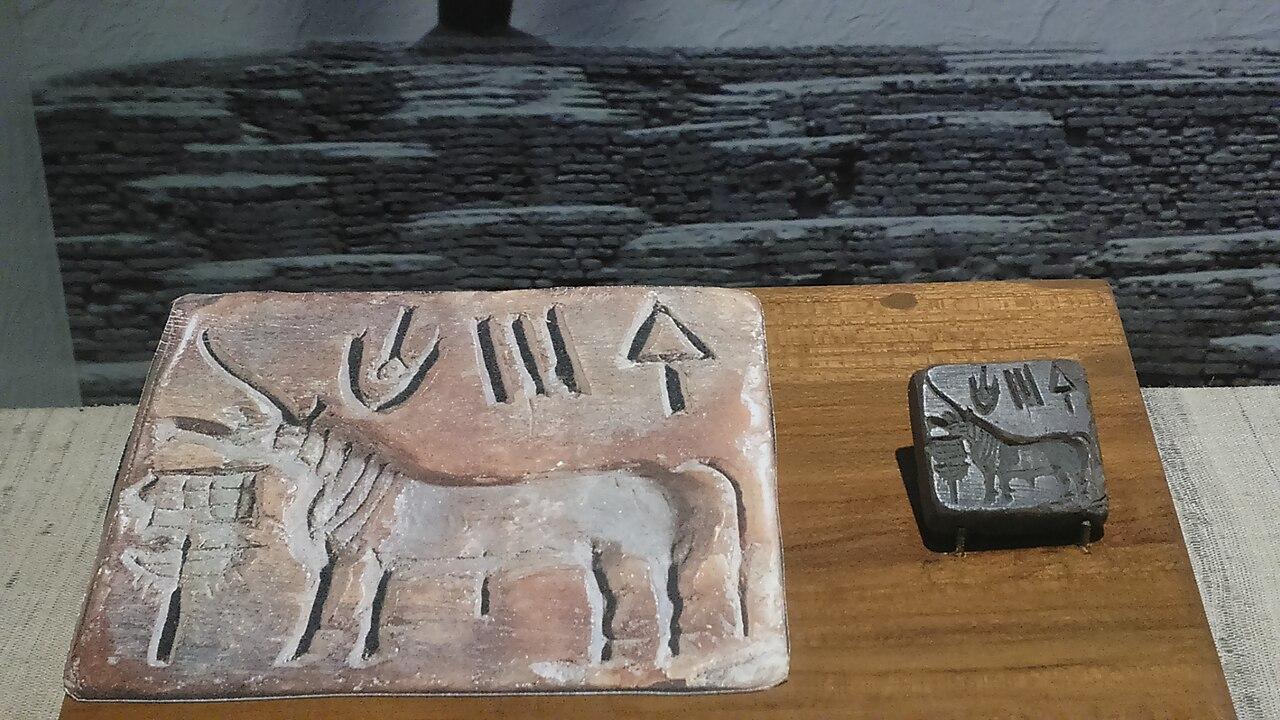
Indus script
Short sequences of signs on seals, tablets and pottery from the Indus civilisation. Undeciphered.
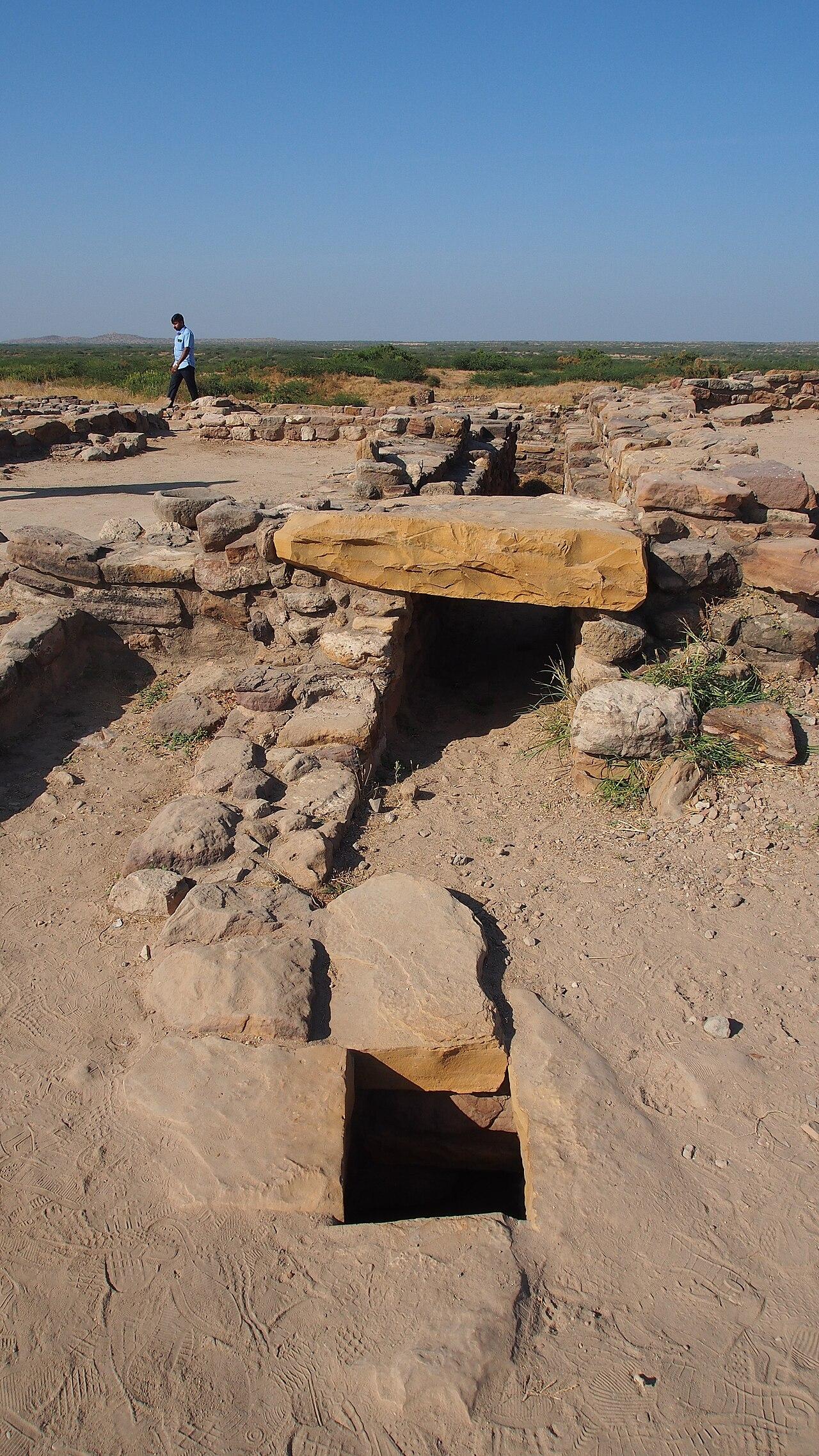
The Water Engineers of the Indus
Drains, wells and reservoirs at Mohenjo-daro and Dholavira, and what they reveal about Indus urban life.
An Ancient Harappan Genome Lacks Ancestry from Steppe Pastoralists or Iranian Farmers
The first published genome from an individual buried in an Indus civilisation cemetery.
Bactria–Margiana Archaeological Complex (BMAC)
A Bronze Age urban culture of southern Central Asia, in contact with the Indus world, through which some models route Indo-Iranian speakers.
Harappa
The first Indus city to be excavated, giving its name to the Harappan civilisation. A long occupation sequence from the Ravi phase to the Late Harappan period.
Mohenjo-daro
The largest excavated Indus city, laid out on a citadel mound and a lower town with baked-brick houses, wells, covered drains and the Great Bath.
Dholavira
A walled Harappan city on Khadir Bet in the Rann of Kutch, notable for its stone architecture and a sophisticated system of reservoirs for capturing seasonal water.
Sources & Further Reading
Sources & further reading
- bookPossehl, G. L. (2002). The Indus Civilization: A Contemporary Perspective. AltaMira Press.
- bookKenoyer, J. M. (1998). Ancient Cities of the Indus Valley Civilization. Oxford University Press.
- bookWright, R. P. (2010). The Ancient Indus: Urbanism, Economy, and Society. Cambridge University Press.