Civilisation
Indus Valley Civilisation
Also: Harappan Civilisation · Indus Civilization · Harappan · Sindhu-Sarasvati Civilisation · IVC
A Bronze Age urban tradition spanning more than a million square kilometres, known for planned cities, standardised weights, craft specialisation and an undeciphered script.
The Map Check
Geographic extent
Largest recorded extent, from Cliopatria (Seshat Global History Databank, CC BY 4.0) — drawn as published. Open the atlas to see how it changed over time. Points are the places Indophile uses to locate the polity.
Overview
EstablishedThe Indus civilisation developed out of regional farming cultures of the Indus plains and Balochistan. By about 2600 BCE these had converged on a shared urban tradition: baked bricks in standard proportions, cubical chert weights, seals bearing animal motifs and signs, and distinctive pottery and ornaments.
Its geographic footprint was larger than contemporary Egypt or Mesopotamia, extending from the Makran coast to the upper Ganga plain and south into Gujarat, with an outpost at Shortughai near the Amu Darya.
SourcesPossehl 2002; Kenoyer 1998
Economy and trade
Well supportedAgriculture combined winter crops (wheat, barley) with summer crops including millets and, in some regions, rice. Cattle were central. Craft production — carnelian beads, shell bangles, faience, copper-bronze tools — was specialised and widely traded.
Mesopotamian texts refer to a land called Meluhha, which most scholars identify with the Indus region. Indus-style seals and carnelian beads found in Mesopotamia and the Gulf support maritime contact.
SourcesWright 2010; Possehl 2002
Language and writing
EstablishedThe Indus script survives mainly in short inscriptions on seals and tablets. It has not been deciphered, and the language it records is unknown. Whether it encoded language at all has itself been debated.
What the DNA Says
What the DNA says
Well supportedWhat archaeogenetics can tell us — and its limits
One ancient genome from Rakhigarhi, and eleven individuals found at sites in Iran and Central Asia whose ancestry suggests they were migrants from the Indus world, form the 'Indus Periphery' group in published studies. They carry a mixture of ancestry related to ancient Iranian-plateau groups and to Ancient Ancestral South Indians (AASI), without detectable steppe-related ancestry.
This is a very small sample for a civilisation of millions spread over a vast area. It shows what some individuals' ancestry was; it cannot describe the civilisation as a whole, and it says nothing about language or identity.
Decline and transformation
DebatedFrom around 1900 BCE the large cities were depopulated and the shared urban features — script, weights, seals — fell out of use. Settlement shifted towards smaller villages, with numbers increasing in the eastern Ghaggar–Yamuna region and Gujarat.
Explanations include a weakening of the summer monsoon around 4,200 years ago, river course changes and the breakdown of trade networks. Most researchers now favour combinations of factors over a single cause. Earlier theories of a violent invasion are not supported by the archaeological record.
SourcesDixit et al. 2014; Giosan et al. 2012; Singh et al. 2017; Possehl 2002
What We Still Don't Know
What we still don't know
DebatedUnresolved questions and competing interpretations
The language(s) spoken, the content of the script, the nature of political authority and the relative weight of climatic and social causes in deurbanisation all remain open.
SourcesPossehl 2002; Wright 2010
Material culture
Important artefacts
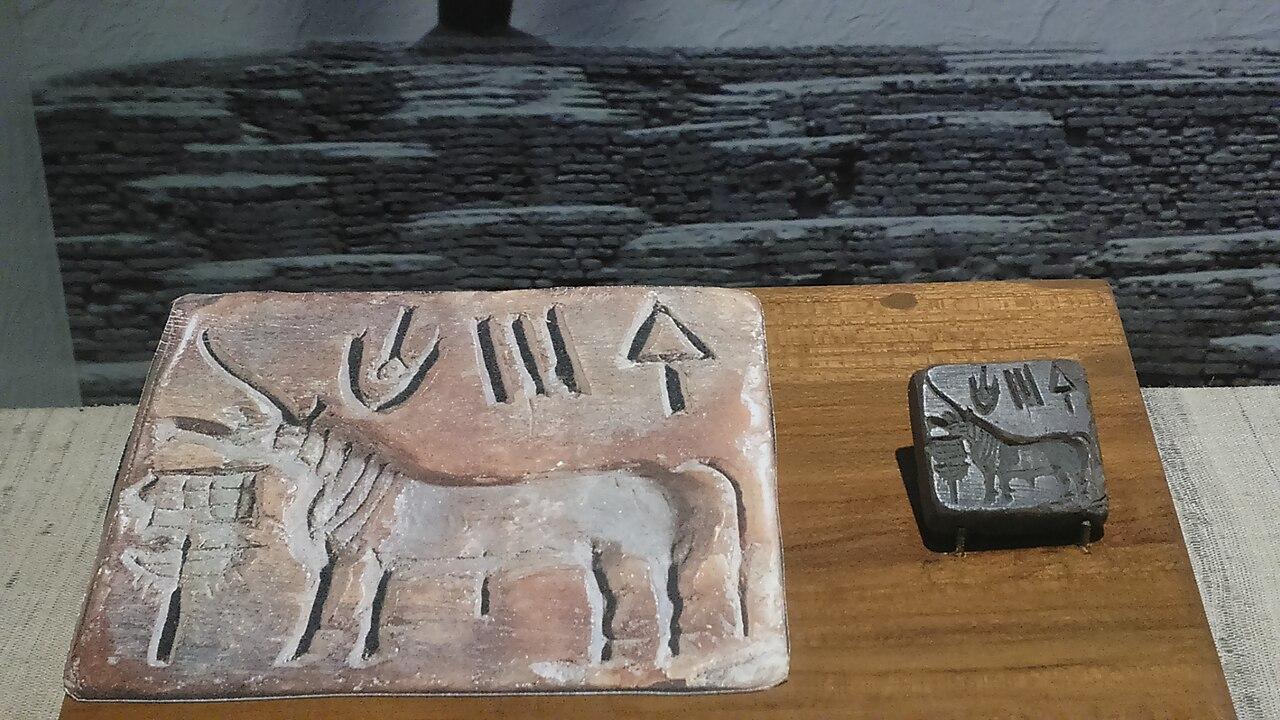
Indus 'unicorn' seal
Square steatite stamp seals showing a single-horned bovine before a stand, with a line of Indus signs above. The unicorn is the most common motif on Indus seals.
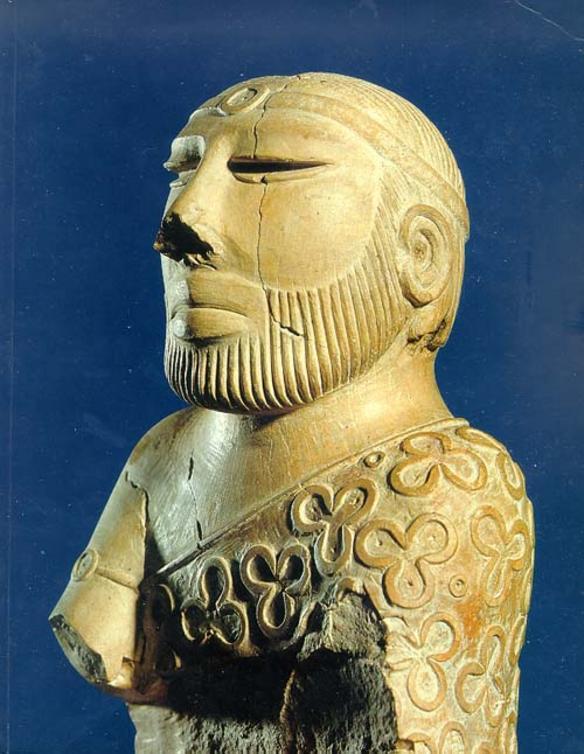
'Priest-King' sculpture
A bearded male figure in steatite wearing a trefoil-patterned robe, the best-known stone sculpture from the Indus civilisation.
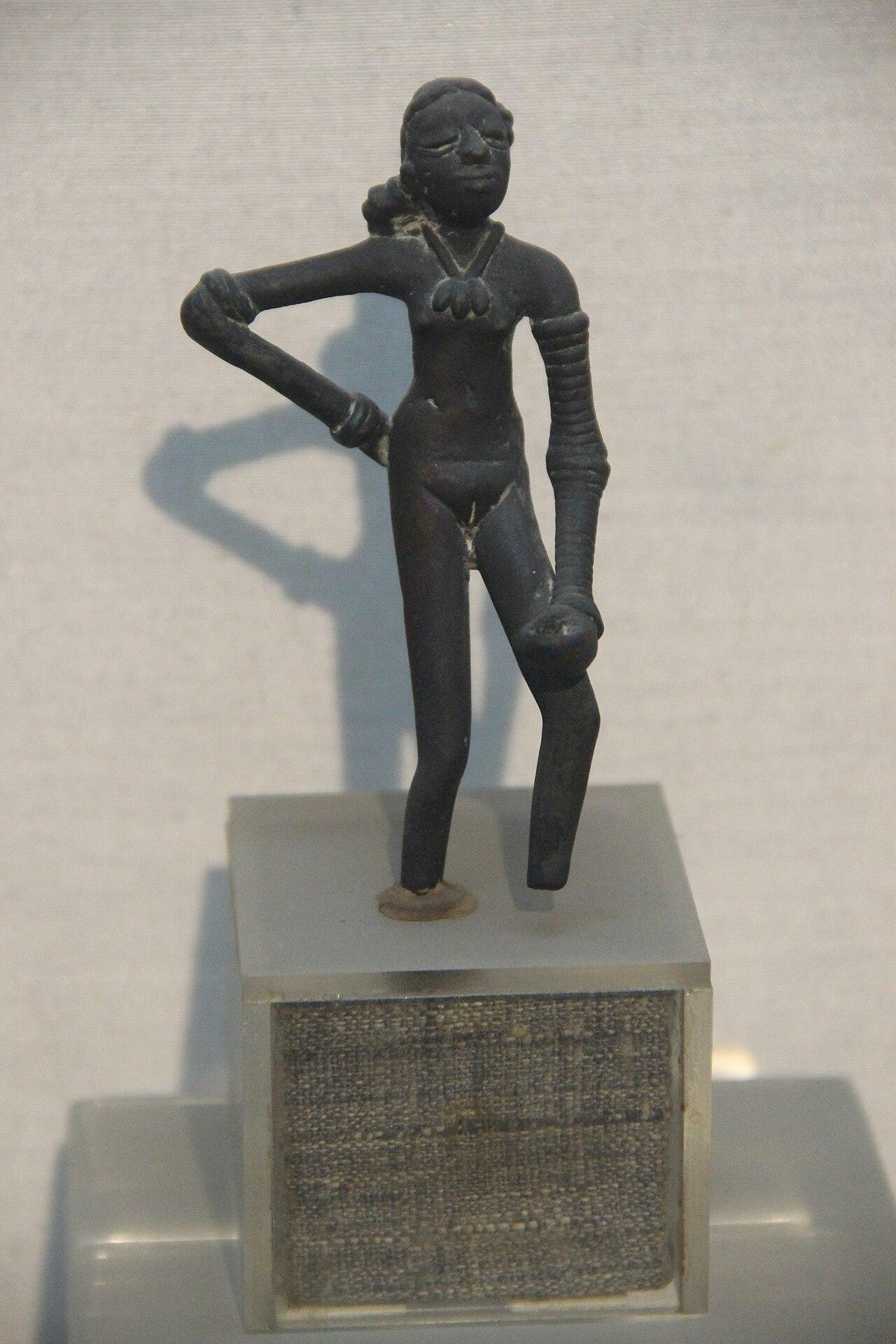
Bronze 'Dancing Girl'
A small cast copper-alloy figurine of a standing young woman with bangles covering one arm.
Connected to Indus Valley Civilisation
Sites, evidence and research
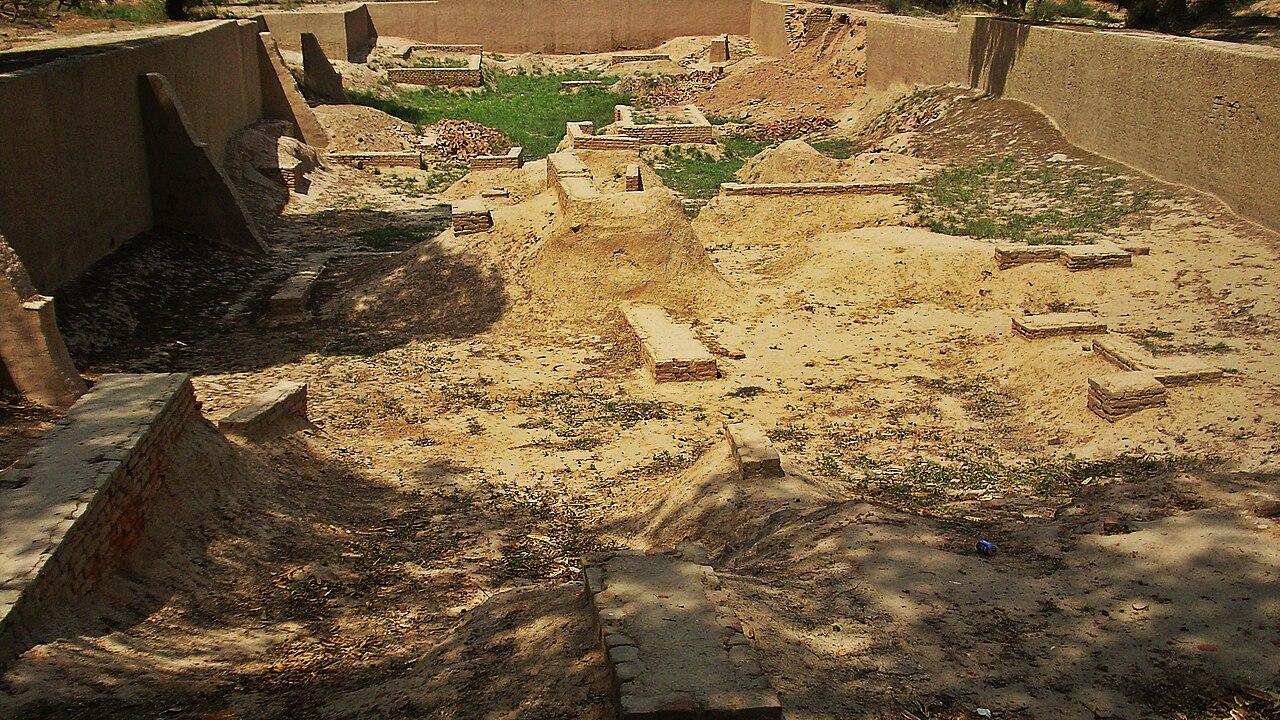
Harappa
The first Indus city to be excavated, giving its name to the Harappan civilisation. A long occupation sequence from the Ravi phase to the Late Harappan period.
Mohenjo-daro
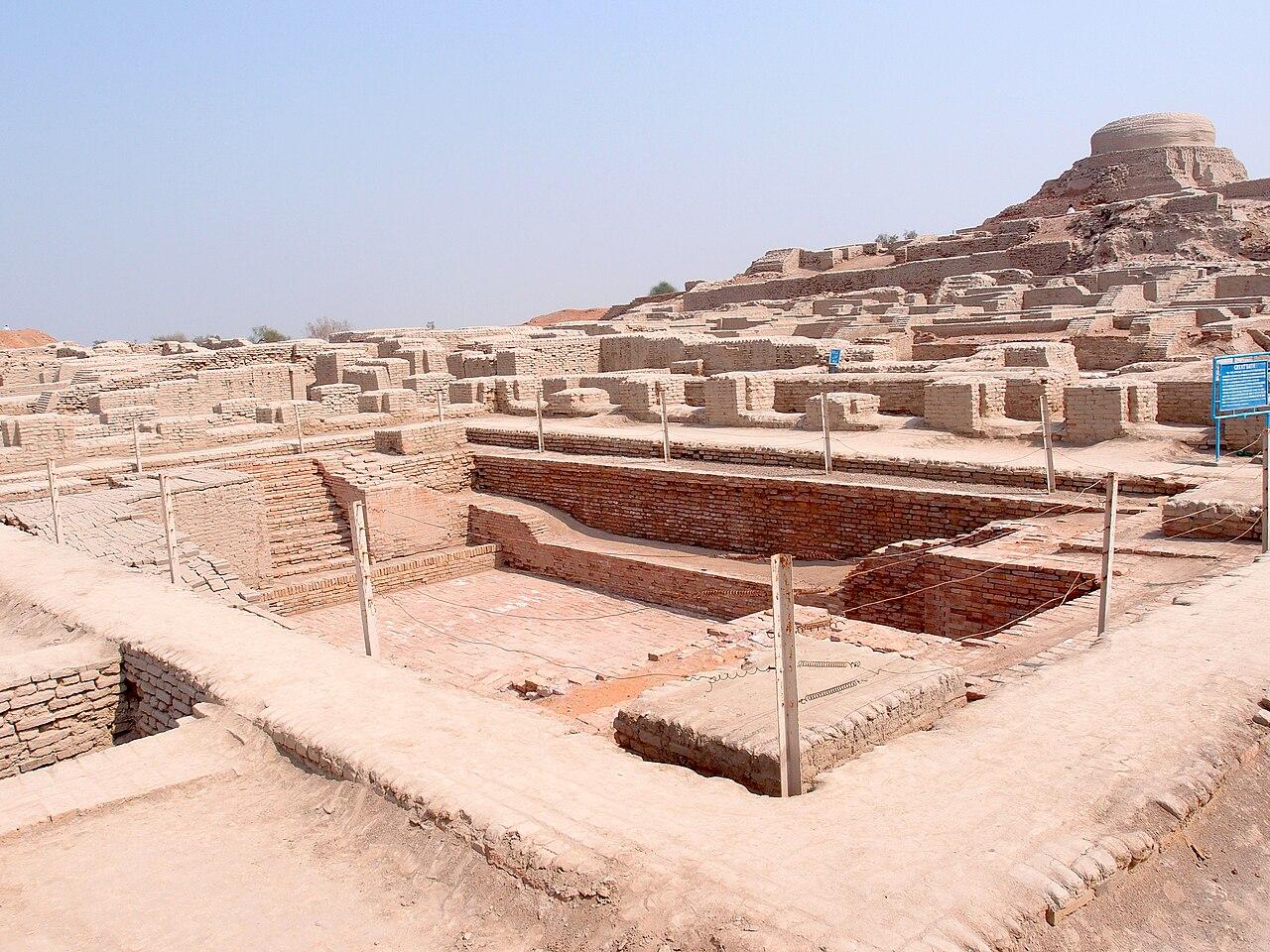
The largest excavated Indus city, laid out on a citadel mound and a lower town with baked-brick houses, wells, covered drains and the Great Bath.
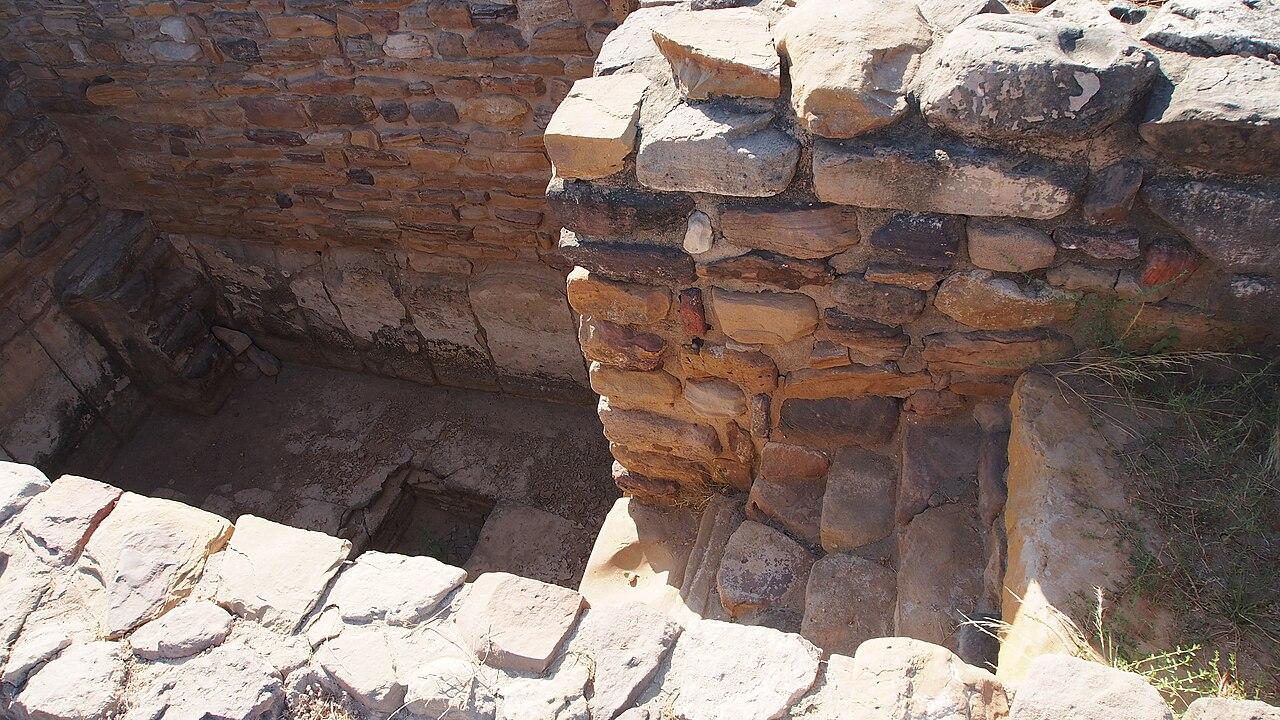
Dholavira
A walled Harappan city on Khadir Bet in the Rann of Kutch, notable for its stone architecture and a sophisticated system of reservoirs for capturing seasonal water.
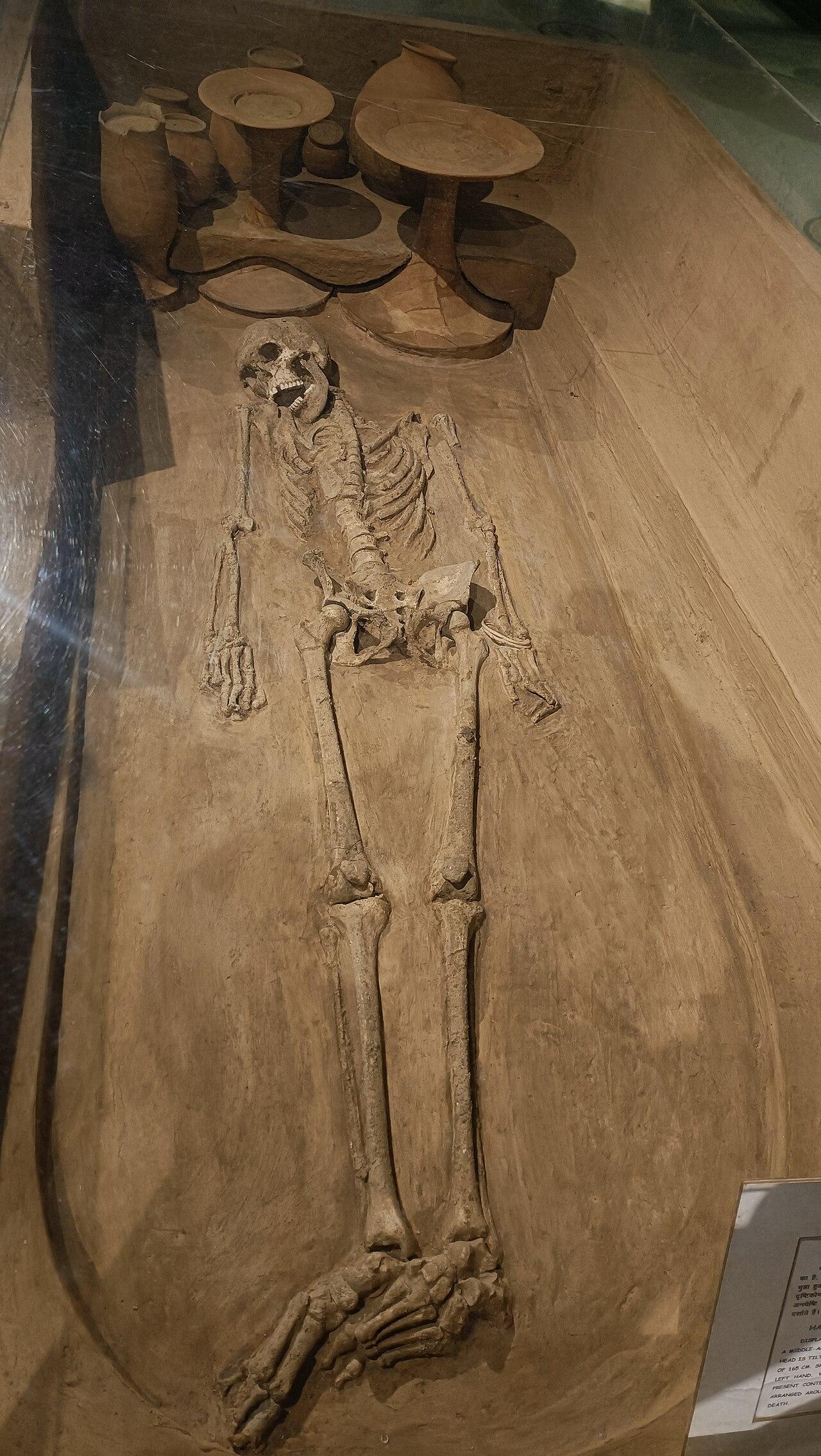
Rakhigarhi
One of the largest Harappan settlements, in the Ghaggar basin of Haryana. Its cemetery produced the first published ancient genome from an Indus-associated individual.
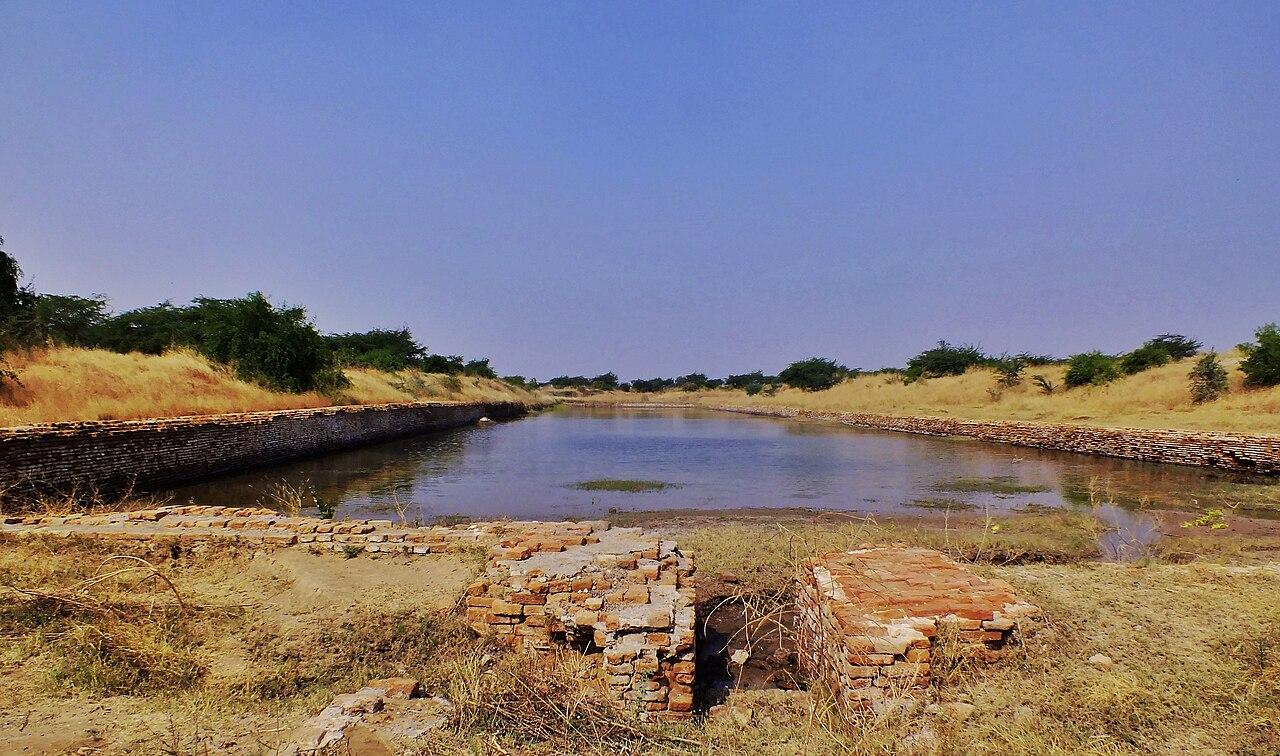
Lothal
A small Harappan town near the Gulf of Khambhat with a bead-making quarter and a large brick basin interpreted by its excavator as a dockyard.
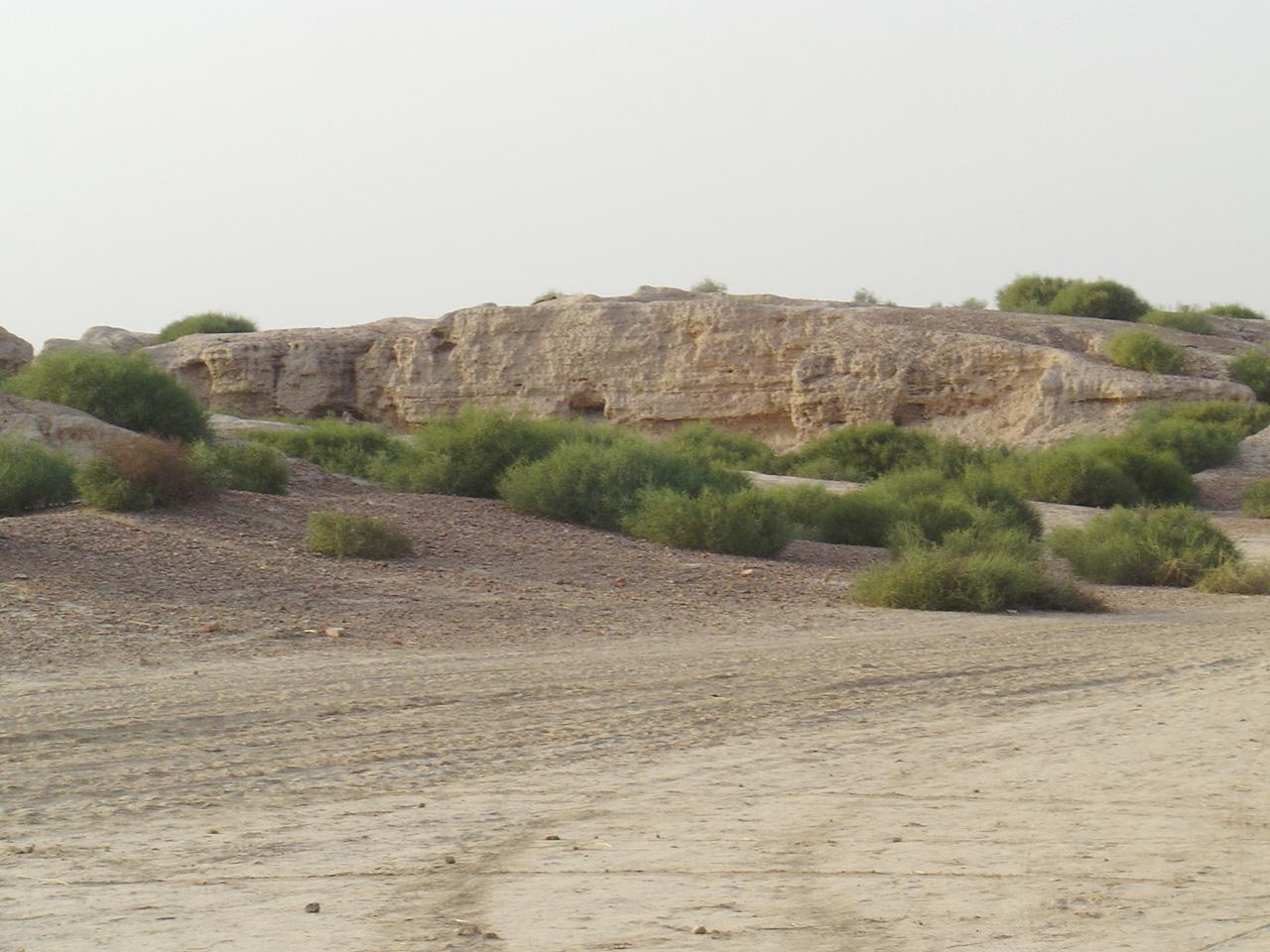
Kalibangan
A Harappan town on the dry bed of the Ghaggar with an Early Harappan settlement beneath it, including a ploughed field surface.
Shortughai
A Harappan settlement far to the north, near the Amu Darya — usually interpreted as a trading outpost linked to lapis lazuli sources in Badakhshan.
Indus script
Short sequences of signs on seals, tablets and pottery from the Indus civilisation. Undeciphered.
Sources & Further Reading
Sources & further reading
- bookPossehl, G. L. (2002). The Indus Civilization: A Contemporary Perspective. AltaMira Press.
- bookKenoyer, J. M. (1998). Ancient Cities of the Indus Valley Civilization. Oxford University Press.
- bookWright, R. P. (2010). The Ancient Indus: Urbanism, Economy, and Society. Cambridge University Press.
- bookConingham, R. & Young, R. (2015). The Archaeology of South Asia: From the Indus to Asoka, c. 6500 BCE–200 CE. Cambridge University Press.
- bookParpola, A. (1994). Deciphering the Indus Script. Cambridge University Press.
- journal articleFarmer, S., Sproat, R. & Witzel, M. (2004). The Collapse of the Indus-Script Thesis: The Myth of a Literate Harappan Civilization. Electronic Journal of Vedic Studies 11(2): 19–57.
- journal articleRao, R. P. N. et al. (2009). Entropic evidence for linguistic structure in the Indus script. Science 324(5931): 1165. doi:10.1126/science.1170391
- journal articleShinde, V. et al. (2019). An Ancient Harappan Genome Lacks Ancestry from Steppe Pastoralists or Iranian Farmers. Cell 179(3): 729–735. doi:10.1016/j.cell.2019.08.048
- journal articleNarasimhan, V. M. et al. (2019). The formation of human populations in South and Central Asia. Science 365(6457): eaat7487. doi:10.1126/science.aat7487
- journal articleDixit, Y., Hodell, D. A. & Petrie, C. A. (2014). Abrupt weakening of the summer monsoon in northwest India ~4100 yr ago. Geology 42(4): 339–342. doi:10.1130/G35236.1
- journal articleGiosan, L. et al. (2012). Fluvial landscapes of the Harappan civilization. Proceedings of the National Academy of Sciences 109(26): E1688–E1694. doi:10.1073/pnas.1112743109
- journal articleSingh, A. et al. (2017). Counter-intuitive influence of Himalayan river morphodynamics on Indus Civilisation urban settlements. Nature Communications 8: 1617. doi:10.1038/s41467-017-01643-9