Archaeological site
Mohenjo-daro
Also: Moenjodaro · Mohenjodaro · Mound of the Dead
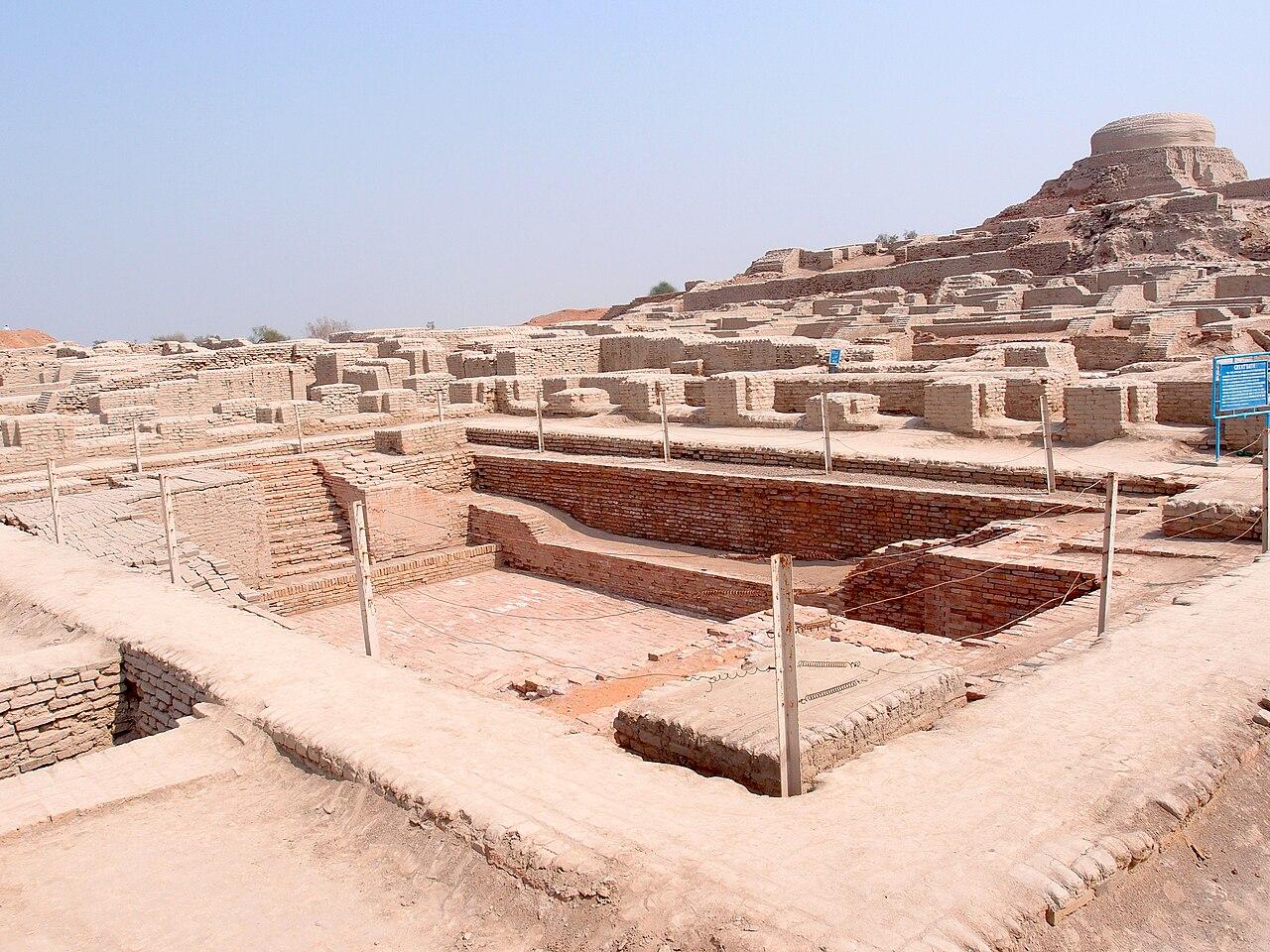
The largest excavated Indus city, laid out on a citadel mound and a lower town with baked-brick houses, wells, covered drains and the Great Bath.
The Map Check
Location and neighbouring sites
From the Trenches
Excavation history
1922–1931
John Marshall, E. J. H. Mackay and others
Archaeological Survey of India
1950
R. E. M. Wheeler
Department of Archaeology, Pakistan
1964–1965
G. F. Dales
University of Pennsylvania Museum
Important findings
- The Great Bath
- Grid-like street plan with house drains connected to street drains
- Hundreds of wells
- Steatite seals with Indus signs
- The 'Priest-King' sculpture and the bronze 'Dancing Girl'
From the Trenches
A planned city
Well supportedWhat does the archaeological evidence reveal?
Mohenjo-daro's streets run broadly north–south and east–west, and many houses discharged waste water through brick-lined drains into covered street drains. The scale of this infrastructure implies coordinated planning and maintenance, though not necessarily a single ruler.
The Great Bath is a watertight brick tank sealed with bitumen. Its ritual function is a widely held interpretation rather than a demonstrated fact.
SourcesMarshall 1931; Kenoyer 1998
What We Still Don't Know
What we still don't know
DebatedUnresolved questions and competing interpretations
How Mohenjo-daro was governed is unknown. No palaces, royal tombs or monumental depictions of rulers have been identified, which has led scholars to propose models ranging from city-state elites to councils of lineages.
SourcesPossehl 2002; Wright 2010
Artefacts
Finds from this site
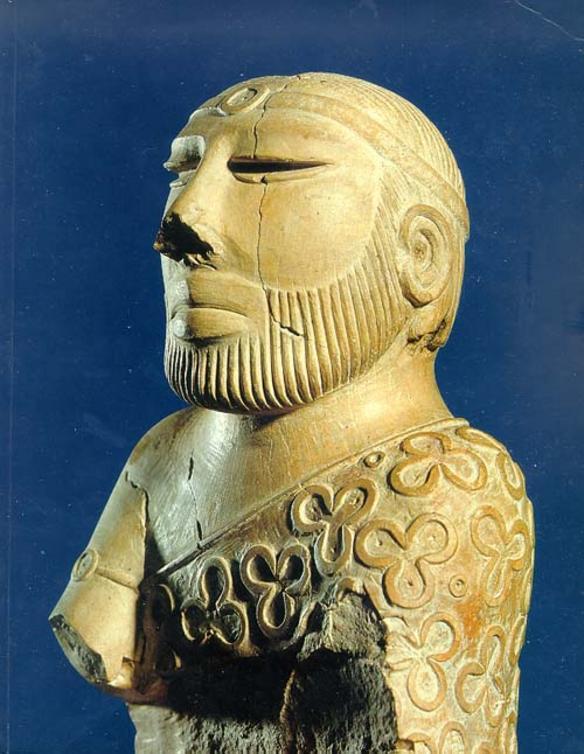
'Priest-King' sculpture
A bearded male figure in steatite wearing a trefoil-patterned robe, the best-known stone sculpture from the Indus civilisation.
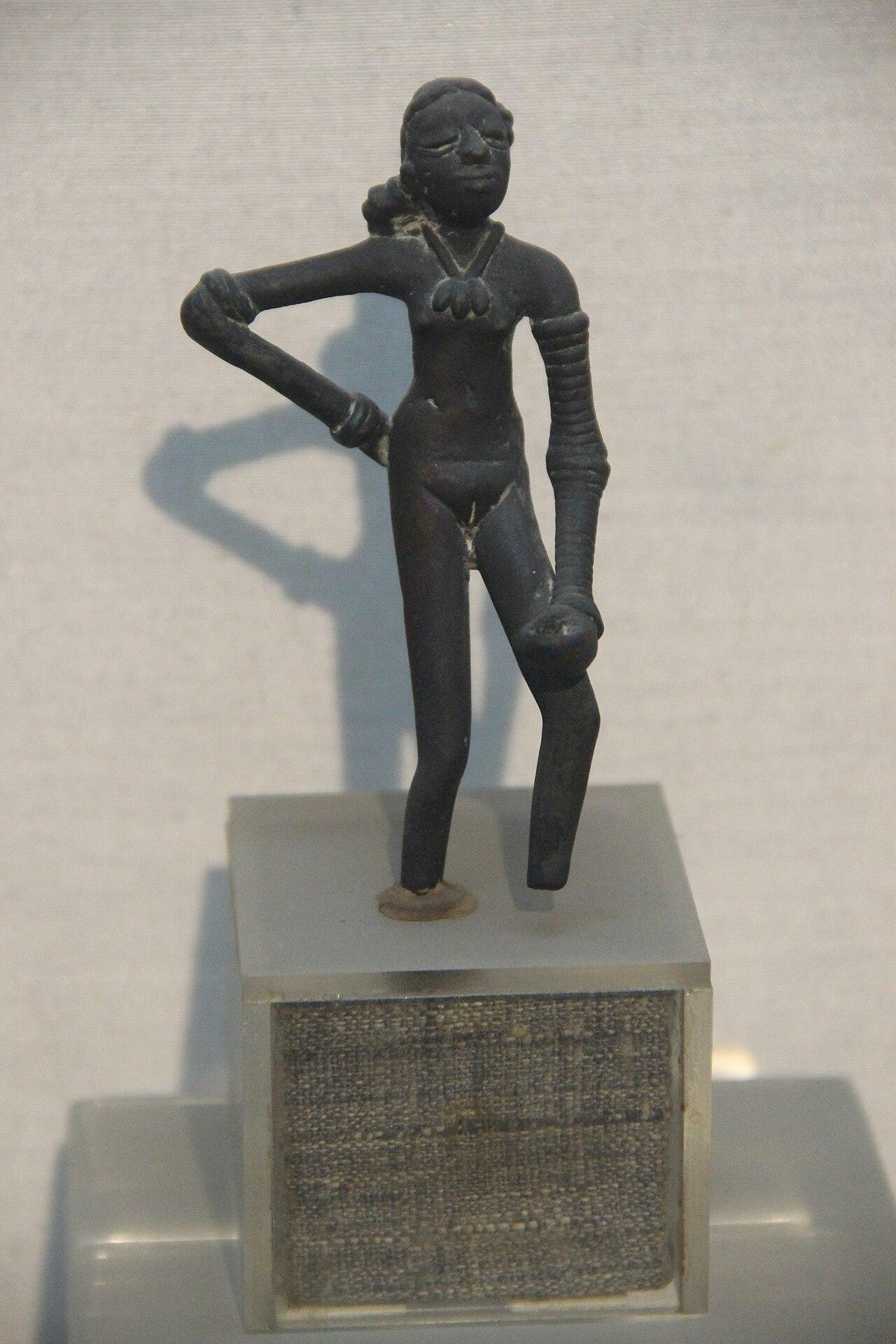
Bronze 'Dancing Girl'
A small cast copper-alloy figurine of a standing young woman with bangles covering one arm.
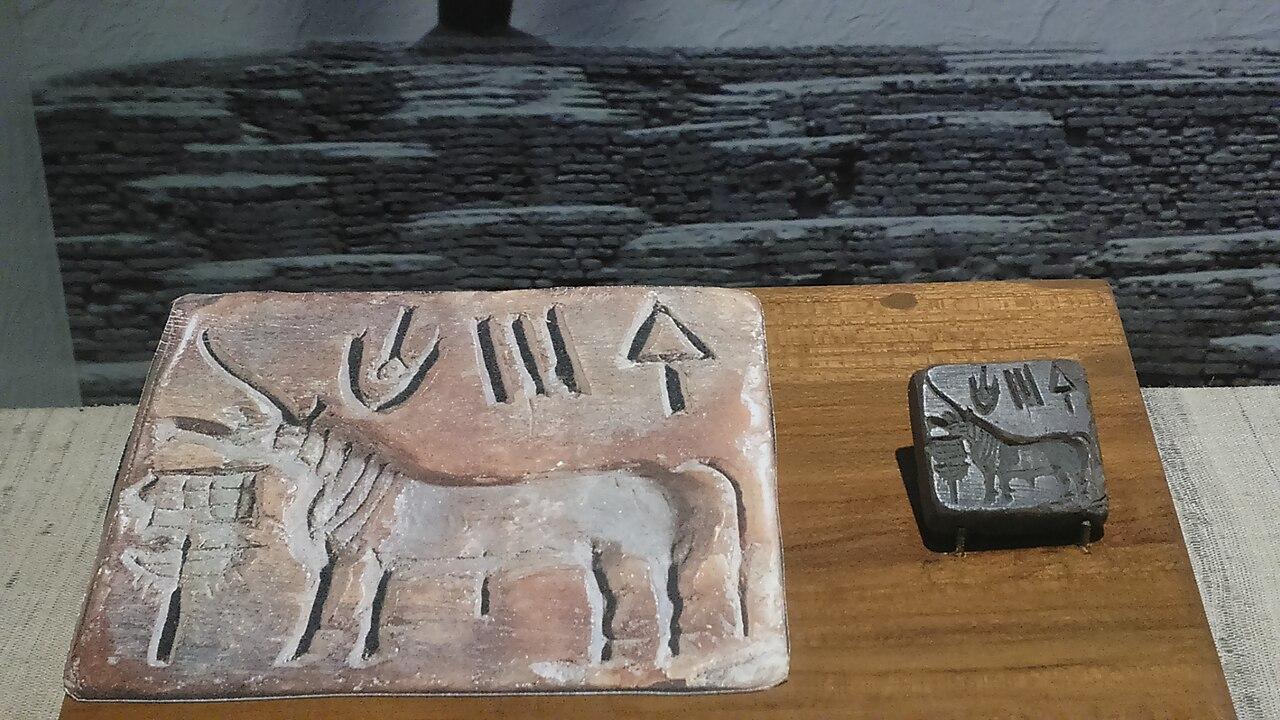
Indus 'unicorn' seal
Square steatite stamp seals showing a single-horned bovine before a stand, with a line of Indus signs above. The unicorn is the most common motif on Indus seals.
Connected to Mohenjo-daro
Connected to this site
Indus Valley Civilisation
A Bronze Age urban tradition spanning more than a million square kilometres, known for planned cities, standardised weights, craft specialisation and an undeciphered script.
Rakhal Das Banerji
Archaeologist who began excavations at Mohenjo-daro in 1922.
John Marshall
Director-General of the Archaeological Survey of India (1902–1928) who announced the discovery of the Indus civilisation in 1924.
'Priest-King' sculpture
A bearded male figure in steatite wearing a trefoil-patterned robe, the best-known stone sculpture from the Indus civilisation.
Bronze 'Dancing Girl'
A small cast copper-alloy figurine of a standing young woman with bangles covering one arm.
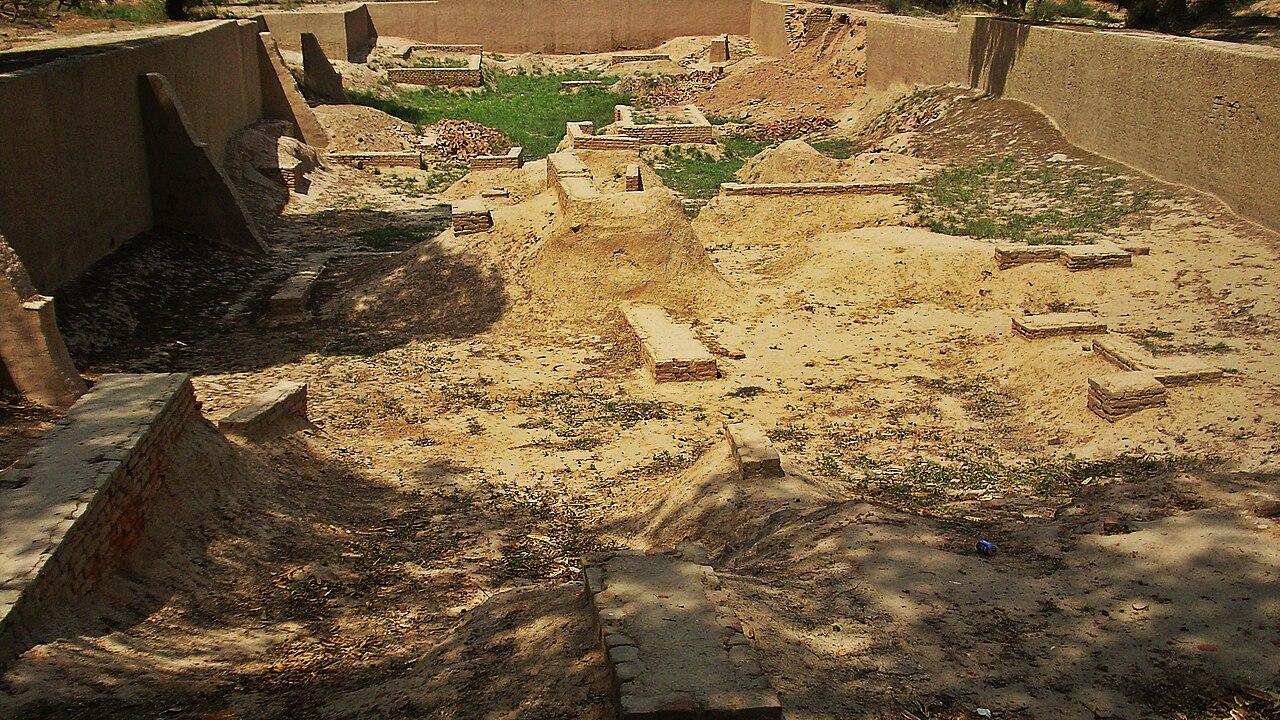
Harappa
The first Indus city to be excavated, giving its name to the Harappan civilisation. A long occupation sequence from the Ravi phase to the Late Harappan period.
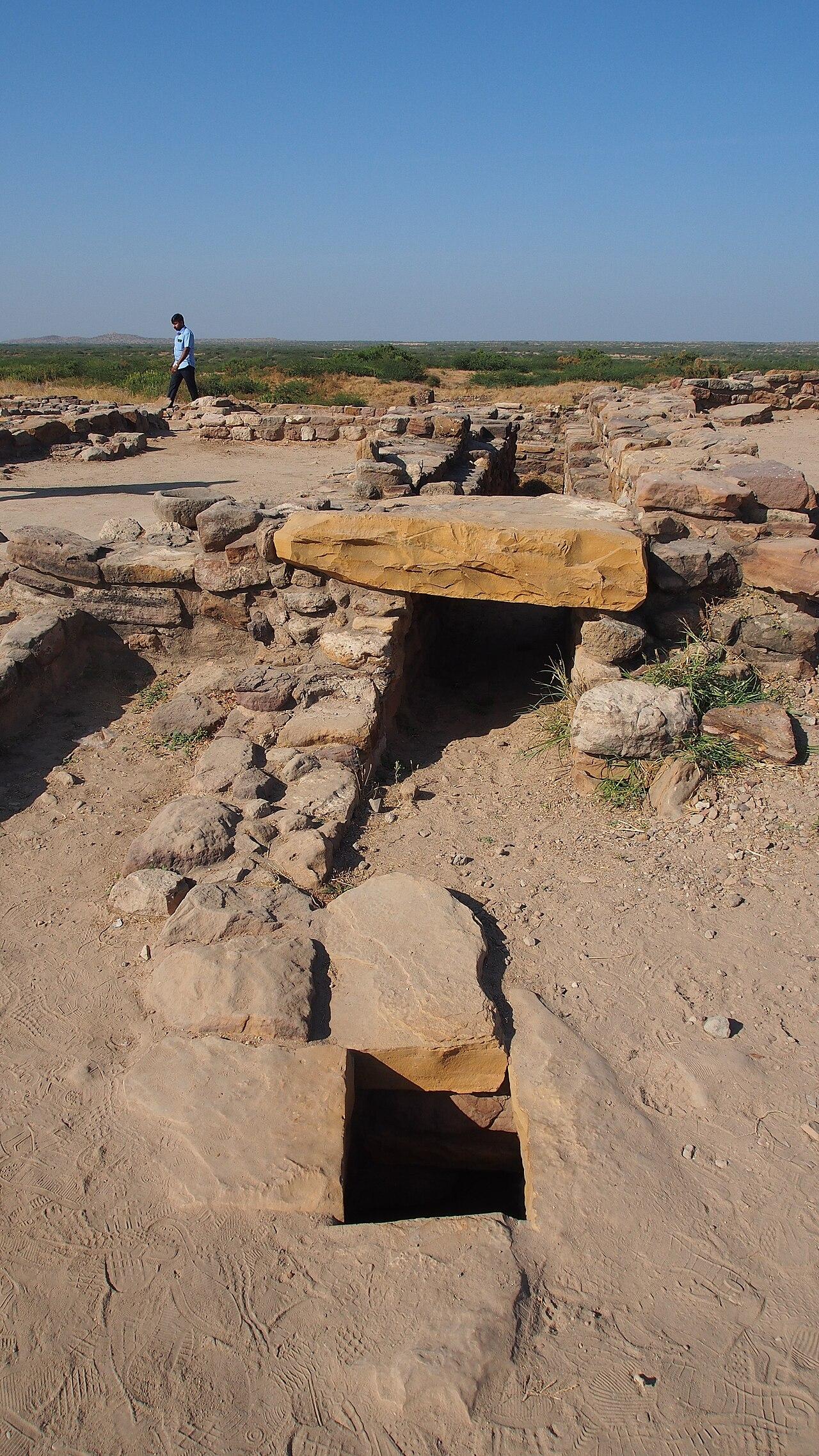
The Water Engineers of the Indus
Drains, wells and reservoirs at Mohenjo-daro and Dholavira, and what they reveal about Indus urban life.
Rise of Indus cities
Regional Early Harappan traditions converge into the Mature Harappan urban phase.
Sources & Further Reading
Sources & further reading
- excavation reportMarshall, J. (ed.) (1931). Mohenjo-daro and the Indus Civilization. Arthur Probsthain.
- unescoUNESCO World Heritage Centre (1980). Archaeological Ruins at Moenjodaro (List no. 138). whc.unesco.org/en/list/138
- bookKenoyer, J. M. (1998). Ancient Cities of the Indus Valley Civilization. Oxford University Press.
- bookPossehl, G. L. (2002). The Indus Civilization: A Contemporary Perspective. AltaMira Press.
- bookWright, R. P. (2010). The Ancient Indus: Urbanism, Economy, and Society. Cambridge University Press.