Ancient Technology · Archaeology
The Water Engineers of the Indus
Four and a half thousand years ago, Indus cities built drains, wells and reservoirs on a scale unmatched in the Bronze Age. What does the evidence actually show about how they managed water?
- Period
- c. 2600 – 1900 BCE(Approximate)
- Location
- ◇ Sindh, Punjab and Gujarat
- Reading time
- 9 min read
- Author
- Indophile Editorial
- Evidence
- Well supported
A civilisation of water
EstablishedWalk through the excavated streets of Mohenjo-daro and the most striking feature is not a palace or a temple — none has been identified — but plumbing. Bathing platforms inside houses drained through the walls into brick-lined channels, which joined covered drains running along the streets.
Mohenjo-daro had hundreds of wells, many of them lined with wedge-shaped bricks designed to resist the pressure of the surrounding soil. Easy access to water seems to have been part of ordinary domestic life, not a privilege of a few.
SourcesMarshall 1931; Kenoyer 1998
The Map Check
The map check
Well supportedWhere did this happen?
The major Indus cities sat in very different hydrological settings: Mohenjo-daro and Harappa on perennial rivers, Kalibangan and Rakhigarhi in the Ghaggar basin, Dholavira on an island in the seasonally flooded Rann of Kutch. Each faced its own water problem.
Select a site to open its record.
SourcesGiosan et al. 2012
From the Trenches
From the trenches: Dholavira's reservoirs
EstablishedWhat does the archaeological evidence reveal?
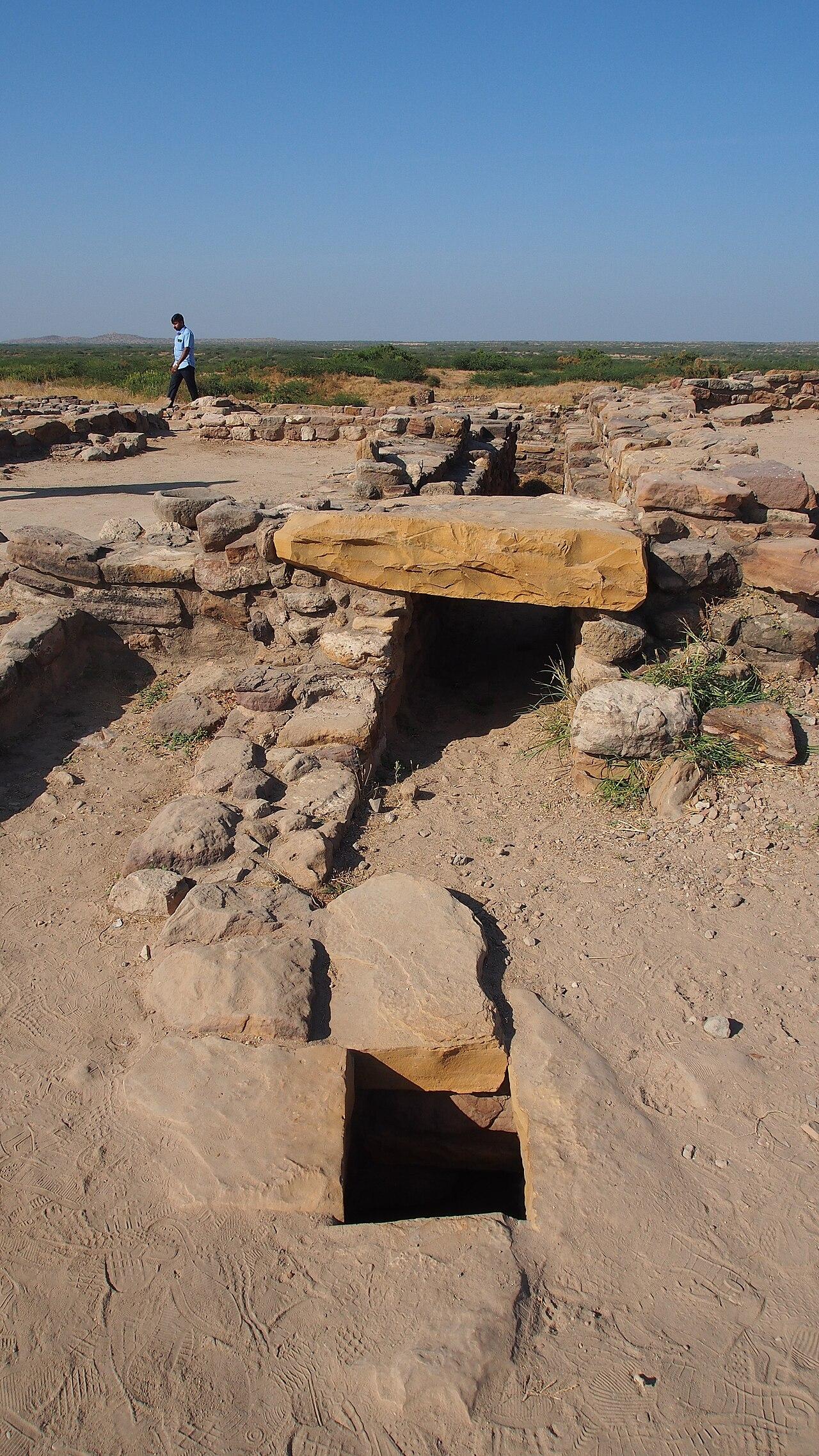
If Mohenjo-daro's challenge was managing abundant water, Dholavira's was capturing scarce rain. Excavations under R. S. Bisht revealed a series of large reservoirs, some cut into bedrock, fed by channels from two seasonal streams that flanked the city.
UNESCO's inscription of the site in 2021 singled out this system as an exceptional example of Harappan water management.
The Historical Record
Who maintained it?
Well supportedInscriptions, texts, coins and other primary sources
Drains clog. Somebody had to clean them, and periodic re-laying of drains at higher levels as streets built up is visible in the excavated sequences. This implies some form of shared urban management.
It does not, however, tell us what kind of authority organised it. In the absence of texts, inferences about rulers or civic councils remain inferences.
SourcesKenoyer 1998; Wright 2010
What We Still Don't Know
What we still don't know
DebatedUnresolved questions and competing interpretations
Whether the Great Bath served ritual purposes, as is widely assumed; whether Lothal's basin was a dock or a reservoir; and how water management changed as the climate shifted around 2000 BCE are all open questions.
SourcesRao 1979; Dixit et al. 2014
Archaeological evidence
Sites, artefacts and events in this story
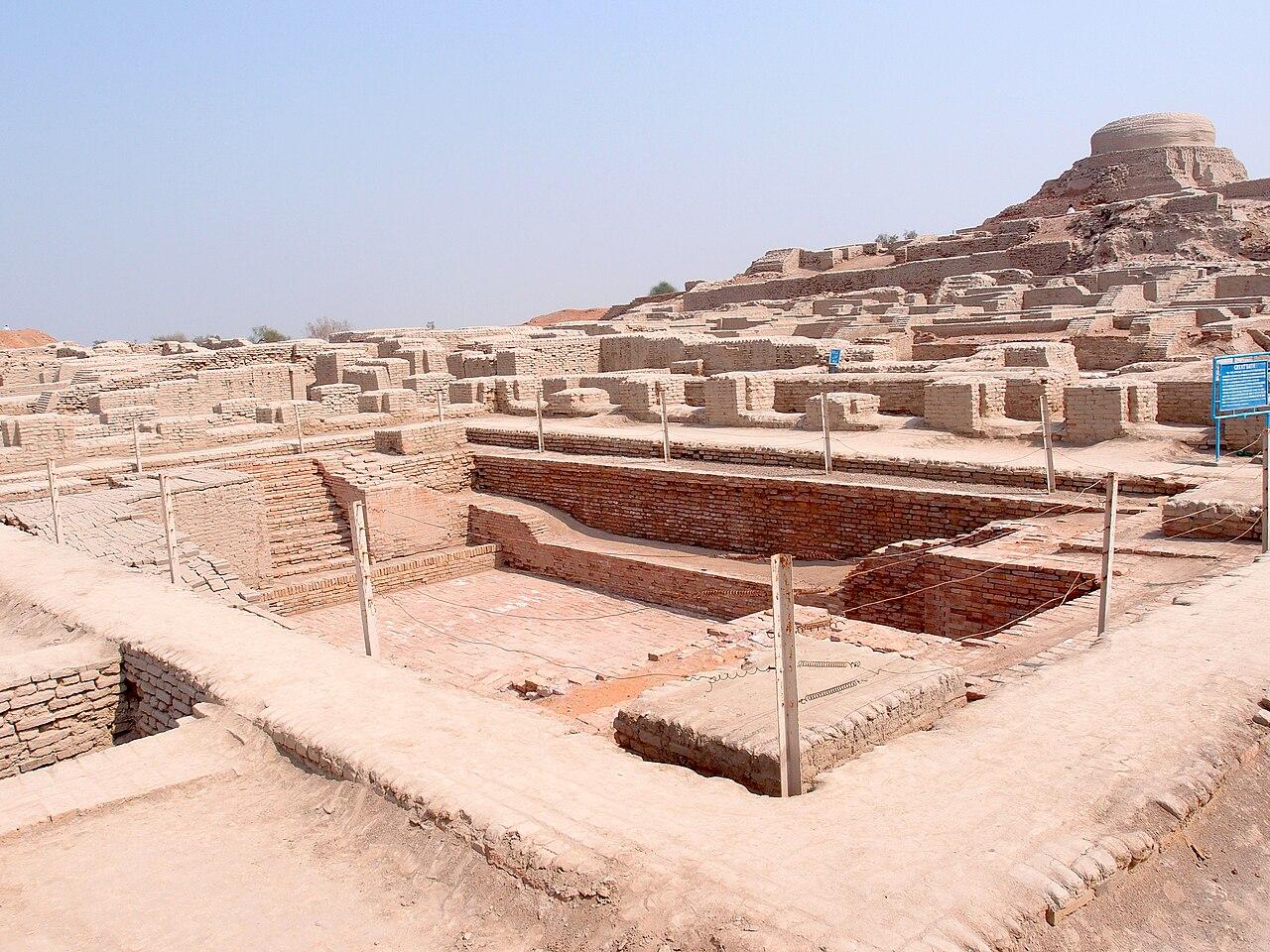
Mohenjo-daro
The largest excavated Indus city, laid out on a citadel mound and a lower town with baked-brick houses, wells, covered drains and the Great Bath.
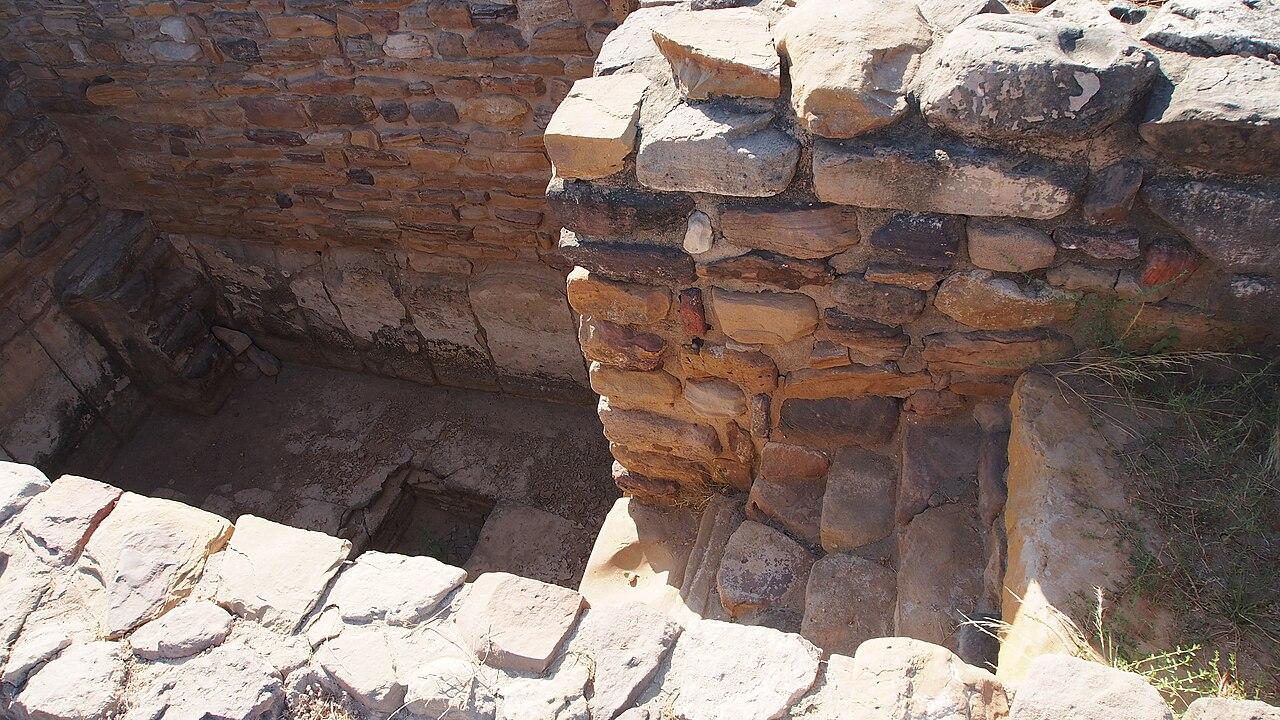
Dholavira
A walled Harappan city on Khadir Bet in the Rann of Kutch, notable for its stone architecture and a sophisticated system of reservoirs for capturing seasonal water.
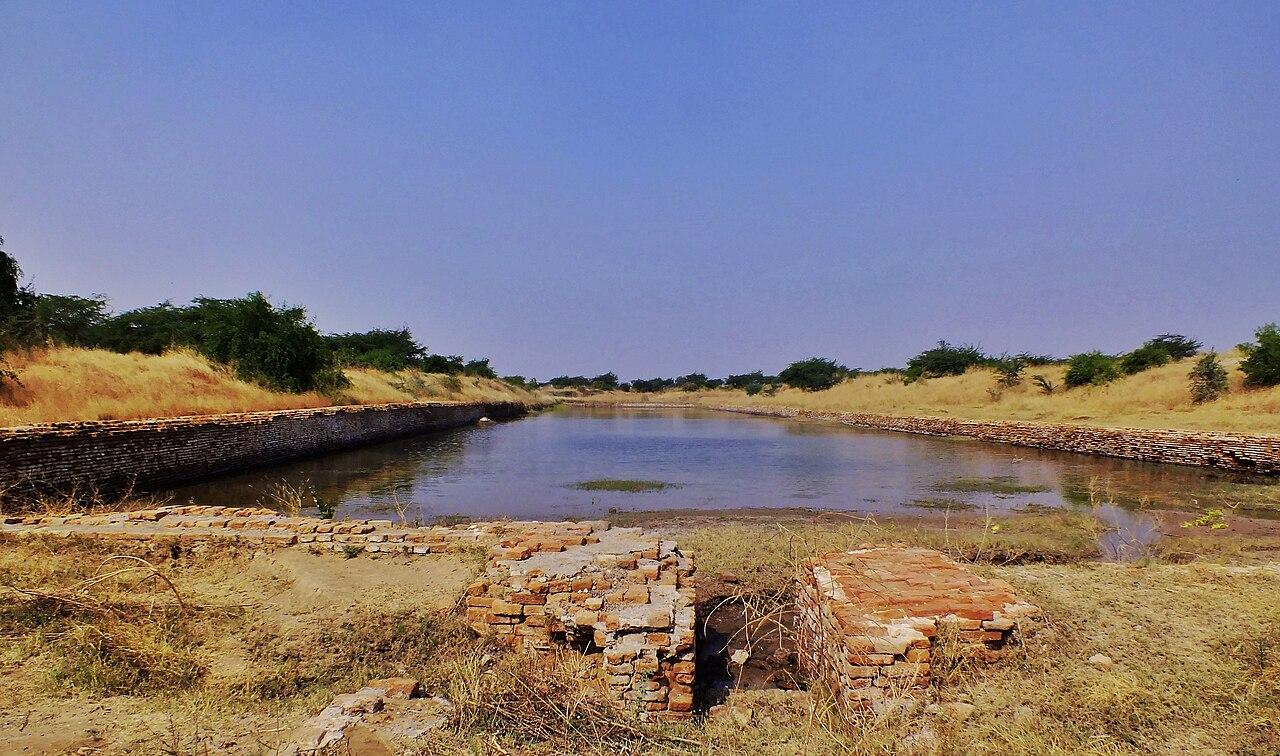
Lothal
A small Harappan town near the Gulf of Khambhat with a bead-making quarter and a large brick basin interpreted by its excavator as a dockyard.
Sources & Further Reading
Sources & further reading
- excavation reportMarshall, J. (ed.) (1931). Mohenjo-daro and the Indus Civilization. Arthur Probsthain.
- bookKenoyer, J. M. (1998). Ancient Cities of the Indus Valley Civilization. Oxford University Press.
- unescoUNESCO World Heritage Centre (2021). Dholavira: a Harappan City (List no. 1645). whc.unesco.org/en/list/1645
- bookPossehl, G. L. (2002). The Indus Civilization: A Contemporary Perspective. AltaMira Press.
- journal articleGiosan, L. et al. (2012). Fluvial landscapes of the Harappan civilization. Proceedings of the National Academy of Sciences 109(26): E1688–E1694. doi:10.1073/pnas.1112743109
- bookWright, R. P. (2010). The Ancient Indus: Urbanism, Economy, and Society. Cambridge University Press.
- excavation reportRao, S. R. (1979). Lothal: A Harappan Port Town (1955–62), Vol. I. Memoirs of the Archaeological Survey of India 78. Archaeological Survey of India.
- journal articleDixit, Y., Hodell, D. A. & Petrie, C. A. (2014). Abrupt weakening of the summer monsoon in northwest India ~4100 yr ago. Geology 42(4): 339–342. doi:10.1130/G35236.1
Keep reading
Related articles
Reading Ashoka
Ashoka's edicts as historical sources: their distribution, languages, decipherment and limits.
One Genome from Rakhigarhi: What It Can and Cannot Tell Us
A careful reading of the Rakhigarhi genome and the Indus Periphery Cline.
Rome on the Coromandel Coast
Evidence for Indo-Roman trade from archaeology, texts and coins.