Artefact
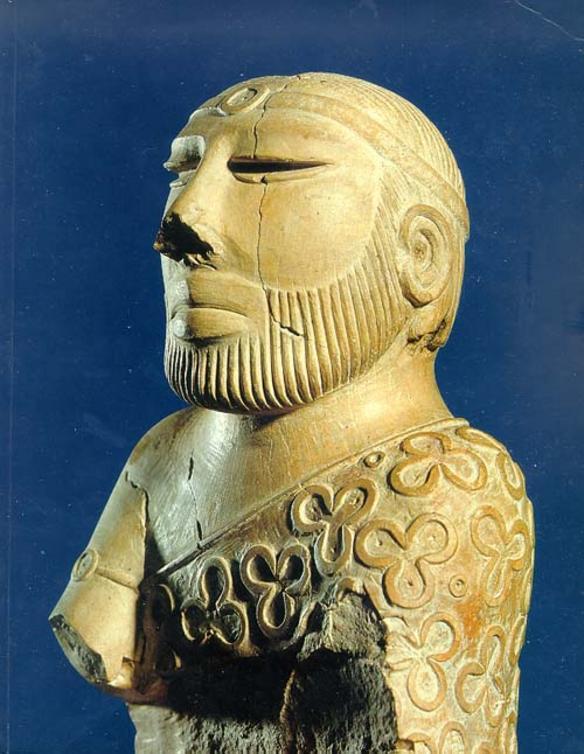
'Priest-King' sculpture
A bearded male figure in steatite wearing a trefoil-patterned robe, the best-known stone sculpture from the Indus civilisation.
Historical interpretation
What the object tells us — and what it doesn't
The name 'Priest-King' was coined by early excavators. There is no evidence that the figure represents either a priest or a king.
The drilled holes and fillet around the head suggest attached ornaments. The trefoil motif also appears on other Indus objects and in Mesopotamia.
Connected to 'Priest-King' sculpture
Continue exploring
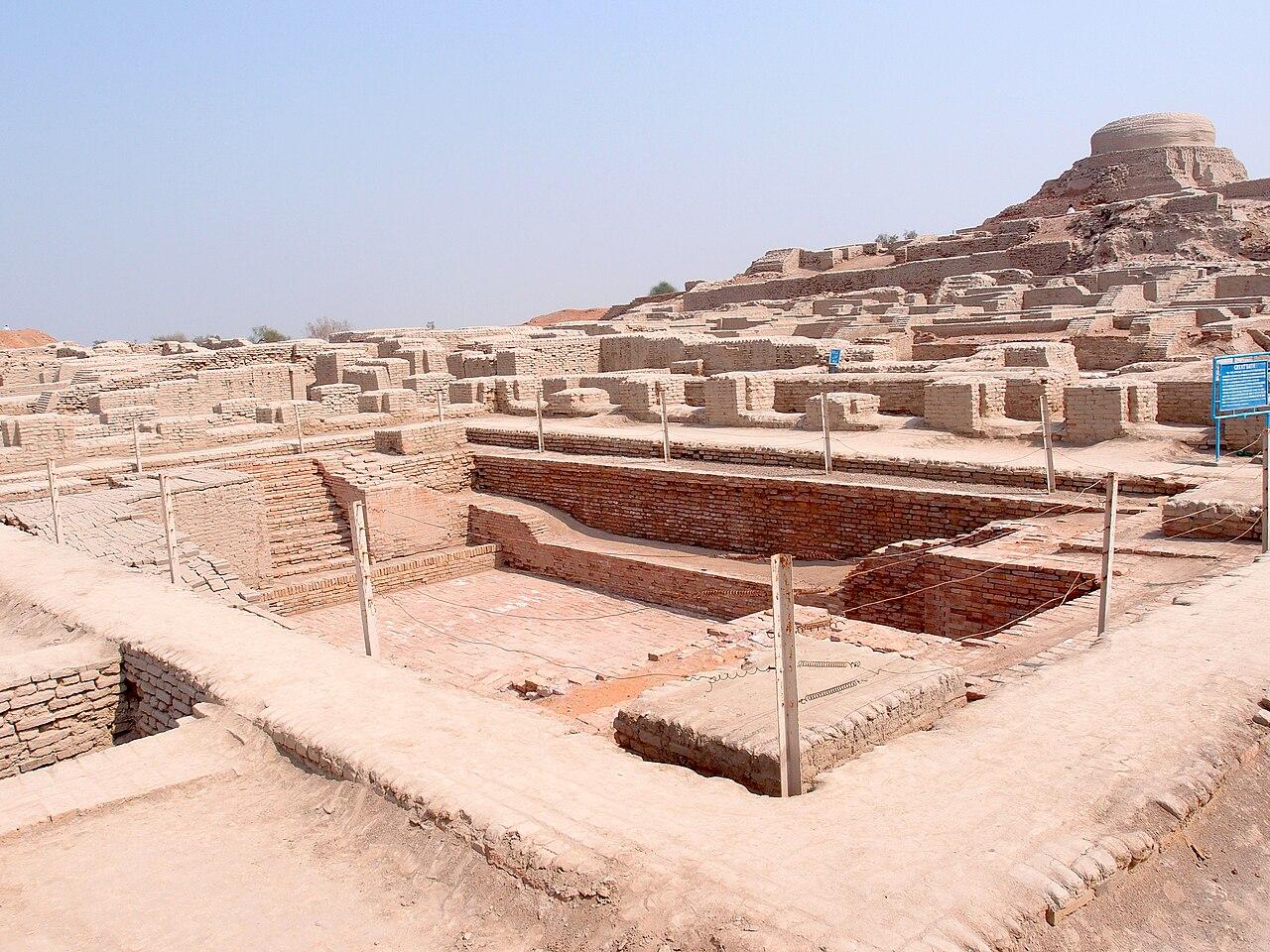
Mohenjo-daro
The largest excavated Indus city, laid out on a citadel mound and a lower town with baked-brick houses, wells, covered drains and the Great Bath.
Indus Valley Civilisation
A Bronze Age urban tradition spanning more than a million square kilometres, known for planned cities, standardised weights, craft specialisation and an undeciphered script.
Sources & Further Reading
Sources & further reading
- excavation reportMarshall, J. (ed.) (1931). Mohenjo-daro and the Indus Civilization. Arthur Probsthain.
- bookKenoyer, J. M. (1998). Ancient Cities of the Indus Valley Civilization. Oxford University Press.