Artefact
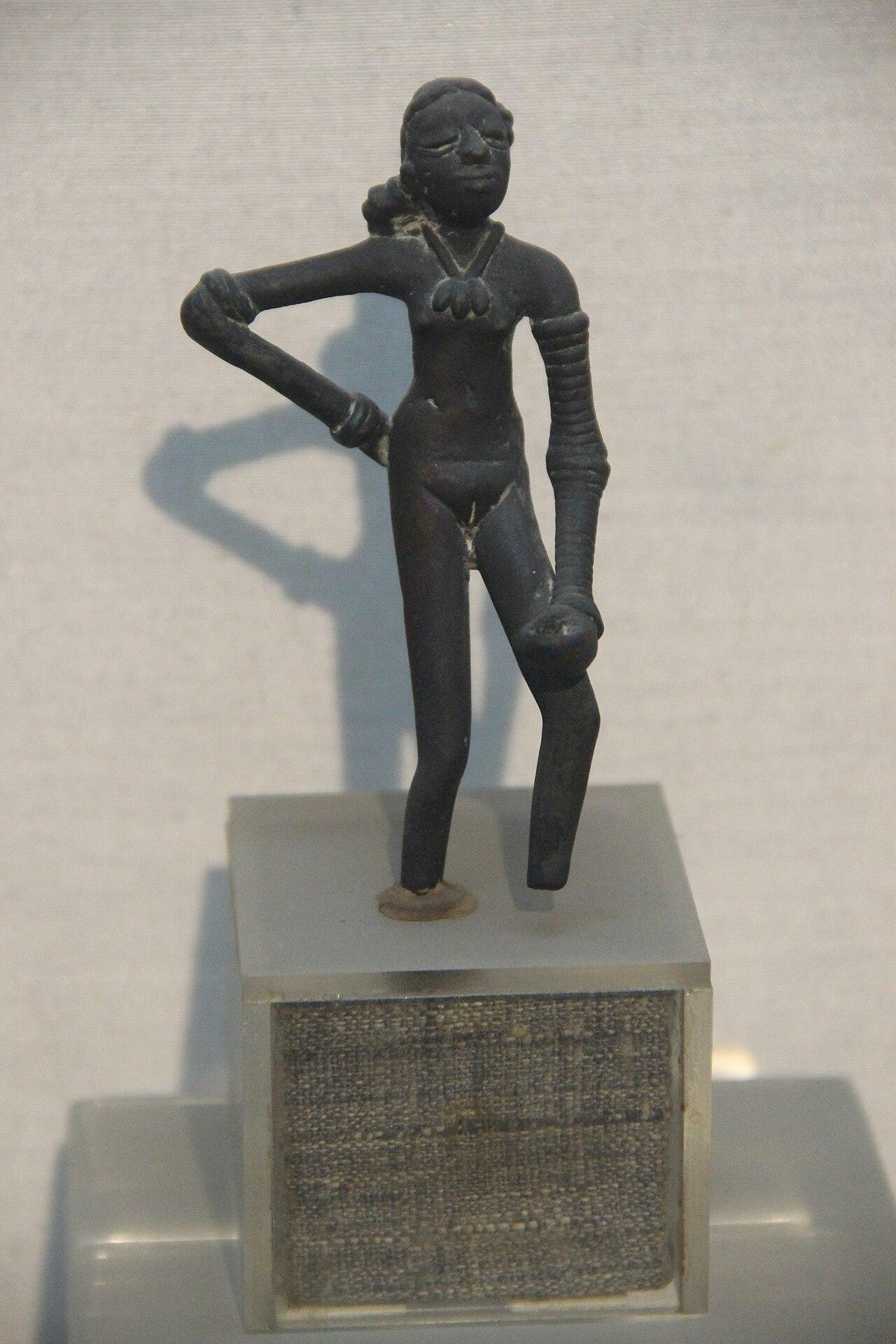
Bronze 'Dancing Girl'
A small cast copper-alloy figurine of a standing young woman with bangles covering one arm.
Historical interpretation
What the object tells us — and what it doesn't
Whether the figure depicts a dancer is unknown; the name is modern. It is important as evidence of lost-wax casting in the Indus world.
Connected to Bronze 'Dancing Girl'
Continue exploring
Site
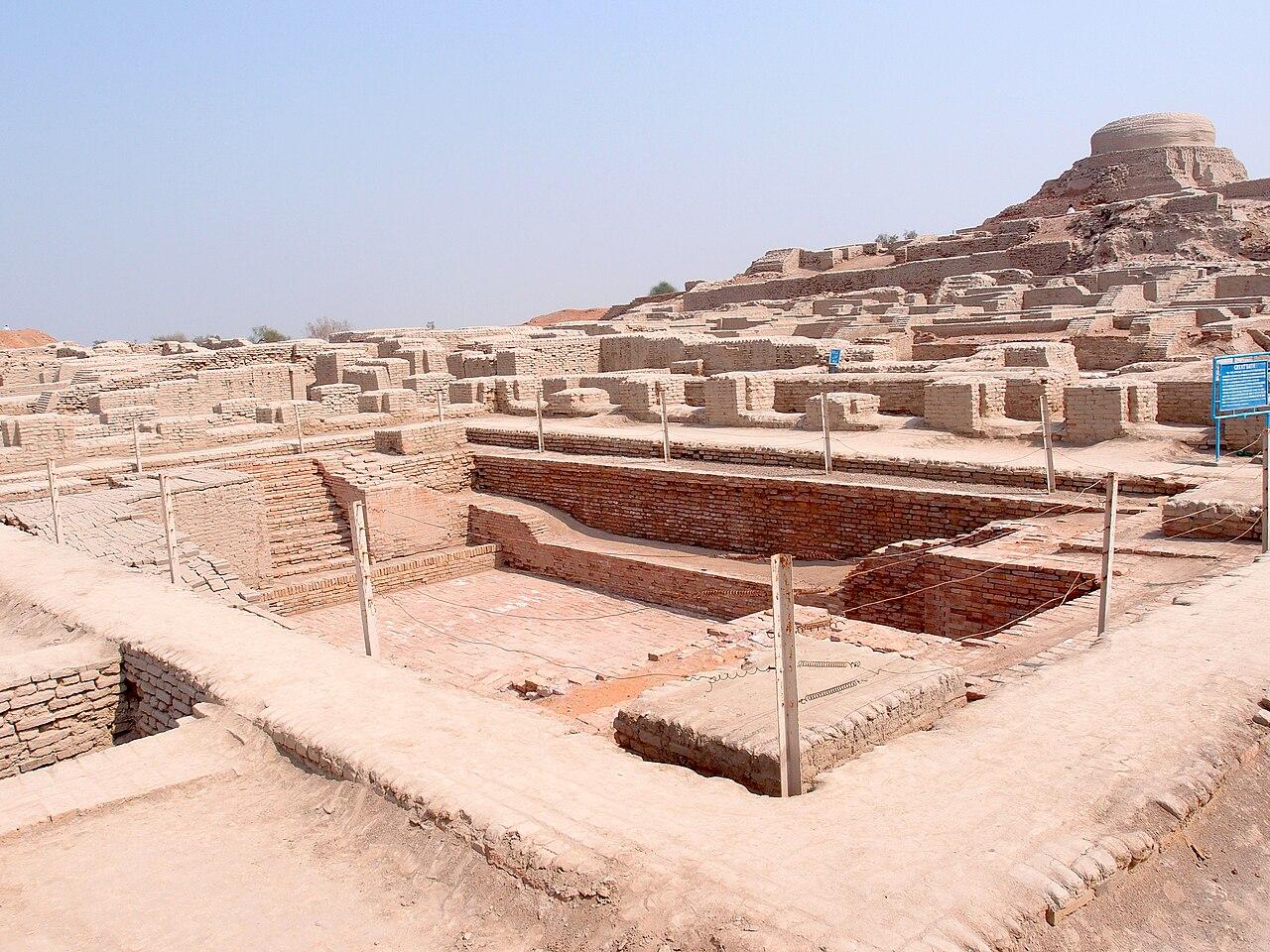
Mohenjo-daro
The largest excavated Indus city, laid out on a citadel mound and a lower town with baked-brick houses, wells, covered drains and the Great Bath.
c. 2600 – 1900 BCE(Approximate)
Polity
Indus Valley Civilisation
A Bronze Age urban tradition spanning more than a million square kilometres, known for planned cities, standardised weights, craft specialisation and an undeciphered script.
c. 3300 – 1300 BCE(Approximate)
Sources & Further Reading
Sources & further reading
- excavation reportMarshall, J. (ed.) (1931). Mohenjo-daro and the Indus Civilization. Arthur Probsthain.
- bookKenoyer, J. M. (1998). Ancient Cities of the Indus Valley Civilization. Oxford University Press.