Archaeological site
Rakhigarhi
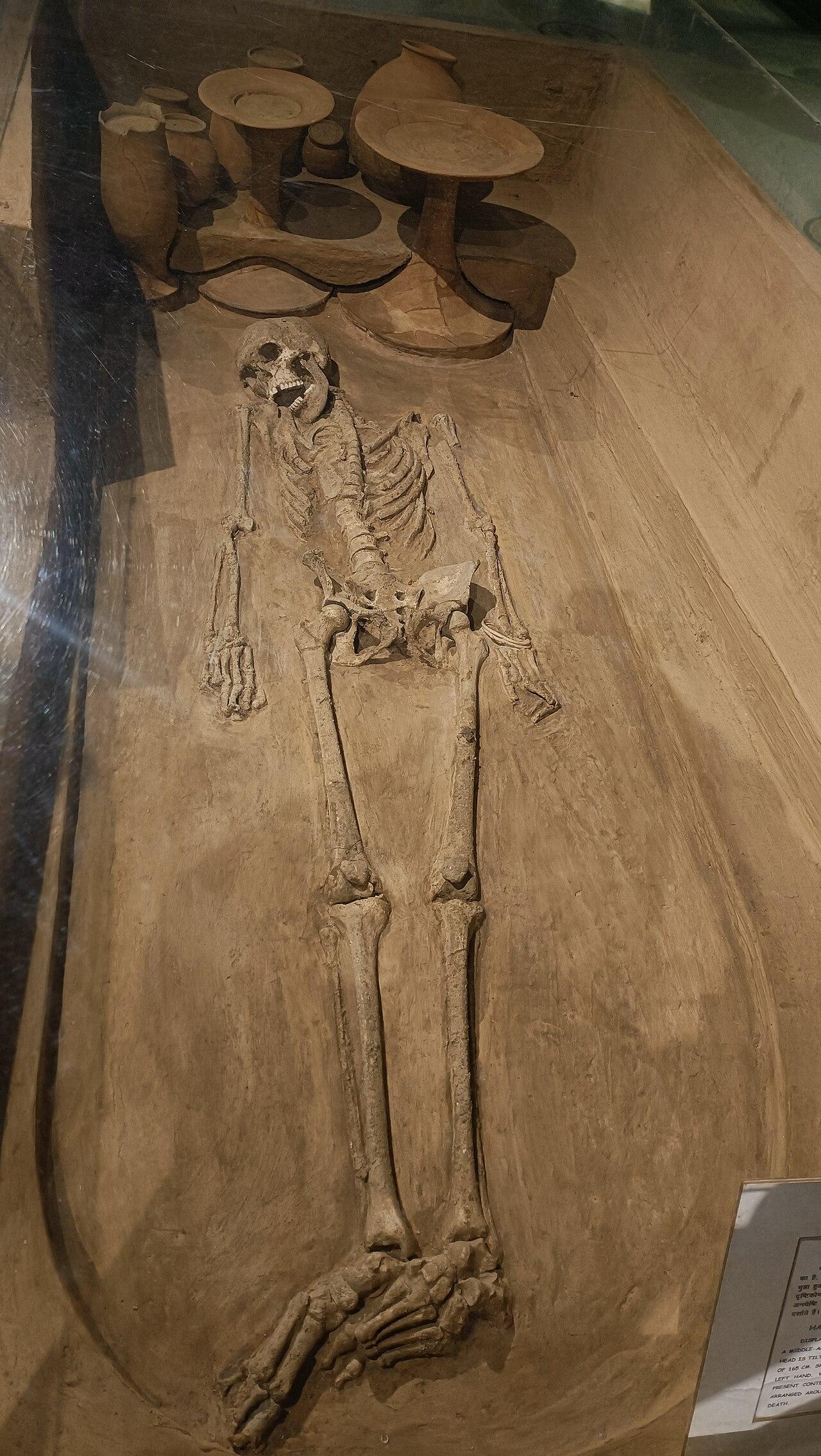
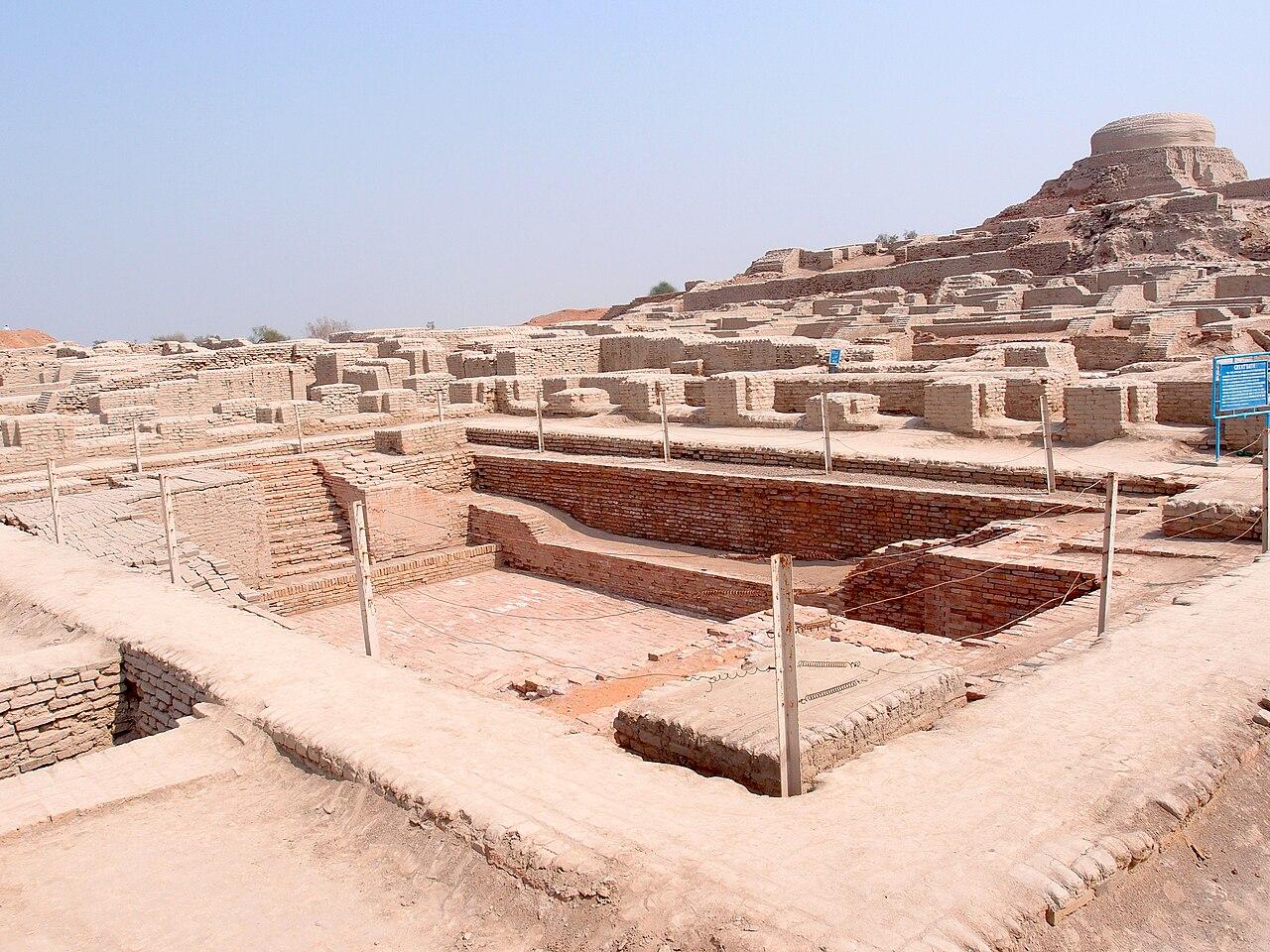
One of the largest Harappan settlements, in the Ghaggar basin of Haryana. Its cemetery produced the first published ancient genome from an Indus-associated individual.
The Map Check
Location and neighbouring sites
From the Trenches
Excavation history
1997–2000
Amarendra Nath
Archaeological Survey of India
2011–2016
Vasant Shinde
Deccan College Post-Graduate and Research Institute
Important findings
- Several mounds forming a large urban complex
- A Mature Harappan cemetery with extended burials
- Craft areas and drains
Connected to Rakhigarhi
Connected to this site
Indus Valley Civilisation
A Bronze Age urban tradition spanning more than a million square kilometres, known for planned cities, standardised weights, craft specialisation and an undeciphered script.
An Ancient Harappan Genome Lacks Ancestry from Steppe Pastoralists or Iranian Farmers
The first published genome from an individual buried in an Indus civilisation cemetery.
One Genome from Rakhigarhi: What It Can and Cannot Tell Us
A careful reading of the Rakhigarhi genome and the Indus Periphery Cline.
First ancient genome from an Indus-associated individual
Shinde et al. publish a genome from the Rakhigarhi cemetery.
Sources & Further Reading
Sources & further reading
- journal articleShinde, V. et al. (2019). An Ancient Harappan Genome Lacks Ancestry from Steppe Pastoralists or Iranian Farmers. Cell 179(3): 729–735. doi:10.1016/j.cell.2019.08.048
- bookConingham, R. & Young, R. (2015). The Archaeology of South Asia: From the Indus to Asoka, c. 6500 BCE–200 CE. Cambridge University Press.