Religious teacher
Siddhartha Gautama, the Buddha
Also: Gautama Buddha · Shakyamuni · Sakyamuni
Founder of Buddhism. Born, according to tradition and Ashoka's Lumbini inscription, at Lumbini; his dates are debated.
Biography
Early Buddhist texts describe his renunciation, enlightenment at Bodh Gaya, first sermon at Sarnath and death at Kushinagar. These texts were transmitted orally and written down centuries later.
Two main chronologies exist: a 'long' chronology placing his death around 544/483 BCE, and a 'short' chronology placing it around 400 BCE. Many historians now favour dates in the 5th century BCE.
The Map Check
Geographic associations
Connected to Siddhartha Gautama, the Buddha
Continue exploring
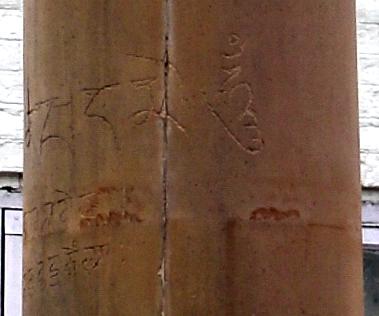
Lumbini
Birthplace of the Buddha in Buddhist tradition. An Ashokan pillar inscription records the emperor's visit and names the village as the Buddha's birthplace.
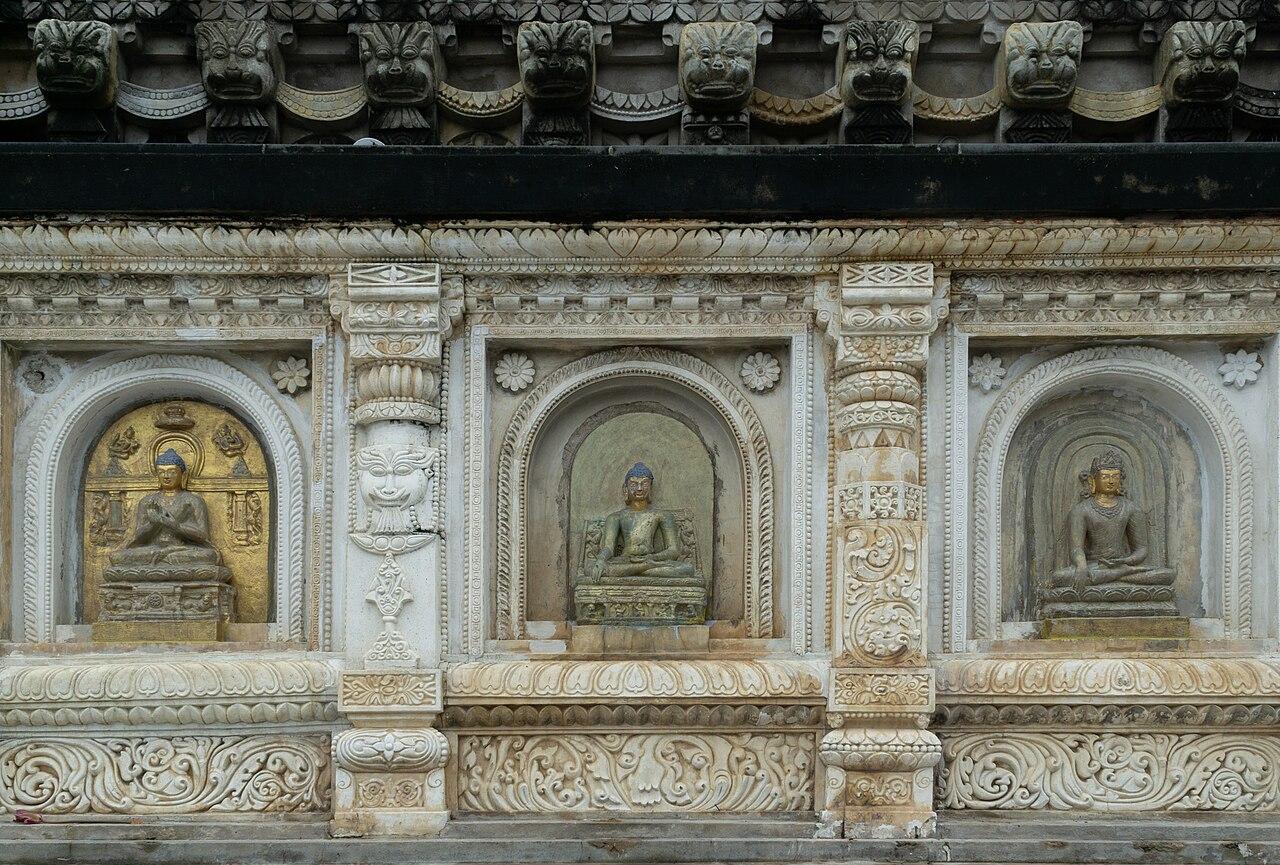
Bodh Gaya
Site of the Buddha's enlightenment in Buddhist tradition. The present brick Mahabodhi Temple dates in its core to the 5th–6th century CE.
Sarnath
The place where, according to Buddhist tradition, the Buddha gave his first sermon. Site of the Ashokan pillar whose capital became India's national emblem.
Rajagriha (Rajgir)
The early capital of Magadha, ringed by hills and a long dry-stone wall, closely associated with the Buddha and Mahavira in early texts.
Shravasti
Capital of Kosala, closely associated with the Buddha in early Buddhist texts.
Vardhamana Mahavira
The 24th tirthankara of the Jain tradition and a contemporary of the Buddha in the middle Ganga valley.
Kosala
A powerful kingdom of the middle Ganga plain in the age of the Buddha, eventually absorbed by Magadha.
Magadha
The kingdom of south Bihar that expanded, through conquest and alliance, to become the core of successive Nanda and Mauryan empires.
Sources & Further Reading
Sources & further reading
- bookSingh, U. (2008). A History of Ancient and Early Medieval India: From the Stone Age to the 12th Century. Pearson Longman.
- inscription corpusHultzsch, E. (1925). Inscriptions of Asoka. Corpus Inscriptionum Indicarum, Vol. I (new edition). Clarendon Press.