Archaeological site
Sarnath
Also: Isipatana · Rishipatana · Deer Park
The place where, according to Buddhist tradition, the Buddha gave his first sermon. Site of the Ashokan pillar whose capital became India's national emblem.
The Map Check
Location and neighbouring sites
From the Trenches
Excavation history
1904–1905
F. O. Oertel
Archaeological Survey of India
Important findings
- Lion Capital of Ashoka (1905)
- Dhamek Stupa
- Gupta-period Buddha sculptures
Artefacts
Finds from this site
Connected to Sarnath
Connected to this site
Ashoka
Mauryan emperor whose inscriptions, issued across the subcontinent, are the earliest substantial body of dated writing from South Asia after the Indus script.
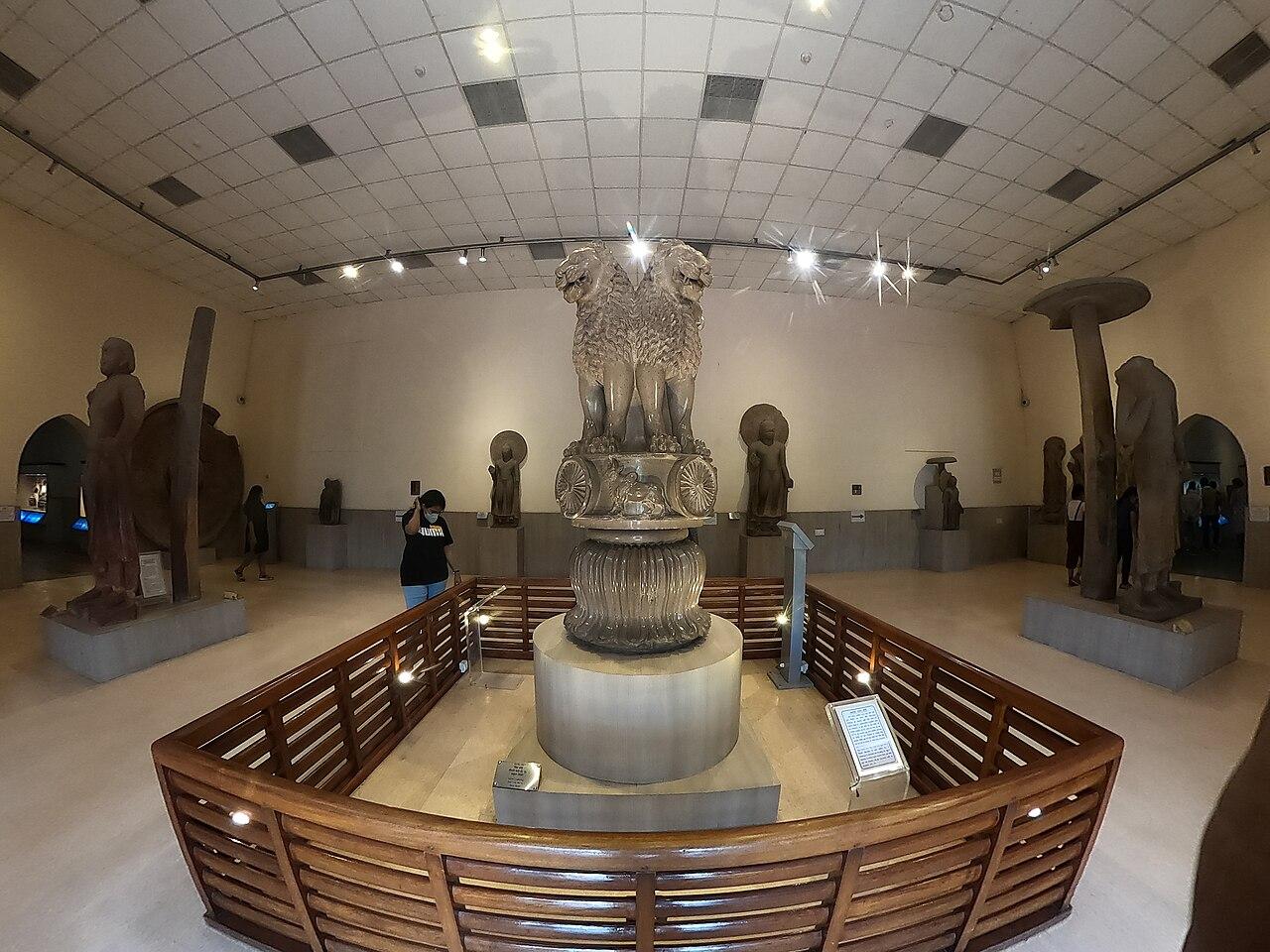
Lion Capital of Ashoka
Four addorsed lions on a drum carved with a horse, bull, elephant and lion separated by wheels, from the Ashokan pillar at Sarnath.
Siddhartha Gautama, the Buddha
Founder of Buddhism. Born, according to tradition and Ashoka's Lumbini inscription, at Lumbini; his dates are debated.
Mauryan Empire
An empire centred on Pataliputra that, under Ashoka, extended from Afghanistan to the Deccan. It left the subcontinent's earliest securely dated inscriptions.
Kushan Empire
An empire of Central Asian origin that controlled Bactria, Gandhara and the Ganga plain, linking the Silk Road with Indian trade networks.
Sources & Further Reading
Sources & further reading
- bookSingh, U. (2008). A History of Ancient and Early Medieval India: From the Stone Age to the 12th Century. Pearson Longman.
- inscription corpusHultzsch, E. (1925). Inscriptions of Asoka. Corpus Inscriptionum Indicarum, Vol. I (new edition). Clarendon Press.