Empire
Kushan Empire
Also: Kushana · Kanishka · Yuezhi
An empire of Central Asian origin that controlled Bactria, Gandhara and the Ganga plain, linking the Silk Road with Indian trade networks.
The Map Check
Geographic extent
Largest recorded extent, from Cliopatria (Seshat Global History Databank, CC BY 4.0) — drawn as published. Open the atlas to see how it changed over time. Points are the places Indophile uses to locate the polity.
Rulers & important personalities
- Kujula Kadphisesc. 30 – 80 CE(Approximate)
- Kanishka Ic. 127 – 150 CE(Debated)
Accession dated c. 127 CE by many scholars; other dates have been proposed.
Overview
Well supportedThe Kushans issued gold coinage on a large scale and patronised both Gandharan and Mathuran sculptural traditions. Their coins show deities drawn from Iranian, Greek, Indian and Buddhist traditions. The Rabatak inscription, discovered in 1993, lists cities under Kanishka's authority and his royal predecessors.
SourcesSingh 2008
Material culture
Important artefacts
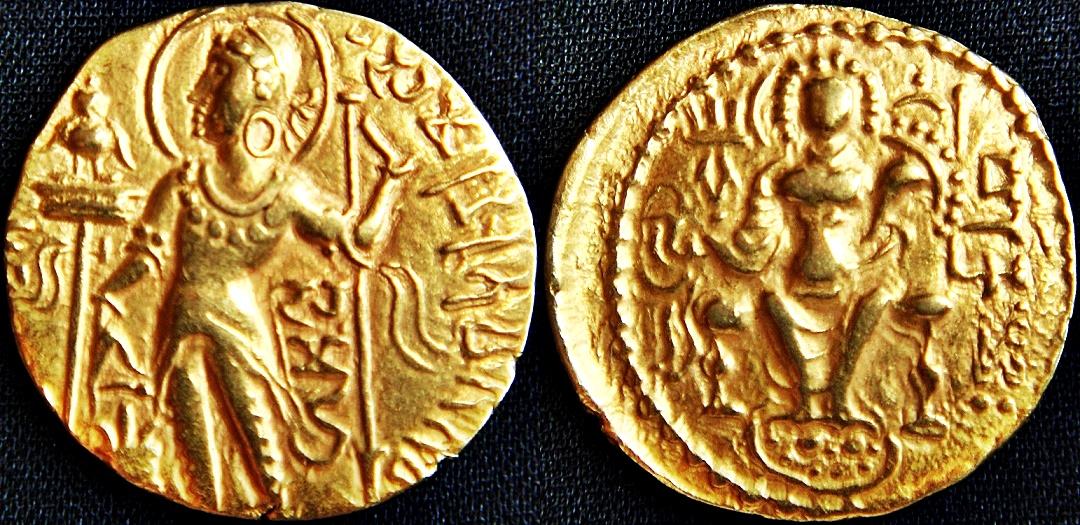
Connected to Kushan Empire
The wider world of this polity
Kanishka I
The most prominent Kushan ruler, remembered in Buddhist tradition as a patron and known from the Rabatak inscription and coinage.
Mathura
A major centre of sculpture and a hub of Kushan power in the Ganga–Yamuna region; also the findspot of Gupta inscriptions.
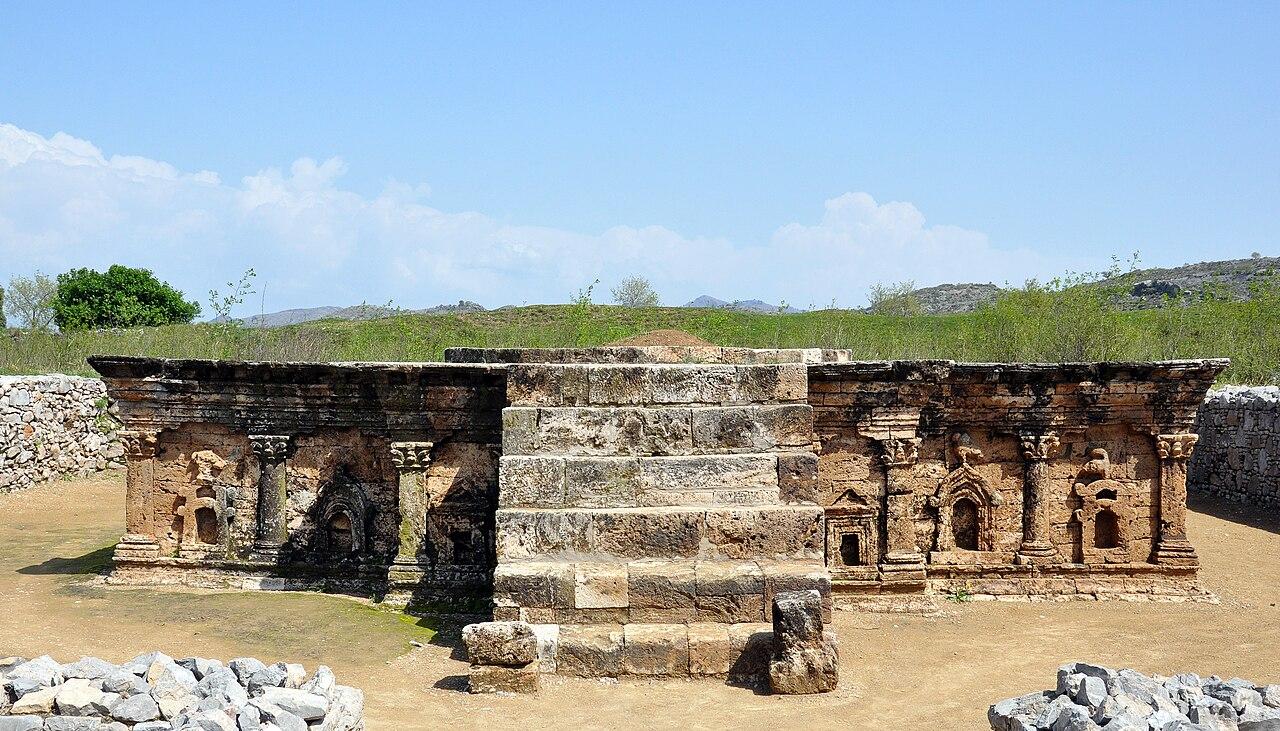
Taxila
A cluster of cities and Buddhist monasteries at the crossroads of South and Central Asia, successively under Achaemenid, Mauryan, Indo-Greek, Saka-Parthian and Kushan rule.
Taxila–Bactria connection
Routes across the Hindu Kush connecting Gandhara with Bactria and the wider network later called the Silk Roads.
Indo-Scythians (Sakas)
Saka rulers who displaced the Indo-Greeks in Gandhara under Maues and later governed Mathura through satraps.
Indo-Parthians (Gondophares)
Parthian rulers of the northwest, best known from Gondophares and the Takht-i-Bahi inscription.
Greco-Bactrian Kingdom
Hellenistic kingdom north of the Hindu Kush that broke from the Seleucids in the mid-3rd century BCE. Its kings pushed south into Gandhara and the Punjab in the early 2nd century BCE, where the Indo-Greek kingdoms followed; Bactria itself fell to nomadic groups by about 130 BCE. The chronology is reconstructed largely from coins.
Kidarites
A Hunnic group, named after a ruler Kidara, that took over former Kushan lands in Bactria and Gandhara and issued coins in the Kushan manner. Their chronology depends on coins and brief Chinese and Roman notices, and scholars place it differently.
Sources & Further Reading
Sources & further reading
- bookSingh, U. (2008). A History of Ancient and Early Medieval India: From the Stone Age to the 12th Century. Pearson Longman.