Empire
Mauryan Empire
Also: Maurya · Mauryas · Maurya dynasty
An empire centred on Pataliputra that, under Ashoka, extended from Afghanistan to the Deccan. It left the subcontinent's earliest securely dated inscriptions.
The Map Check
Geographic extent
Largest recorded extent, from Cliopatria (Seshat Global History Databank, CC BY 4.0) — drawn as published. Open the atlas to see how it changed over time. Points are the places Indophile uses to locate the polity.
Rulers & important personalities
- 322 – 298 BCE(Conventional date)
- Bindusara298 – 272 BCE(Conventional date)
- 268 – 232 BCE(Conventional date)
Overview
Well supportedChandragupta Maurya displaced the Nanda kings of Magadha around 322 BCE (a conventional date). Greek sources record a treaty with Seleucus I, after which Megasthenes resided at the Mauryan court. Under Ashoka the empire reached its greatest extent.
SourcesThapar 2002; McCrindle 1877
The Historical Record
The historical record
EstablishedInscriptions, texts, coins and other primary sources
Three kinds of sources survive: Ashoka's inscriptions (contemporary, first-person, securely Mauryan); fragments of Megasthenes preserved in later Greek and Latin authors; and the Arthashastra, a treatise on statecraft traditionally attributed to Kautilya, whose surviving text most scholars date later than the Mauryan period.
Buddhist and Jain traditions about the Mauryas were compiled centuries later and must be read for their own purposes.
SourcesHultzsch 1925; Olivelle 2013; McCrindle 1877
Language and writing
EstablishedAshoka's edicts are in Prakrit dialects, written in Brahmi in most of the subcontinent and in Kharoshthi in the northwest; in Afghanistan, Greek and Aramaic versions were set up. The edicts are the earliest securely dated examples of writing in South Asia after the Indus script.
SourcesSalomon 1998; Hultzsch 1925
Architecture and monuments
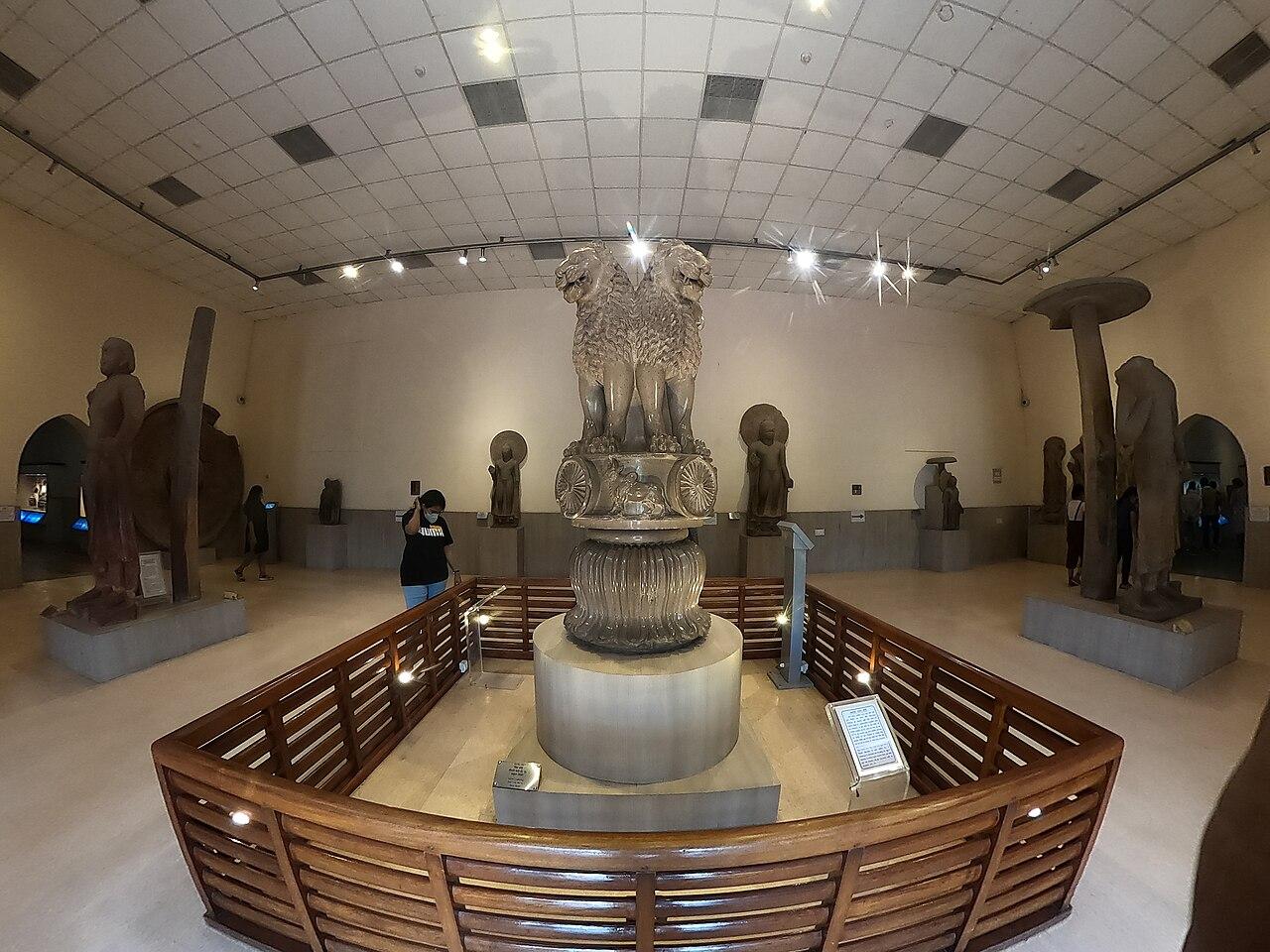
EstablishedPolished sandstone pillars crowned with animal capitals, the core of the Great Stupa at Sanchi, and rock-cut chambers in the Barabar hills dedicated to Ajivika ascetics are among the surviving Mauryan monuments.
SourcesSingh 2008
Decline
Well supportedAfter Ashoka the empire contracted. Around 185 BCE (conventional), the last Mauryan king Brihadratha was killed by his general Pushyamitra, founder of the Shunga dynasty, according to later tradition.
SourcesThapar 2002
Material culture
Important artefacts
Connected to Mauryan Empire
The wider world of this polity
Ashoka
Mauryan emperor whose inscriptions, issued across the subcontinent, are the earliest substantial body of dated writing from South Asia after the Indus script.
Chandragupta Maurya
Founder of the Mauryan Empire, identified with the 'Sandrokottos' of Greek writers.
Kautilya
The name traditionally attached to the Arthashastra, a Sanskrit treatise on statecraft. Tradition makes him Chandragupta's minister; the surviving text is generally dated later.
Megasthenes
Greek envoy of Seleucus I to the Mauryan court at Pataliputra, whose lost 'Indica' survives only in quotations by later authors.
Pataliputra
Capital of Magadha from the late 5th or 4th century BCE and of the Mauryan Empire. Its remains lie beneath modern Patna.
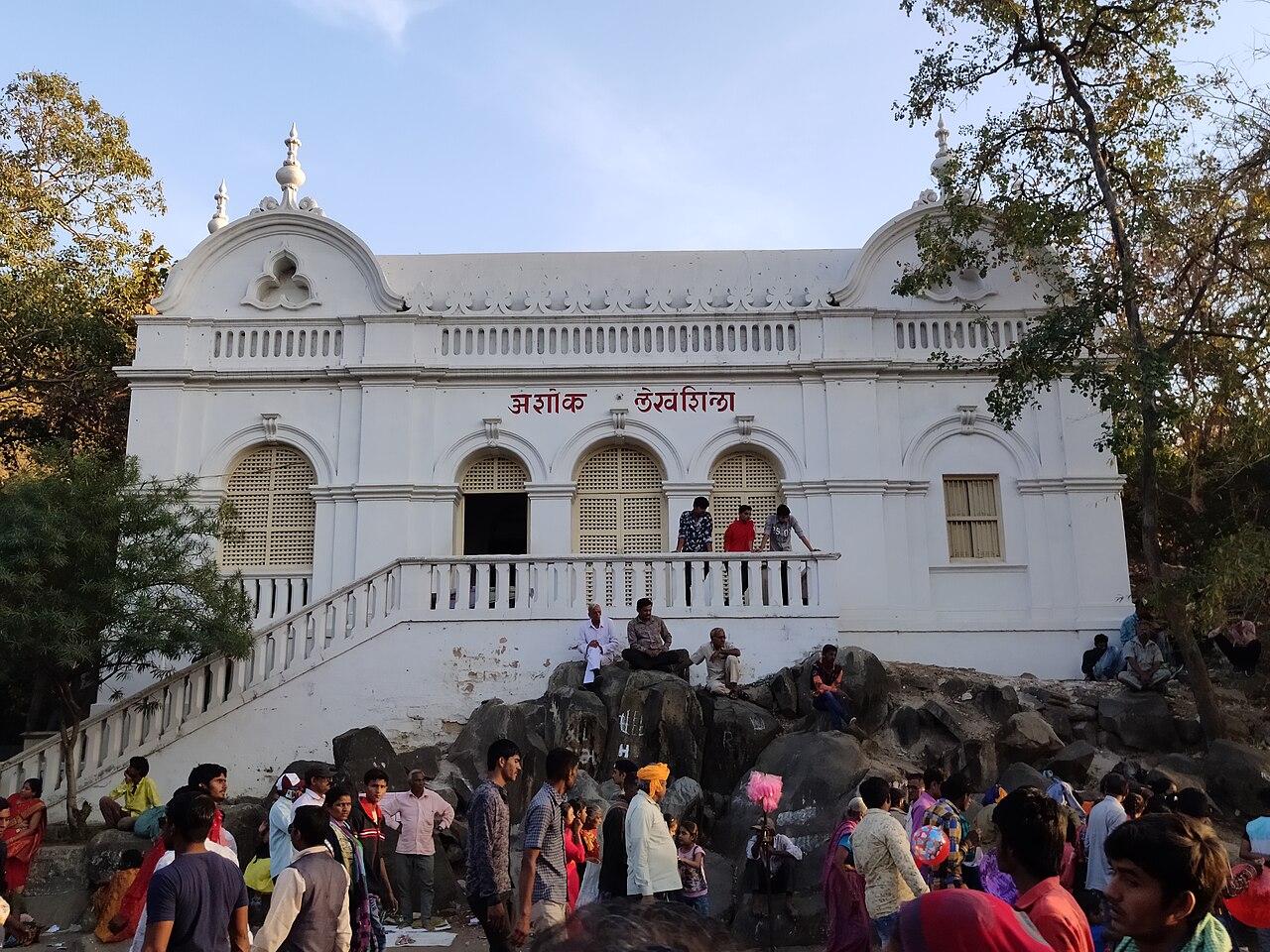
Junagadh Rock (Girnar)
A single granite boulder carrying three layers of history: Ashoka's fourteen major rock edicts, Rudradaman's Sanskrit inscription (c. 150 CE) and Skandagupta's record (mid-5th century CE).
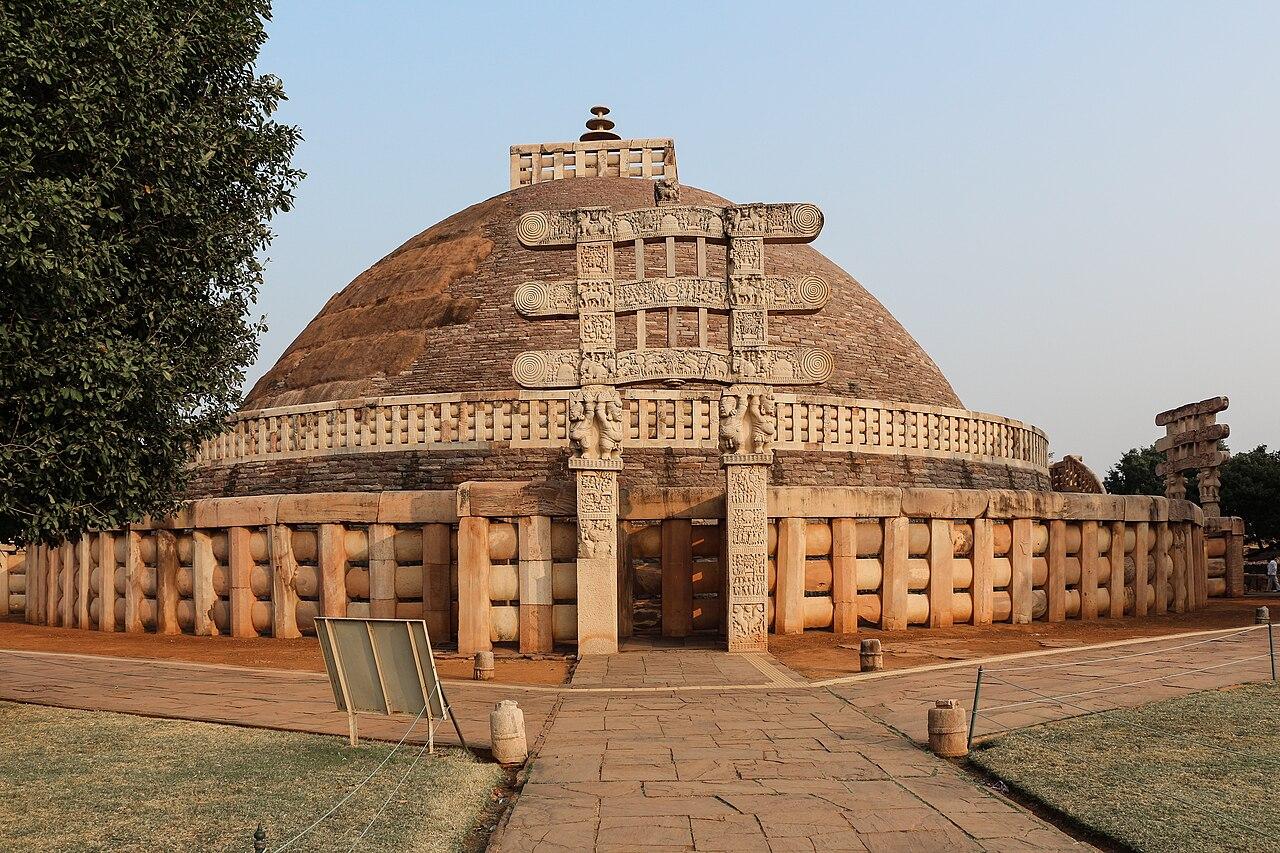
Sanchi
A hilltop Buddhist complex whose Great Stupa originated under Ashoka and was enlarged in the following centuries, with four carved gateways.
Sarnath
The place where, according to Buddhist tradition, the Buddha gave his first sermon. Site of the Ashokan pillar whose capital became India's national emblem.
Sources & Further Reading
Sources & further reading
- inscription corpusHultzsch, E. (1925). Inscriptions of Asoka. Corpus Inscriptionum Indicarum, Vol. I (new edition). Clarendon Press.
- bookThapar, R. (2002). Early India: From the Origins to AD 1300. Allen Lane / University of California Press.
- bookLahiri, N. (2015). Ashoka in Ancient India. Harvard University Press.
- bookSingh, U. (2008). A History of Ancient and Early Medieval India: From the Stone Age to the 12th Century. Pearson Longman.
- primary sourceMcCrindle, J. W. (trans.) (1877). Ancient India as Described by Megasthenês and Arrian. Trübner & Co..
- primary sourceOlivelle, P. (trans.) (2013). King, Governance, and Law in Ancient India: Kauṭilya's Arthaśāstra. Oxford University Press.
- bookSalomon, R. (1998). Indian Epigraphy: A Guide to the Study of Inscriptions in Sanskrit, Prakrit, and the Other Indo-Aryan Languages. Oxford University Press.