Archaeological site
Pataliputra
Also: Patna · Palibothra · Kusumapura · Pāṭaliputra · Azimabad
Capital of Magadha from the late 5th or 4th century BCE and of the Mauryan Empire. Its remains lie beneath modern Patna.
The Map Check
Location and neighbouring sites
From the Trenches
Excavation history
1912–1915
D. B. Spooner
Archaeological Survey of India
1951–1955
A. S. Altekar and V. Mishra
K. P. Jayaswal Research Institute
Important findings
- Remains of a pillared hall at Kumrahar with polished sandstone column fragments
- Timber palisade remains at Bulandi Bagh
The Historical Record
The historical record
Well supportedInscriptions, texts, coins and other primary sources
Greek writers drawing on Megasthenes, envoy of Seleucus I to Chandragupta's court, called the city Palibothra and described a long timber wall with towers and a moat. Timber palisade remains excavated at Bulandi Bagh are often connected with this description.
SourcesMcCrindle 1877; Singh 2008
Connected to Pataliputra
Connected to this site
Magadha
The kingdom of south Bihar that expanded, through conquest and alliance, to become the core of successive Nanda and Mauryan empires.
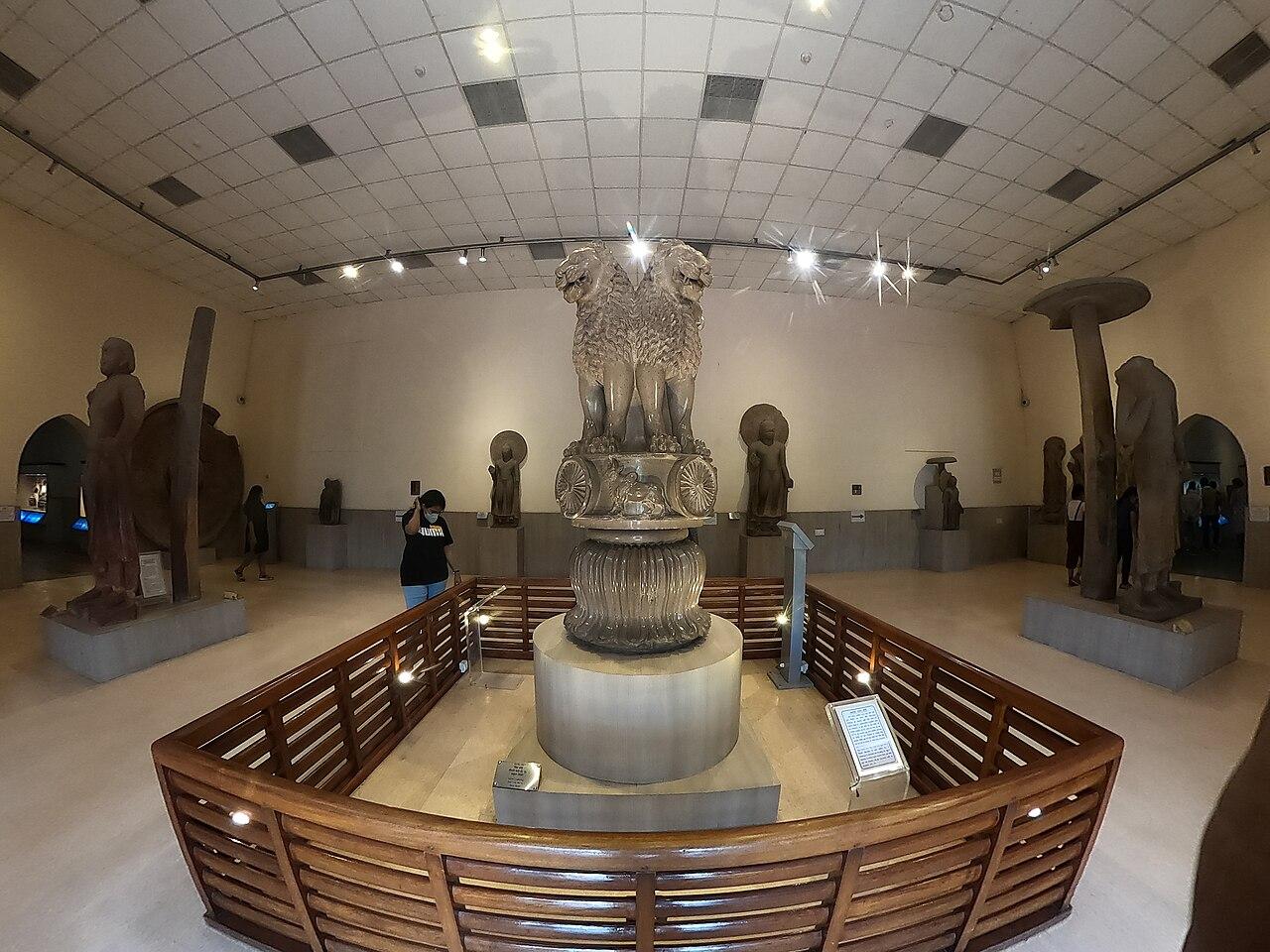
Mauryan Empire
An empire centred on Pataliputra that, under Ashoka, extended from Afghanistan to the Deccan. It left the subcontinent's earliest securely dated inscriptions.
Megasthenes
Greek envoy of Seleucus I to the Mauryan court at Pataliputra, whose lost 'Indica' survives only in quotations by later authors.
Chandragupta Maurya
Founder of the Mauryan Empire, identified with the 'Sandrokottos' of Greek writers.
Rajagriha (Rajgir)
The early capital of Magadha, ringed by hills and a long dry-stone wall, closely associated with the Buddha and Mahavira in early texts.
Nanda dynasty
Rulers of Magadha before the Mauryas, remembered in Indian and Greek accounts for a very large army and great wealth. Their own dates rest on later king-lists and are approximate; Chandragupta Maurya overthrew them around 321 BCE.
Uttarapatha (Northern Route)
The overland corridor linking Gandhara and the Punjab with the Ganga valley and the Bay of Bengal.
Ashoka and the Mauryan World
Edicts, stupas, pillars and the people around the Mauryan court.
Sources & Further Reading
Sources & further reading
- bookSingh, U. (2008). A History of Ancient and Early Medieval India: From the Stone Age to the 12th Century. Pearson Longman.
- primary sourceMcCrindle, J. W. (trans.) (1877). Ancient India as Described by Megasthenês and Arrian. Trübner & Co..
- bookThapar, R. (2002). Early India: From the Origins to AD 1300. Allen Lane / University of California Press.