Kingdom
Magadha
The kingdom of south Bihar that expanded, through conquest and alliance, to become the core of successive Nanda and Mauryan empires.
The Map Check
Geographic extent
Largest recorded extent, from Cliopatria (Seshat Global History Databank, CC BY 4.0) — drawn as published. Open the atlas to see how it changed over time. Points are the places Indophile uses to locate the polity.
Places that locate this polity
| Place | Role | Counted |
|---|---|---|
| Rajagriha | capital | whole period |
| Pataliputra | capital | whole period |
| Uruvela (Bodh Gaya) | site | whole period |
Rulers & important personalities
- Bimbisarac. 544 – 492 BCE(Debated)
Haryanka dynasty; dates depend on the chronology adopted for the Buddha.
- Ajatashatruc. 492 – 460 BCE(Debated)
- Nanda dynastyc. 345 – 322 BCE(Approximate)
Why Magadha?
DebatedHistorians point to Magadha's fertile alluvial land, access to iron ore and timber in the south, river communications along the Ganga and the availability of elephants. These are explanatory proposals rather than demonstrated causes.
SourcesThapar 2002; Singh 2008
Chronology
DebatedThe dates of early Magadhan kings depend on the date assigned to the Buddha's death, which itself varies by more than half a century between traditions and modern reconstructions.
SourcesSingh 2008
Connected to Magadha
The wider world of this polity
Rajagriha (Rajgir)
The early capital of Magadha, ringed by hills and a long dry-stone wall, closely associated with the Buddha and Mahavira in early texts.
Pataliputra
Capital of Magadha from the late 5th or 4th century BCE and of the Mauryan Empire. Its remains lie beneath modern Patna.
Mauryan Empire
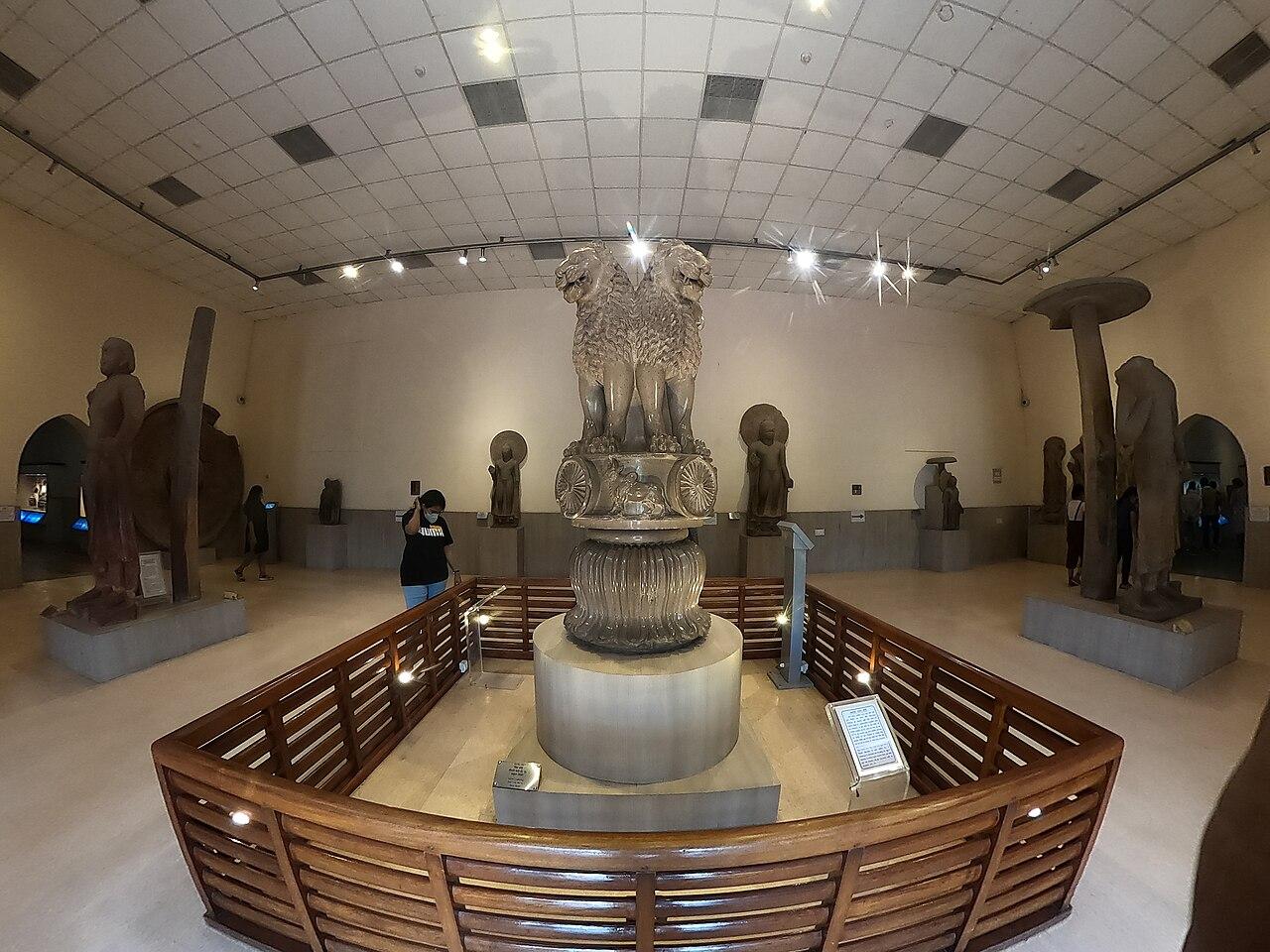
An empire centred on Pataliputra that, under Ashoka, extended from Afghanistan to the Deccan. It left the subcontinent's earliest securely dated inscriptions.
Kosala
A powerful kingdom of the middle Ganga plain in the age of the Buddha, eventually absorbed by Magadha.
Vajji (Vrijji) Confederacy
A gana-sangha — a polity governed by an assembly of clan heads rather than a hereditary monarch — centred on Vaishali, with the Licchavis as its leading clan.
Siddhartha Gautama, the Buddha
Founder of Buddhism. Born, according to tradition and Ashoka's Lumbini inscription, at Lumbini; his dates are debated.
Vardhamana Mahavira
The 24th tirthankara of the Jain tradition and a contemporary of the Buddha in the middle Ganga valley.
Avanti
A mahajanapada of the Malwa plateau, controlling routes between the Ganga valley, the western coast and the Deccan.
Sources & Further Reading
Sources & further reading
- bookSingh, U. (2008). A History of Ancient and Early Medieval India: From the Stone Age to the 12th Century. Pearson Longman.
- bookThapar, R. (2002). Early India: From the Origins to AD 1300. Allen Lane / University of California Press.