Period 08 of 16
Gupta and Classical Period
Also: Gupta period · Classical age · Vakataka
The Gupta kings ruled from the Ganga valley while Sanskrit became the dominant language of royal inscriptions. A period of temple architecture, mathematics and monastic learning.
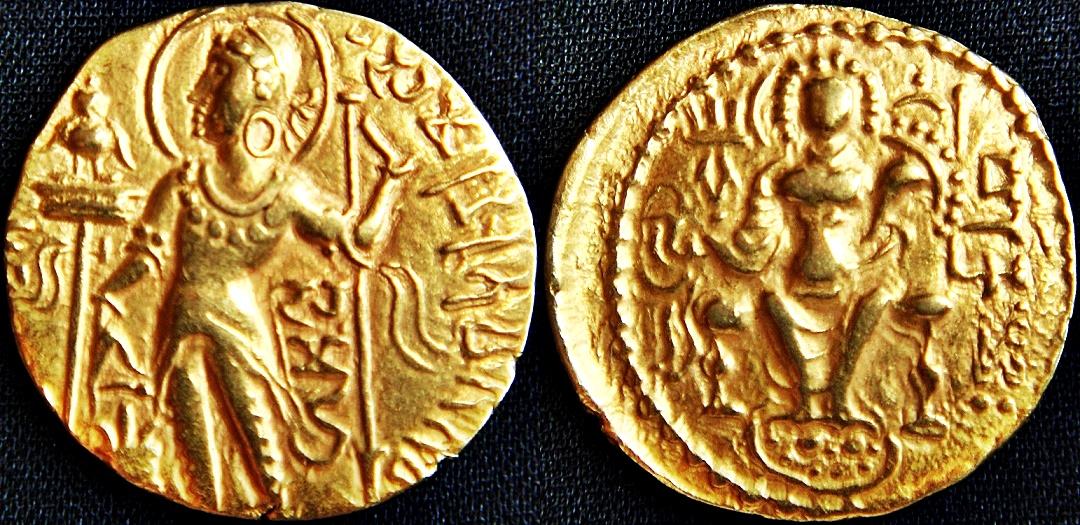
Major developments
- 01Gupta era reckoned from 319/320 CE
- 02Samudragupta's campaigns recorded on the Allahabad pillar
- 03Early free-standing stone temples
- 04Aryabhata's Aryabhatiya (499 CE)
- 05Nalanda founded as a monastic centre
The Map Check
Where this period happened
Click a point to open its record. Boundaries at 435 CE from Cliopatria (Seshat), CC BY 4.0.
Polities & cultures
Civilisations, kingdoms and republics
Gupta Empire
A dynasty of the Ganga valley whose kings, through conquest, tribute and marriage alliance, dominated north India from the 4th to the 6th century CE.
Western Kshatrapas
Saka rulers of western India, rivals of the Satavahanas, whose Rudradaman I left the Junagadh inscription. Their rule ended with the Gupta conquest of the west.
Ikshvakus of Vijayapuri
Successors of the Satavahanas in Andhra whose capital Vijayapuri, at Nagarjunakonda, held major Buddhist monasteries.
Vakataka
A Deccan dynasty allied by marriage to the Guptas; a Vakataka minister's inscription is in Ajanta Cave 16, and the later Ajanta caves are usually dated to the reign of Harishena.
Kadambas of Banavasi
Early Karnataka dynasty whose Halmidi inscription is often cited as the oldest Kannada inscription; later overtaken by the Chalukyas of Badami.
Western Gangas of Talakad
A long-lived dynasty of southern Karnataka, frequently subordinate to larger neighbours; its minister Chavundaraya commissioned the Gommateshvara colossus at Shravanabelagola.
Pallavas
A dynasty of Kanchipuram whose rock-cut and structural temples at Mamallapuram and Kanchi are landmarks of early Dravidian architecture.
Chalukyas of Badami
A Deccan power whose Pulakeshin II checked Harsha on the Narmada; temples at Aihole, Badami and Pattadakal mix northern and southern styles.
Maitrakas of Valabhi
A Gujarat dynasty whose capital Valabhi was a noted centre of learning, recorded by Xuanzang.
Kamarupa
The early historic kingdom of Assam under the Varman, Mlechchha and Pala dynasties of Kamarupa, recorded in copper-plate grants and by Xuanzang.
Licchavis of Nepal
Rulers of the Kathmandu valley whose Sanskrit inscriptions begin with Manadeva's pillar at Changu Narayan (464 CE).
Anuradhapura Kingdom
The first great Sri Lankan kingdom, centred on Anuradhapura, whose history is recorded in the Pali chronicles (Dipavamsa, Mahavamsa) and in Brahmi inscriptions. Its early dates follow the chronicles' chronology.
Yaudheya republic
A gana-sangha known from its coins and seals and named among the peoples who submitted to Samudragupta — a reminder that republics outlived the age of the Buddha.
Vishnukundinas
An Andhra dynasty, patrons of the Undavalli caves, displaced by the Eastern Chalukyas.
Alchon Huns (Hunas)
Central Asian rulers whose kings Toramana and Mihirakula left inscriptions at Eran and Gwalior; their incursions weakened the Gupta state.
Aulikaras of Dashapura
A Malwa dynasty whose Yashodharman claimed victory over the Huna Mihirakula in the Mandasor pillar inscriptions.
Kidarites
A Hunnic group, named after a ruler Kidara, that took over former Kushan lands in Bactria and Gandhara and issued coins in the Kushan manner. Their chronology depends on coins and brief Chinese and Roman notices, and scholars place it differently.
Maukharis of Kanauj
Former Gupta subordinates who made Kanauj the leading city of the Ganga plain in the later 6th century. After the death of Grahavarman the kingdom passed to his brother-in-law Harsha of the Pushyabhutis.
From the trenches
Archaeological sites
Pataliputra
Capital of Magadha from the late 5th or 4th century BCE and of the Mauryan Empire. Its remains lie beneath modern Patna.
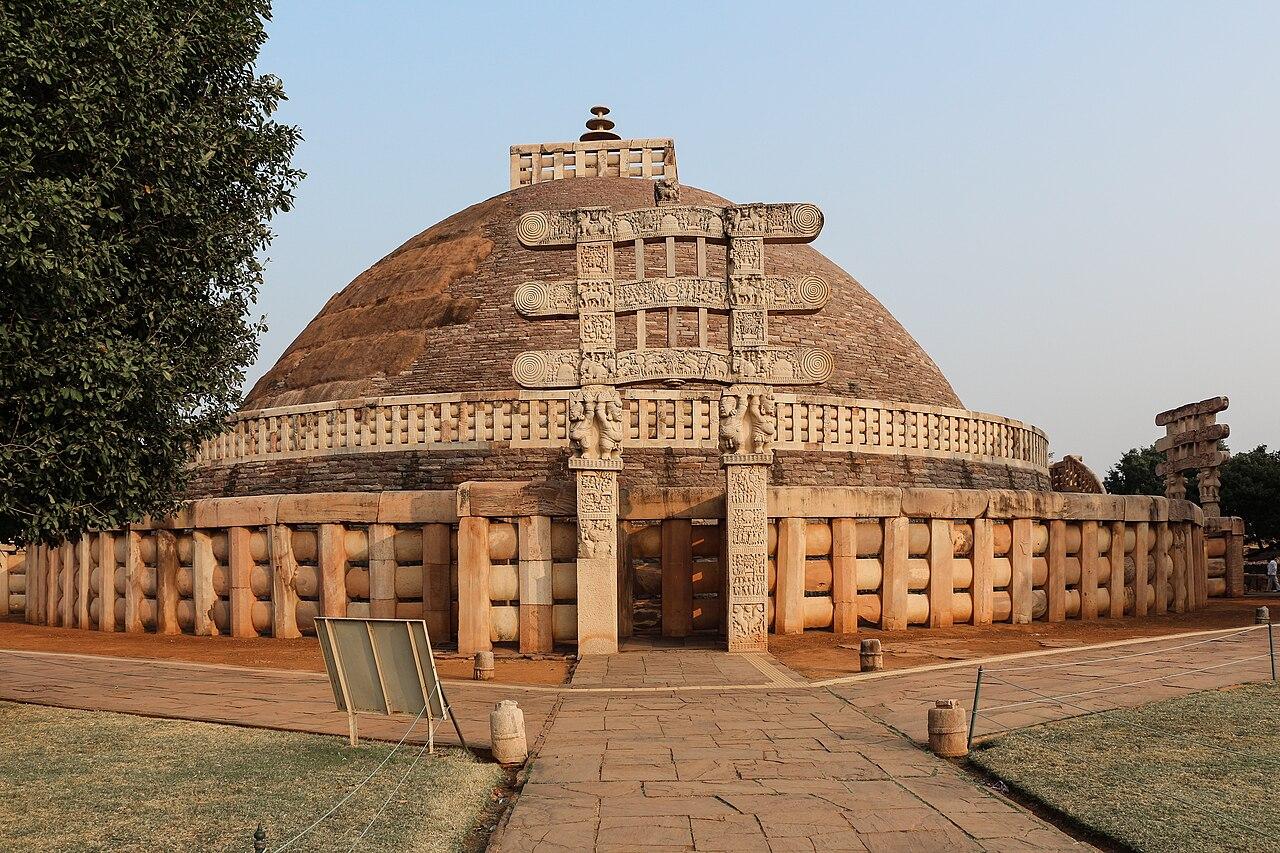
Sanchi
A hilltop Buddhist complex whose Great Stupa originated under Ashoka and was enlarged in the following centuries, with four carved gateways.
Sarnath
The place where, according to Buddhist tradition, the Buddha gave his first sermon. Site of the Ashokan pillar whose capital became India's national emblem.
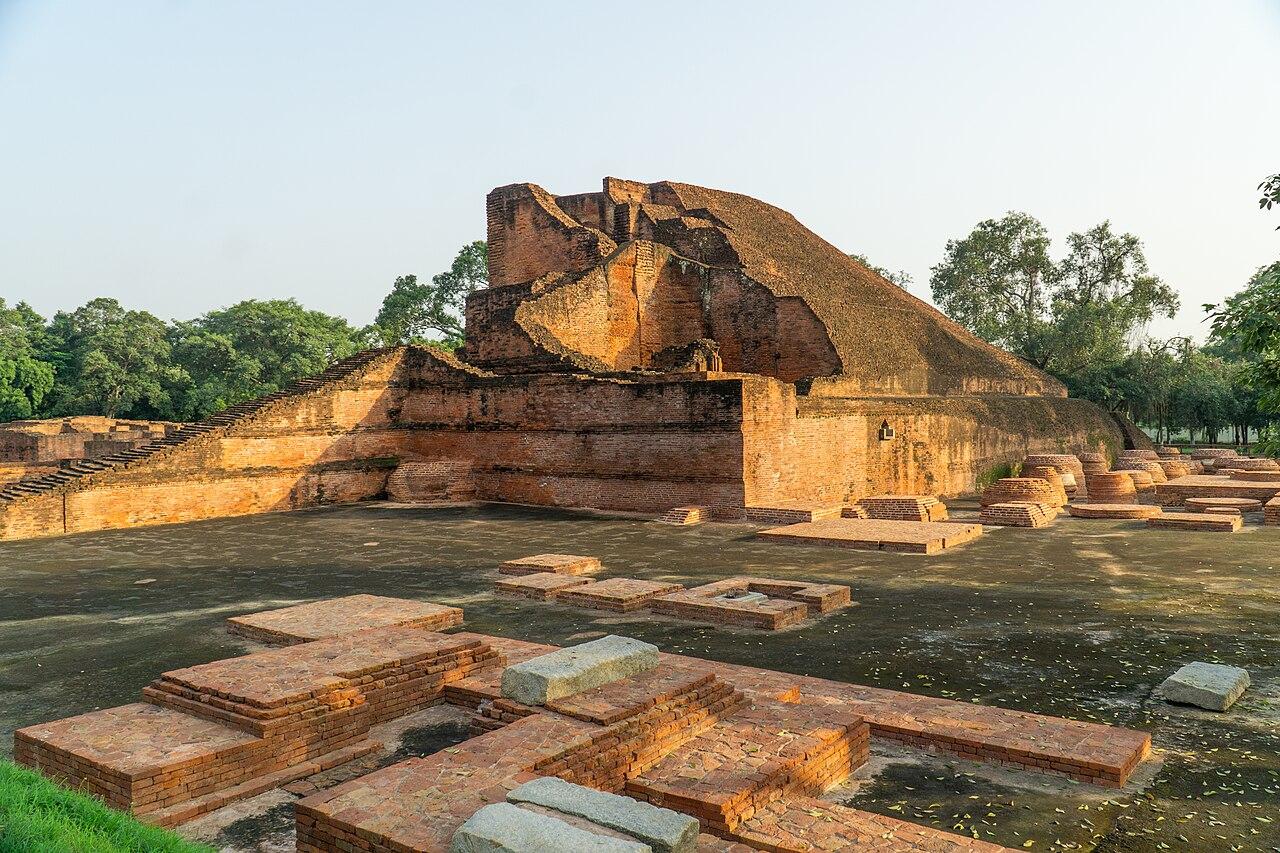
Nalanda Mahavihara
A great Buddhist monastic university that flourished from the Gupta period to the 12th century, visited by the Chinese pilgrim Xuanzang.
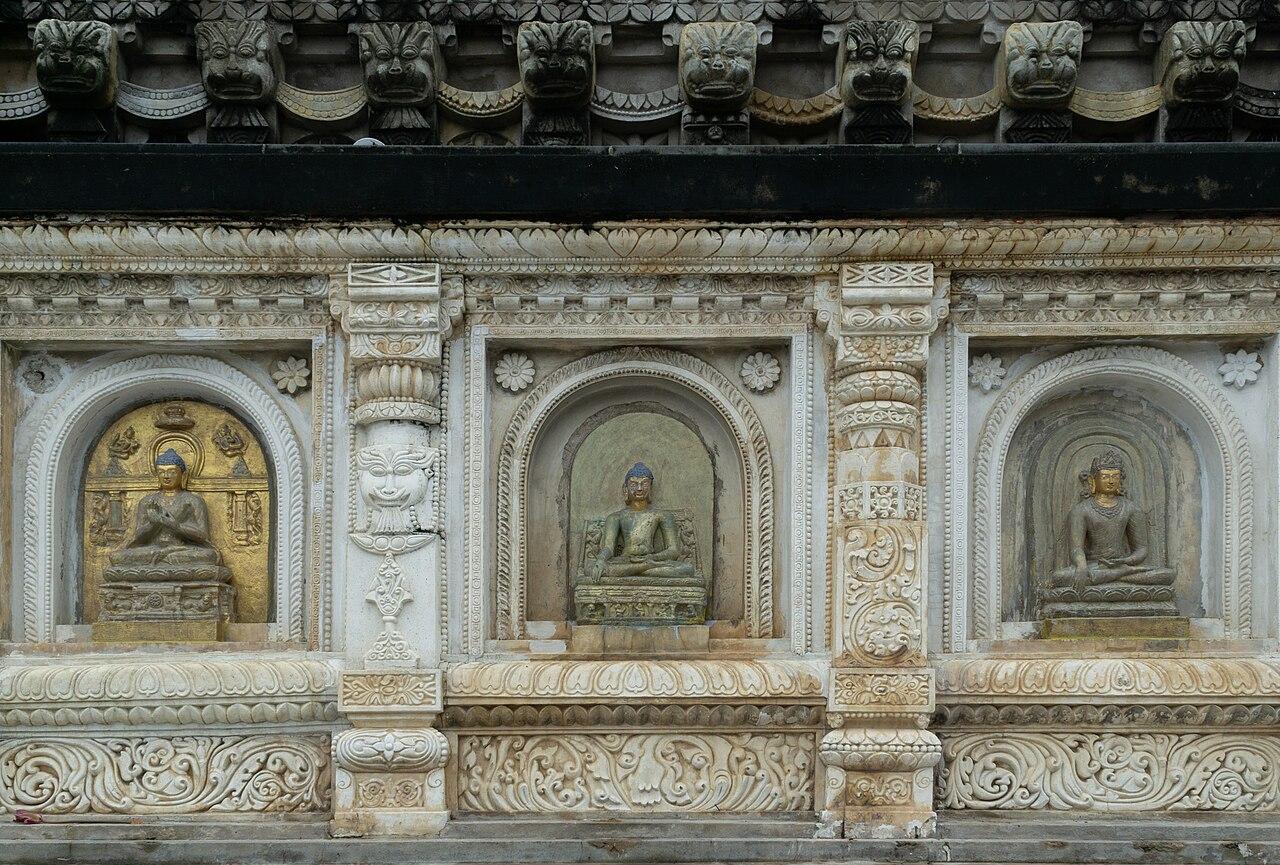
Bodh Gaya
Site of the Buddha's enlightenment in Buddhist tradition. The present brick Mahabodhi Temple dates in its core to the 5th–6th century CE.
Tamralipti (Tamluk)
Port near the mouth of the Ganga, from which the pilgrim Faxian sailed to Sri Lanka in the early 5th century CE.
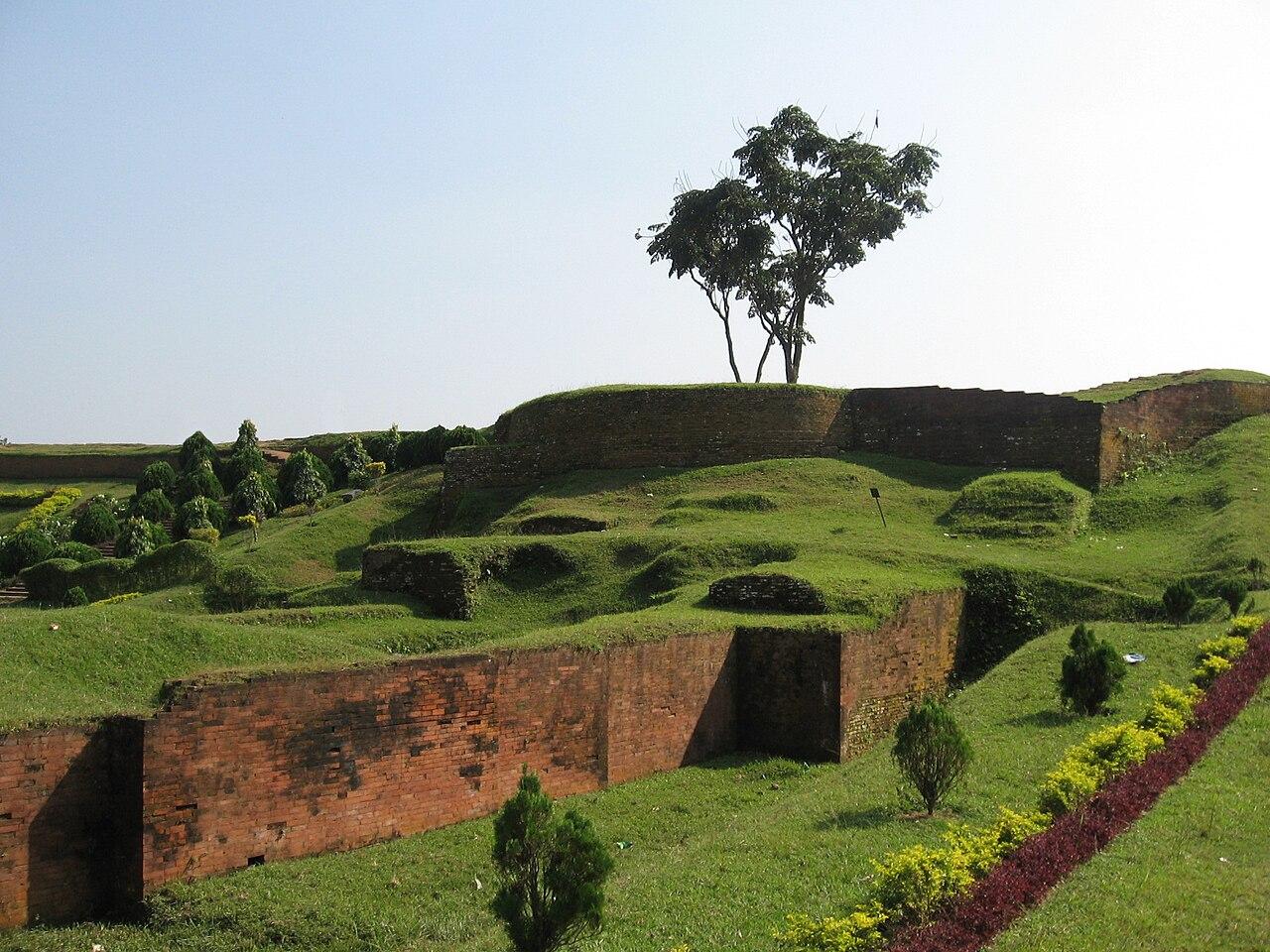
Mahasthangarh
A fortified early historic city in northern Bangladesh, identified with Pundranagara. A Brahmi inscription found here is often attributed to the Mauryan period.
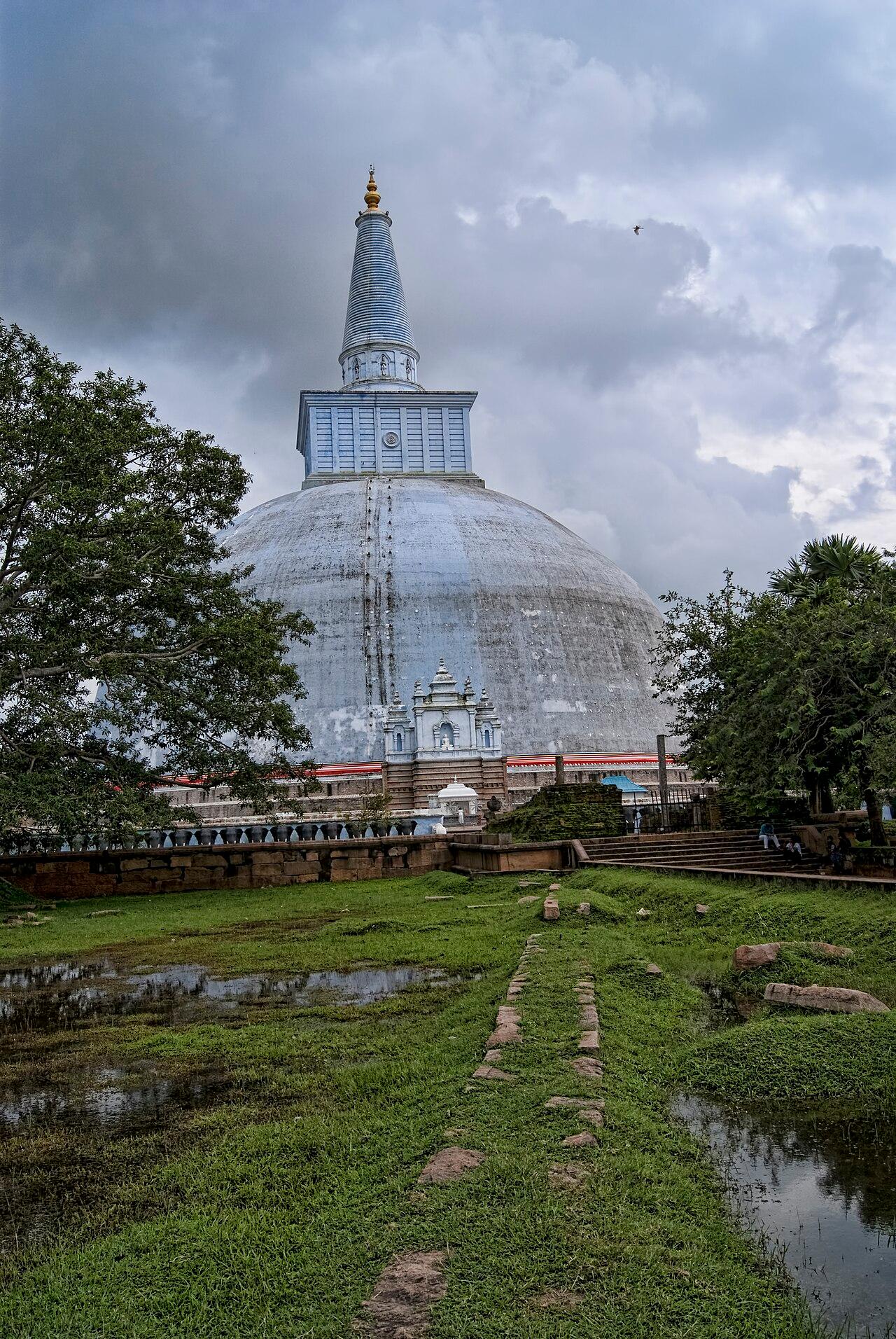
Anuradhapura
The first great capital of Sri Lanka, with monumental stupas and early Brahmi inscriptions; a centre of Theravada Buddhism.
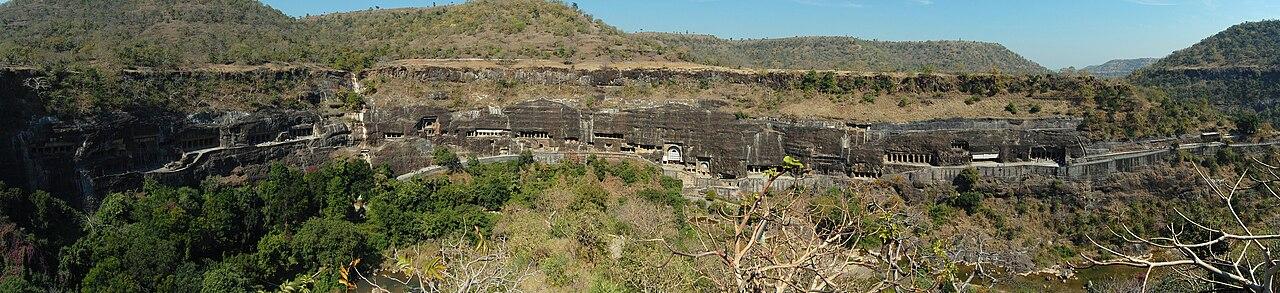
Ajanta
About thirty rock-cut Buddhist monasteries and shrines in a horseshoe gorge, made in two phases — around the 2nd–1st centuries BCE and in the later 5th century CE — with the finest surviving early Indian wall paintings.
Chronology
Events
Beginning of the Gupta eraEvent319/320 CE(Secure date)Faxian's pilgrimageEvent399 – 414 CE(Secure date)Kashyapa I builds SigiriyaEvent477 – 495 CE(Conventional date)Aryabhatiya composedEvent499 CE(Secure date)People
SamudraguptaPersonr. c. 335 – 375 CE(Approximate)Chandragupta IIPersonr. c. 375 – 415 CE(Approximate)FaxianPersonTravels 399 – 414 CE(Secure date)AryabhataPersonb. 476 CE(Approximate)VarahamihiraPerson6th century CE (Pancasiddhantika epoch 505 CE)(Approximate)KalidasaPersonc. 4th – 5th century CE (debated)(Debated)Conclusions
What the evidence supports
- Gupta kings dominated north India from the 4th to the 6th century; Sanskrit became the main language of royal inscriptions.
- Free-standing stone temples, the Aryabhatiya and Nalanda date from this period.
Still open
What we still don't know
- How far the 'golden age' label reflects the evidence rather than later historiography.
Connected to Gupta and Classical Period
Continue exploring
Gupta Empire
A dynasty of the Ganga valley whose kings, through conquest, tribute and marriage alliance, dominated north India from the 4th to the 6th century CE.
Samudragupta
Gupta king whose campaigns and claimed tributaries are recorded in Harishena's eulogy on the Allahabad pillar.
Chandragupta II
Gupta king who extended Gupta power into western India; Faxian travelled through his realm.
Faxian
Chinese Buddhist monk who travelled through South Asia c. 399–414 CE in search of monastic texts.
Aryabhata
Mathematician-astronomer whose Aryabhatiya (499 CE) treats arithmetic, algebra, trigonometry and planetary astronomy.
Western Kshatrapas
Saka rulers of western India, rivals of the Satavahanas, whose Rudradaman I left the Junagadh inscription. Their rule ended with the Gupta conquest of the west.
Ikshvakus of Vijayapuri
Successors of the Satavahanas in Andhra whose capital Vijayapuri, at Nagarjunakonda, held major Buddhist monasteries.
Vakataka
A Deccan dynasty allied by marriage to the Guptas; a Vakataka minister's inscription is in Ajanta Cave 16, and the later Ajanta caves are usually dated to the reign of Harishena.
Sources & Further Reading
Sources & further reading
- inscription corpusFleet, J. F. (1888). Inscriptions of the Early Gupta Kings and their Successors. Corpus Inscriptionum Indicarum, Vol. III. Government of India.
- bookSingh, U. (2008). A History of Ancient and Early Medieval India: From the Stone Age to the 12th Century. Pearson Longman.