Archaeological site
Porunthal
A habitation-cum-burial site in the Palani hills where a grave contained a jar of rice; AMS dates on associated material have been used to argue for an early date for Tamil-Brahmi.
The Map Check
Location and neighbouring sites
From the Trenches
Excavation history
2009–2010
K. Rajan and colleagues
Pondicherry University
Important findings
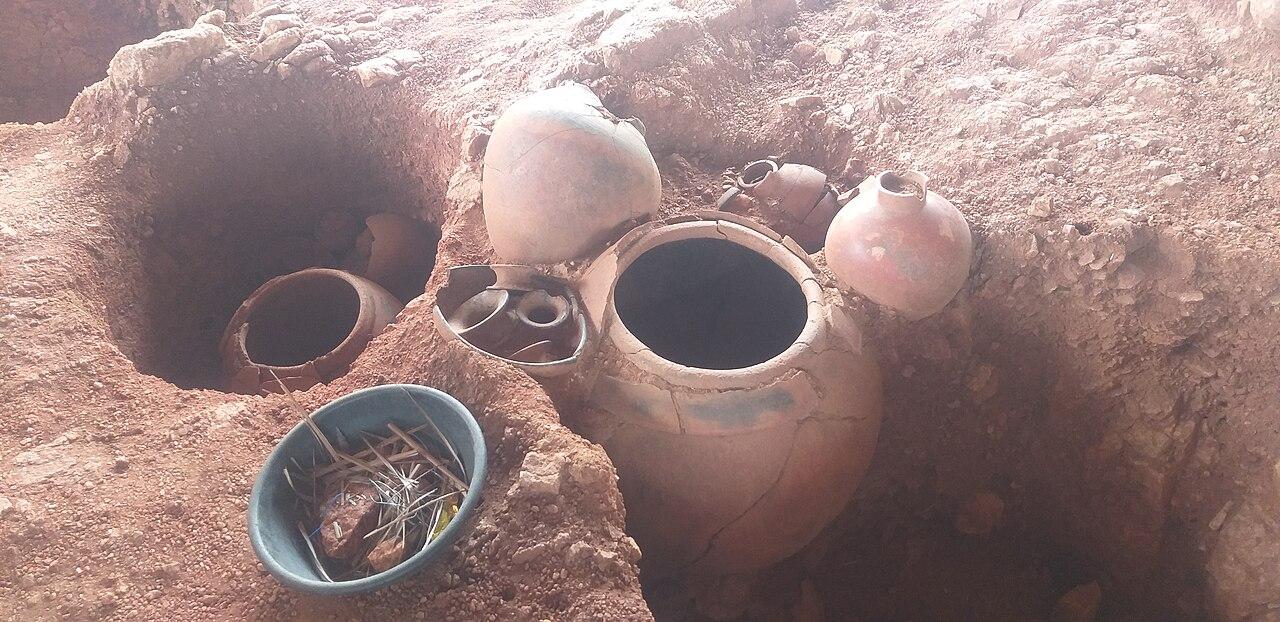
- Cist burials with grave goods, including a four-legged jar containing rice
- Glass and stone beads
- Tamil-Brahmi inscribed sherds
What We Still Don't Know
What we still don't know
DebatedUnresolved questions and competing interpretations
The excavators reported AMS dates around the 5th century BCE for the levels with inscribed sherds. Critics question whether the dated samples and the sherds are securely contemporary. The result is significant but not yet settled.
SourcesRajan et al. 2013
Connected to Porunthal
Connected to this site
Kodumanal
An Iron Age industrial village on the Noyyal with iron-smelting, gemstone (beryl and quartz) working, megalithic cist burials and Tamil-Brahmi inscribed sherds.
South Indian Iron Age – Megalithic culture
A long-lived tradition of monumental burial across the peninsula — cists, dolmens, stone circles, urn fields, rock-cut chambers and umbrella stones — associated with iron, Black-and-Red Ware and, later, early writing and trade.
Tamil-Brahmi
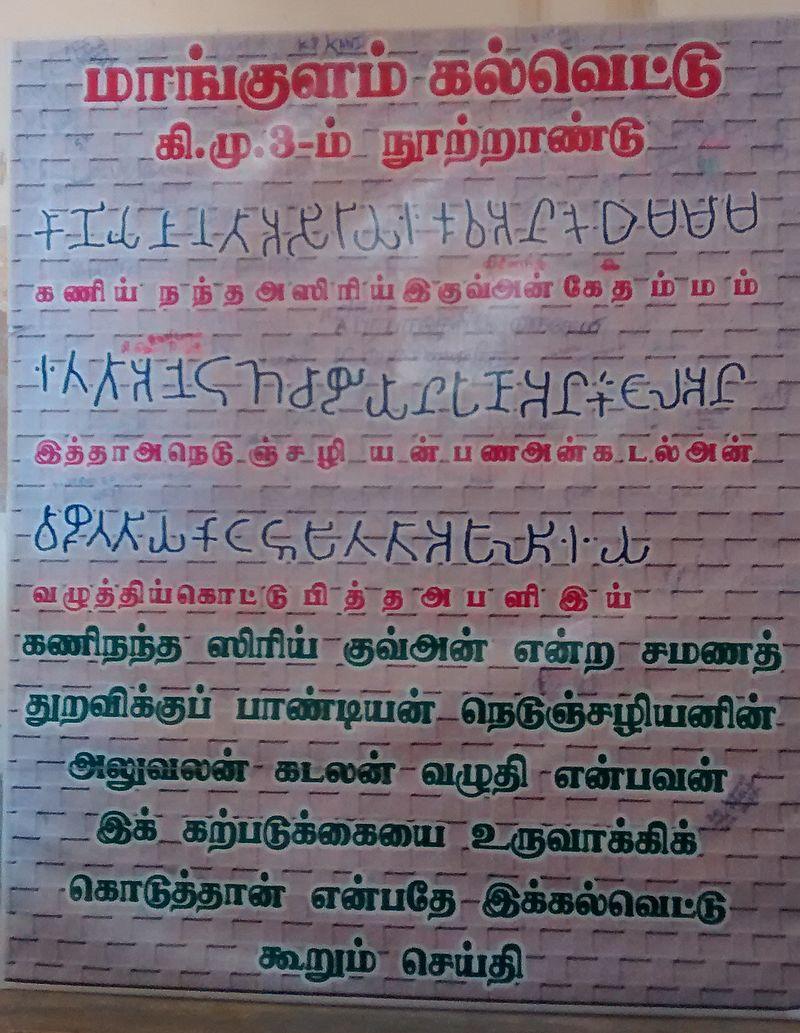
An adaptation of Brahmi to write Old Tamil, found in cave inscriptions and on pottery across Tamil Nadu and beyond.
Megaliths of the South
Dolmens, cists, urn fields and umbrella stones: the Iron Age burial tradition of the peninsula, site by site.
Sources & Further Reading
Sources & further reading
- journal articleRajan, K. & Yatheeskumar, V. P. (2013). New evidences on scientific dates for Brāhmī script as revealed from Porunthal and Kodumanal excavations. Prāgdhārā 21–22: 279–295.record unverified