Kingdom
Indo-Greek Kingdoms
Also: Yavana · Menander · Milinda · Graeco-Bactrian
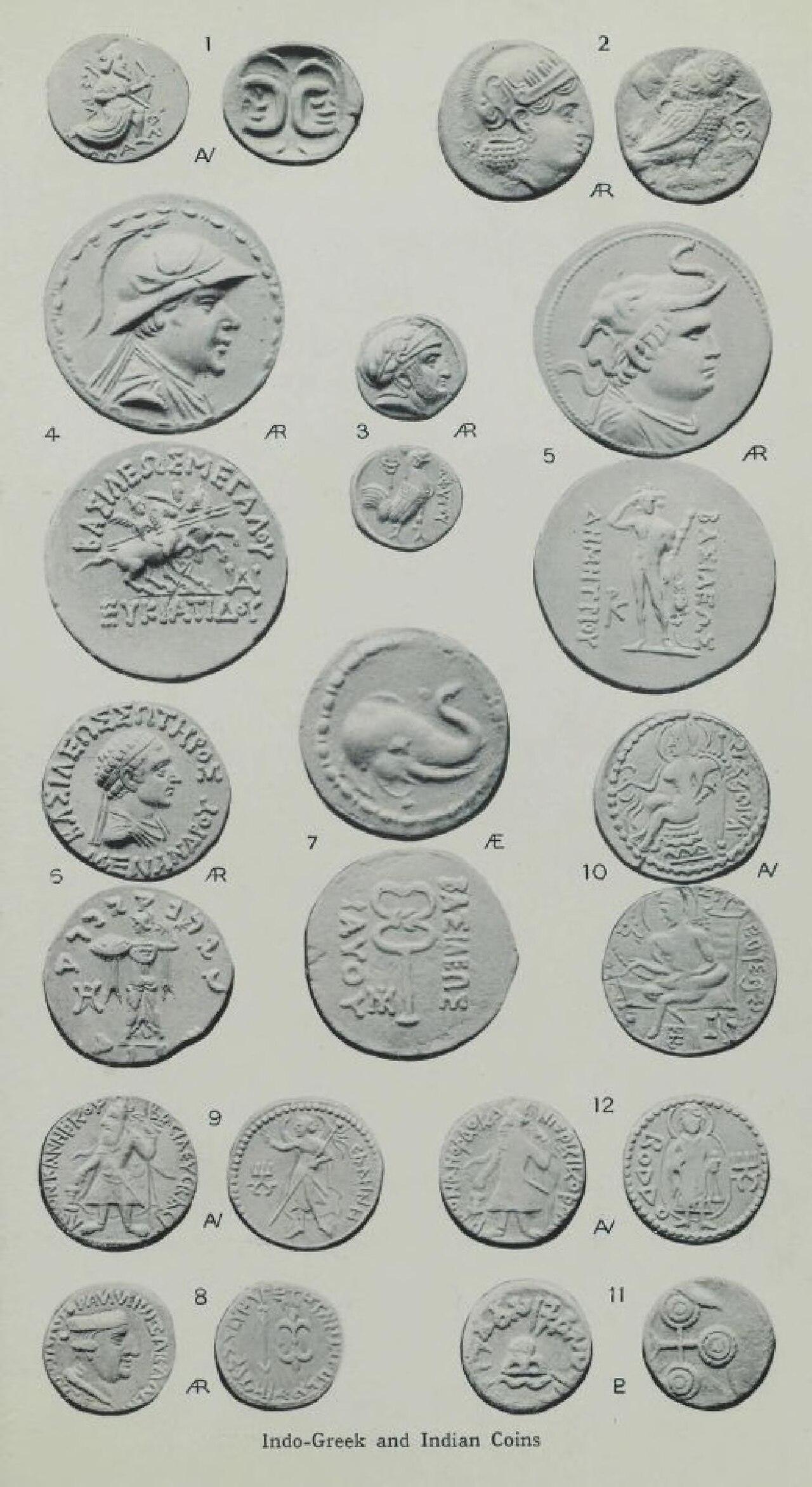
Kingdoms ruled by Greek-speaking dynasties from Bactria and the northwest, known largely from bilingual coins in Greek and Kharoshthi.
The Map Check
Geographic extent
Largest recorded extent, from Cliopatria (Seshat Global History Databank, CC BY 4.0) — drawn as published. Open the atlas to see how it changed over time. Points are the places Indophile uses to locate the polity.
Places that locate this polity
| Place | Role | Counted |
|---|---|---|
| Taxila | city | whole period |
| Sagala | capital of Menander in tradition | whole period |
| Pushkalavati | city | whole period |
| Kapisa (Begram) | city | whole period |
The Historical Record
The historical record
Well supportedInscriptions, texts, coins and other primary sources
More than thirty Indo-Greek rulers are known, mostly from coins; few appear in any text. The Buddhist dialogue known as the Milindapanha presents the king Milinda, usually identified with Menander, in debate with a monk.
SourcesSingh 2008
Connected to Indo-Greek Kingdoms
The wider world of this polity
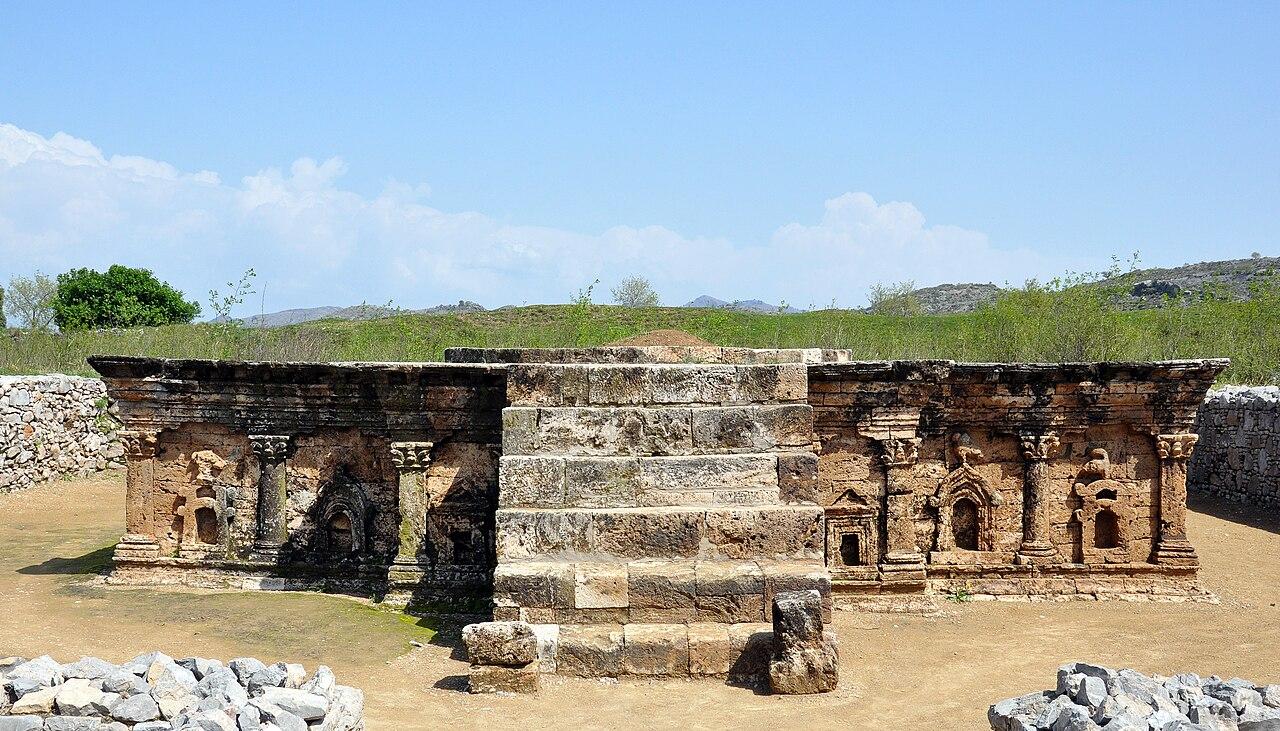
Taxila
A cluster of cities and Buddhist monasteries at the crossroads of South and Central Asia, successively under Achaemenid, Mauryan, Indo-Greek, Saka-Parthian and Kushan rule.
Kharoshthi
A script derived from Aramaic, used in Gandhara and adjoining regions from the 3rd century BCE to around the 3rd–4th century CE.
Indo-Scythians (Sakas)
Saka rulers who displaced the Indo-Greeks in Gandhara under Maues and later governed Mathura through satraps.
Greco-Bactrian Kingdom
Hellenistic kingdom north of the Hindu Kush that broke from the Seleucids in the mid-3rd century BCE. Its kings pushed south into Gandhara and the Punjab in the early 2nd century BCE, where the Indo-Greek kingdoms followed; Bactria itself fell to nomadic groups by about 130 BCE. The chronology is reconstructed largely from coins.
Sources & Further Reading
Sources & further reading
- bookSingh, U. (2008). A History of Ancient and Early Medieval India: From the Stone Age to the 12th Century. Pearson Longman.
- excavation reportMarshall, J. (1951). Taxila: An Illustrated Account of Archaeological Excavations Carried Out at Taxila (3 vols.). Cambridge University Press.