Curated collection · 8 entries
The Great Trade Networks of the Indian Ocean
The subcontinent has always faced the sea. This collection follows trade from the Bronze Age to the early centuries CE.
Curated by Indophile Editorial
- 01Routec. 2600 – 1900 BCE(Approximate)
Harappan–Gulf maritime contact
Meluhha and the Gulf.
Sea contact between the Indus region, the Gulf (Dilmun, Magan) and Mesopotamia, documented by Indus seals and beads found abroad and by Mesopotamian references to Meluhha.
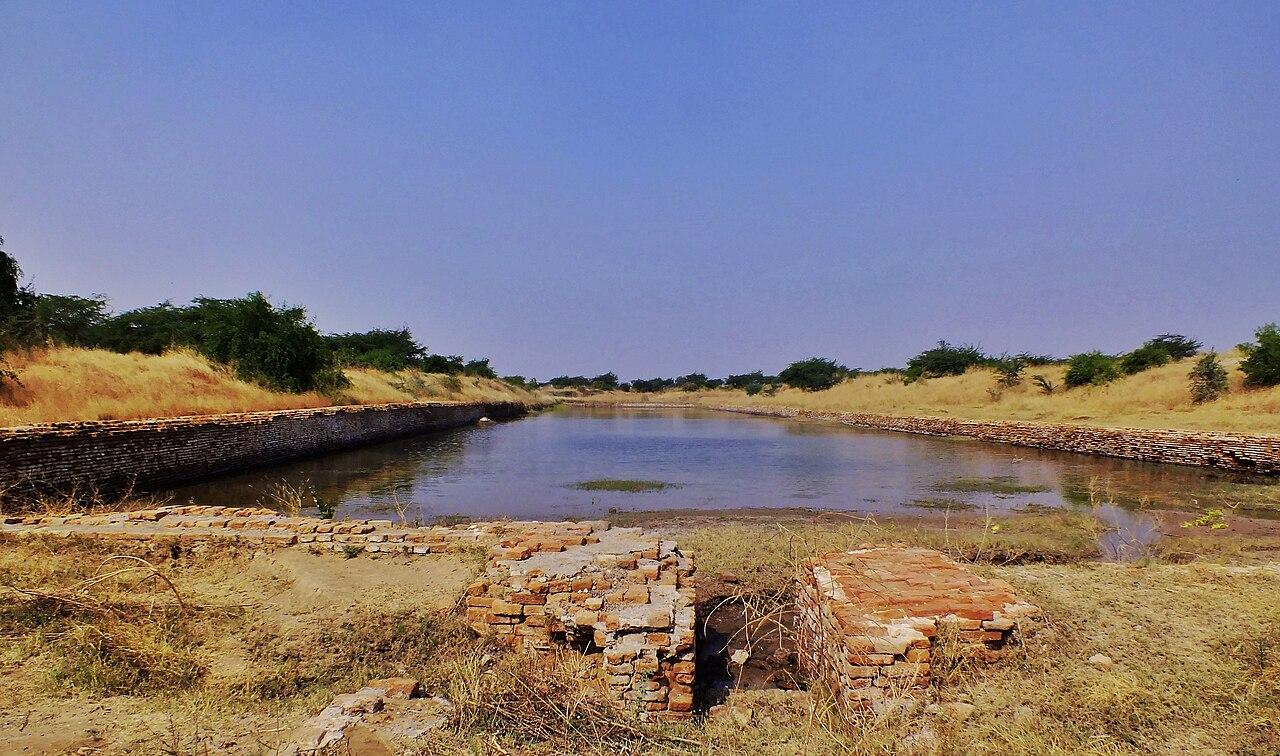
- 02Sitec. 2400 – 1600 BCE(Approximate)
Lothal
A harbour, or a reservoir?
A small Harappan town near the Gulf of Khambhat with a bead-making quarter and a large brick basin interpreted by its excavator as a dockyard.
- 03Sitec. late 3rd millennium BCE(Approximate)
Shortughai
An Indus outpost on the Amu Darya.
A Harappan settlement far to the north, near the Amu Darya — usually interpreted as a trading outpost linked to lapis lazuli sources in Badakhshan.
- 04Routec. 30 BCE – 300 CE(Approximate)
Monsoon route to the Red Sea
Sailing with the monsoon.
Seasonal sailing between Egyptian Red Sea ports and western Indian and Malabar ports, described in the 1st-century Periplus of the Erythraean Sea.
- 05Articlec. 30 BCE – 250 CE(Approximate)
Rome on the Coromandel Coast
Read: Rome on the Coromandel.
Evidence for Indo-Roman trade from archaeology, texts and coins.
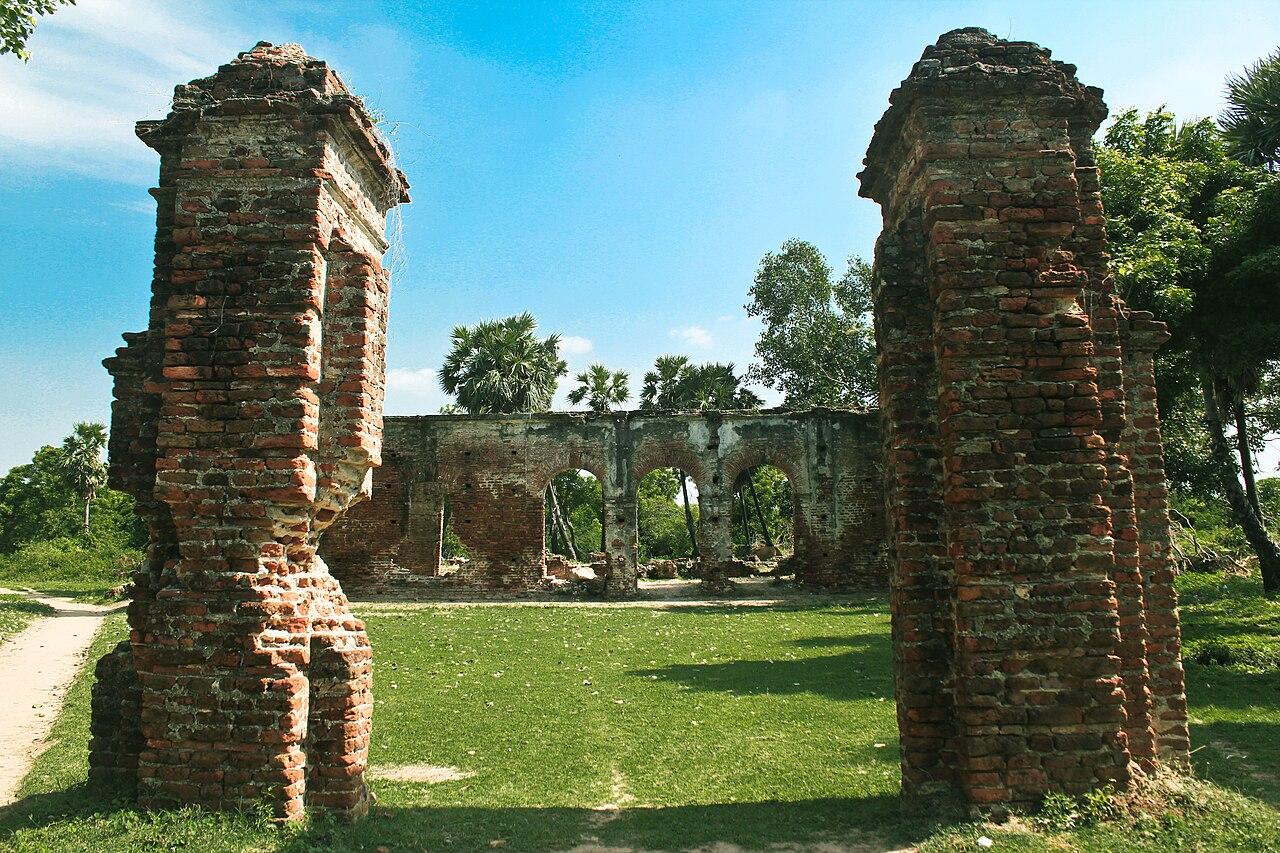
- 06Sitec. 3rd century BCE – 3rd century CE(Approximate)
Arikamedu
Arretine ware and beads.
A coastal settlement on the Ariyankuppam river where Mediterranean pottery and amphorae document trade with the Roman world, alongside a long-lived local bead industry.
- 07Sitec. 1st century BCE – 4th century CE(Approximate)
Muziris (Pattanam?)
The pepper port.
A major pepper port on the Malabar coast named in Greek, Latin and Tamil sources. Excavations at Pattanam have been proposed as its location, an identification still discussed.
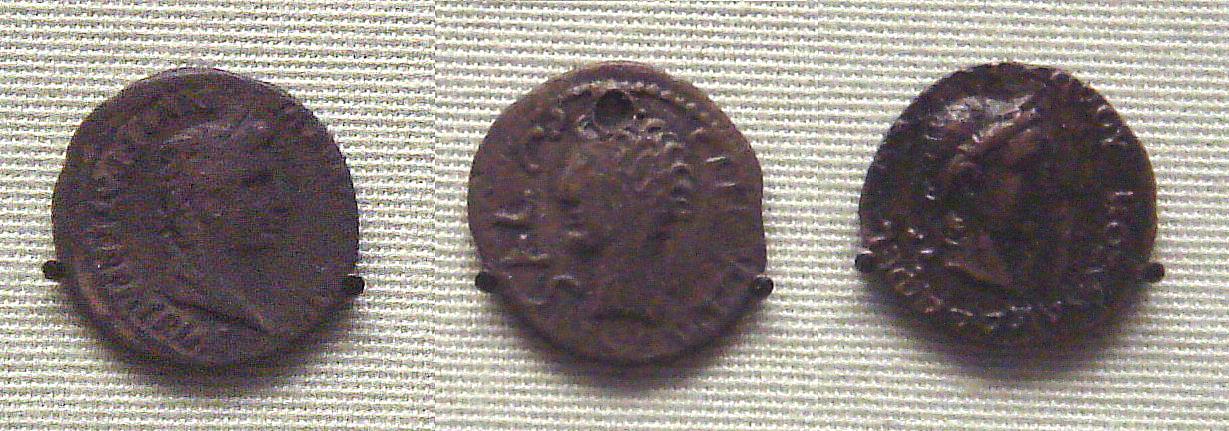
- 08ArtefactReign of Tiberius, 14 – 37 CE(Secure date)
Roman denarius found in India
Roman silver in Tamil hoards.
Roman silver coins of Augustus and Tiberius are found in hoards in South India; local imitations and Kushan coins copying Roman types also circulated.
The Map Check
Places in this collection
Sources & Further Reading
Sources & further reading
- bookPossehl, G. L. (2002). The Indus Civilization: A Contemporary Perspective. AltaMira Press.
- bookWright, R. P. (2010). The Ancient Indus: Urbanism, Economy, and Society. Cambridge University Press.
- excavation reportRao, S. R. (1979). Lothal: A Harappan Port Town (1955–62), Vol. I. Memoirs of the Archaeological Survey of India 78. Archaeological Survey of India.
- bookKenoyer, J. M. (1998). Ancient Cities of the Indus Valley Civilization. Oxford University Press.
- primary sourceCasson, L. (ed. & trans.) (1989). The Periplus Maris Erythraei. Princeton University Press.
- bookBegley, V. & De Puma, R. D. (eds.) (1991). Rome and India: The Ancient Sea Trade. University of Wisconsin Press.
- excavation reportWheeler, R. E. M., Ghosh, A. & Deva, K. (1946). Arikamedu: an Indo-Roman trading-station on the east coast of India. Ancient India 2: 17–124. Archaeological Survey of India.