Curated collection · 8 entries
Keeladi and the Vaigai
Keeladi is not a single site but a cluster along the Vaigai — habitation at Keeladi, Agaram and Manalur, burials at Konthagai — tied to the coast at Alagankulam and to a wider world of trade and writing.
Curated by Indophile Editorial
- 01Site6th century BCE (debated) – early centuries CE(Debated)
Keeladi
The town.
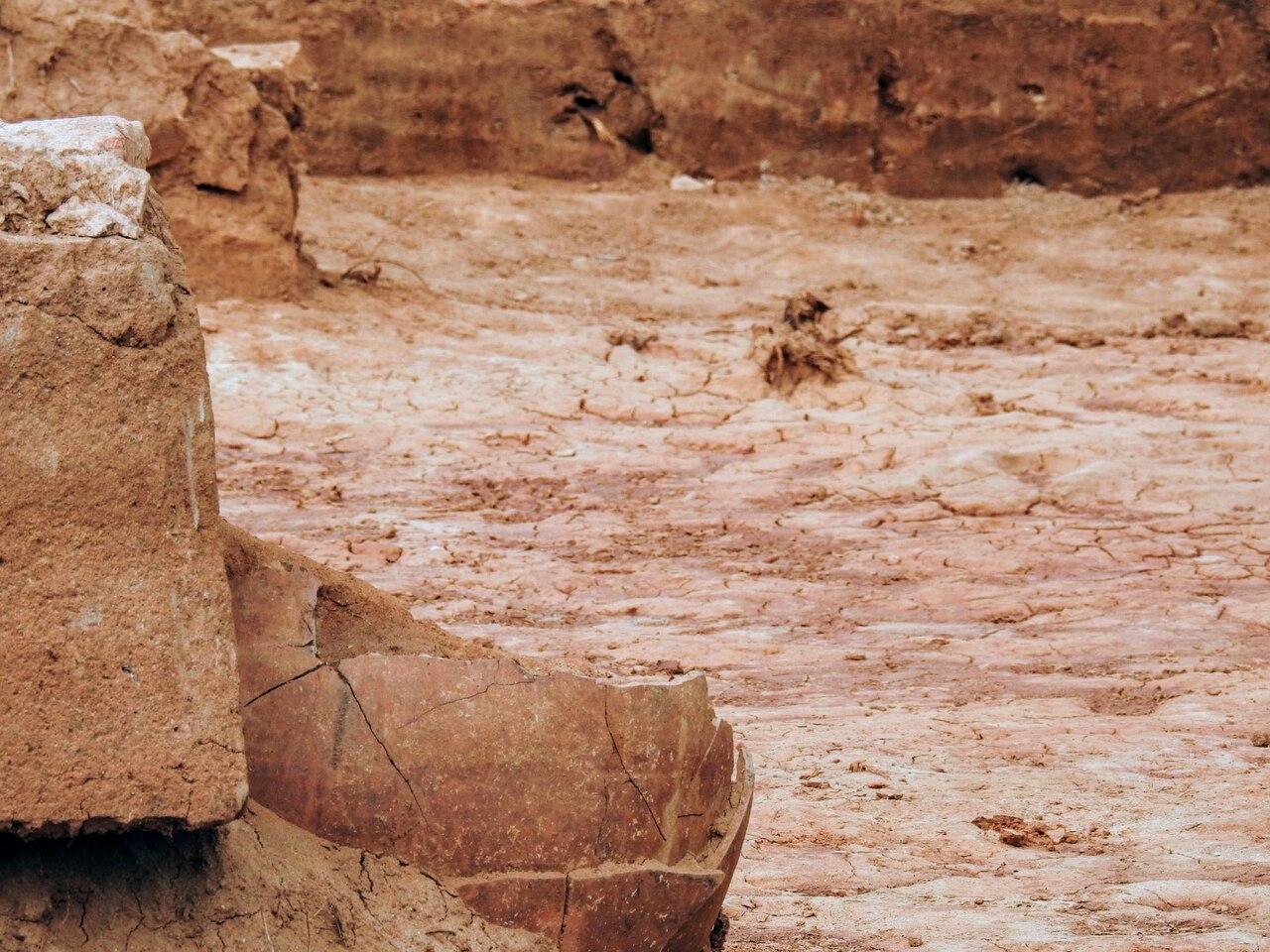
An Early Historic urban settlement on the Vaigai with brick structures, ring wells and potsherds inscribed in Tamil-Brahmi.
- 02SiteContemporary with Keeladi (debated)(Debated)
Konthagai
Its burial ground.
The burial ground of the Keeladi cluster: a field of urn burials, some with skeletal remains suitable for scientific study, excavated with Keeladi since 2020.
- 03Sitec. 600 BCE – 300 CE(Debated)
Agaram
Ring wells and beads.
A habitation site within the Keeladi cluster with ring wells, terracotta and bead finds.
- 04Sitec. 600 BCE – 300 CE(Debated)
Manalur
Kilns and furnaces.
A site of the Keeladi cluster on the Vaigai, investigated for industrial activity including furnaces.
- 05Sitec. 300 BCE – 300 CE(Approximate)
Alagankulam
The port at the river mouth.
A port near the mouth of the Vaigai with Roman amphora sherds, rouletted ware and Tamil-Brahmi graffiti — the sea outlet of the Keeladi hinterland.
- 06Sitec. 300 BCE – 300 CE(Approximate)
Korkai
The Pandya pearl port.
The early port of the Pandyas, famed for pearl fishing and named by Greek writers; its former shoreline now lies inland.
- 07Script / languagec. 3rd/2nd century BCE – 3rd century CE (start debated)(Debated)
Tamil-Brahmi
Writing on pots.
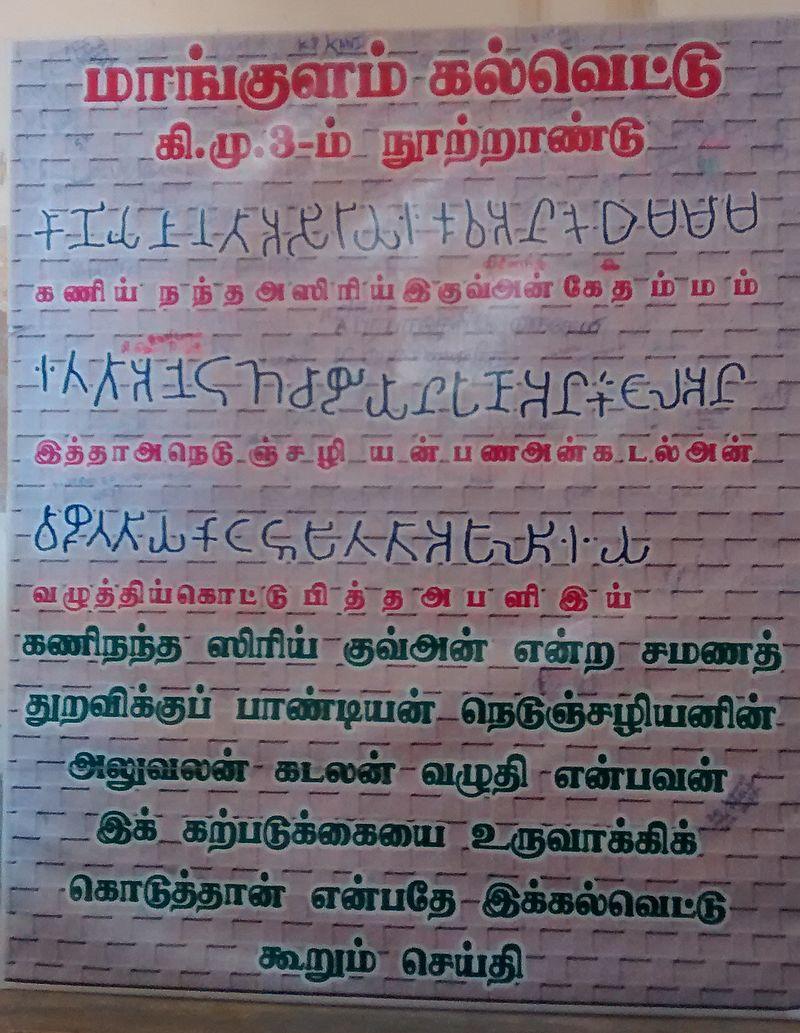
An adaptation of Brahmi to write Old Tamil, found in cave inscriptions and on pottery across Tamil Nadu and beyond.
- 08Polityc. 300 BCE – 300 CE(Approximate)
Early Pandyas
The kings of Madurai.
The southernmost of the muvendar, centred on Madurai; a Pandya king is named in Tamil-Brahmi inscriptions at Mangulam.
The Map Check
Places in this collection
Sources & Further Reading
Sources & further reading
- excavation reportTamil Nadu State Department of Archaeology (2019). Keeladi: An Urban Settlement of Sangam Age on the Banks of River Vaigai. Government of Tamil Nadu.
- bookBegley, V. & De Puma, R. D. (eds.) (1991). Rome and India: The Ancient Sea Trade. University of Wisconsin Press.
- inscription corpusMahadevan, I. (2003). Early Tamil Epigraphy: From the Earliest Times to the Sixth Century A.D.. Harvard Oriental Series 62. Harvard University Press / Cre-A.
- primary sourceCasson, L. (ed. & trans.) (1989). The Periplus Maris Erythraei. Princeton University Press.
- bookSastri, K. A. Nilakanta (1955). A History of South India from Prehistoric Times to the Fall of Vijayanagar. Oxford University Press.
- inscription corpusHultzsch, E. (1925). Inscriptions of Asoka. Corpus Inscriptionum Indicarum, Vol. I (new edition). Clarendon Press.