Subject
Historical Personalities
People documented in the historical record.
52 connected entries
Persons · 52
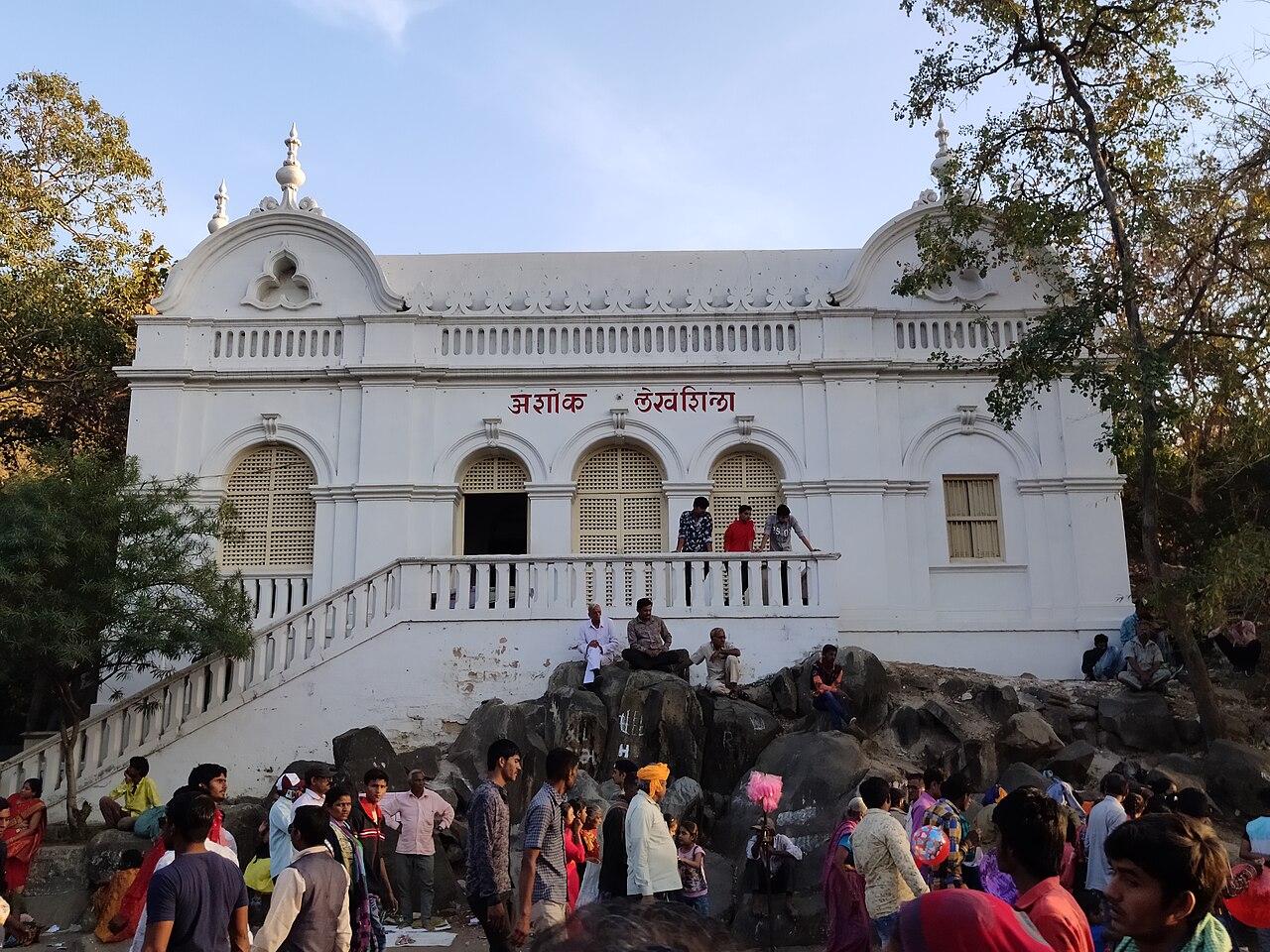
Ashoka
Mauryan emperor whose inscriptions, issued across the subcontinent, are the earliest substantial body of dated writing from South Asia after the Indus script.
Chandragupta Maurya
Founder of the Mauryan Empire, identified with the 'Sandrokottos' of Greek writers.
Kautilya
The name traditionally attached to the Arthashastra, a Sanskrit treatise on statecraft. Tradition makes him Chandragupta's minister; the surviving text is generally dated later.
Megasthenes
Greek envoy of Seleucus I to the Mauryan court at Pataliputra, whose lost 'Indica' survives only in quotations by later authors.
Siddhartha Gautama, the Buddha
Founder of Buddhism. Born, according to tradition and Ashoka's Lumbini inscription, at Lumbini; his dates are debated.
Vardhamana Mahavira
The 24th tirthankara of the Jain tradition and a contemporary of the Buddha in the middle Ganga valley.
Rudradaman I
Western Kshatrapa ruler whose Junagadh inscription is the earliest long royal inscription in Sanskrit.
Kanishka I
The most prominent Kushan ruler, remembered in Buddhist tradition as a patron and known from the Rabatak inscription and coinage.
Samudragupta
Gupta king whose campaigns and claimed tributaries are recorded in Harishena's eulogy on the Allahabad pillar.
Chandragupta II
Gupta king who extended Gupta power into western India; Faxian travelled through his realm.
Faxian
Chinese Buddhist monk who travelled through South Asia c. 399–414 CE in search of monastic texts.
Xuanzang
Chinese monk and translator who spent more than a decade in South Asia in the 7th century and studied at Nalanda.
Aryabhata
Mathematician-astronomer whose Aryabhatiya (499 CE) treats arithmetic, algebra, trigonometry and planetary astronomy.
Iravatham Mahadevan
Epigraphist whose corpus of Tamil-Brahmi inscriptions and concordance of Indus signs are standard references.
James Prinsep
Assay master at the Calcutta Mint and secretary of the Asiatic Society who deciphered Brahmi in 1837, making Ashoka's edicts readable.
Alexander Cunningham
British army engineer who became the first Archaeological Surveyor of India in 1861 and identified many Buddhist sites using Chinese pilgrims' accounts.
John Marshall
Director-General of the Archaeological Survey of India (1902–1928) who announced the discovery of the Indus civilisation in 1924.
Rakhal Das Banerji
Archaeologist who began excavations at Mohenjo-daro in 1922.
Daya Ram Sahni
Archaeologist who directed the first excavations at Harappa in 1920–21, and later became Director-General of the ASI.
R. E. Mortimer Wheeler
Director-General of the ASI (1944–48) who introduced stratigraphic excavation methods and excavated Arikamedu, Brahmagiri and Harappa.
Vishnu Shridhar Wakankar
Archaeologist who brought the rock shelters of Bhimbetka to scholarly attention in 1957.
Rajaraja I
Chola king (r. 985–1014 CE) who built the Brihadisvara temple at Thanjavur.
Babur
Founder of the Mughal dynasty, victor at Panipat in 1526, and author of the memoir known as the Baburnama.
Akbar
Mughal emperor (r. 1556–1605) whose administrative system and religious policy shaped the empire.
Varahamihira
Astronomer and polymath of Ujjain whose Pancasiddhantika summarises five earlier astronomical systems and whose Brihatsamhita is an encyclopaedia of omens, architecture and natural knowledge.
Brahmagupta
Mathematician-astronomer who in 628 CE composed the Brahmasphutasiddhanta, which gives rules for operating with zero and negative quantities.
Bhaskara II
Mathematician-astronomer whose Siddhantashiromani (1150 CE), including the Lilavati on arithmetic and the Bijaganita on algebra, became a standard text across India.
Kalidasa
The most celebrated poet and dramatist of classical Sanskrit, author of the play Abhijnanashakuntalam and the poem Meghaduta.
Shankara
Philosopher of Advaita Vedanta whose commentaries on the Upanishads, the Bhagavad Gita and the Brahmasutras shaped later Hindu thought.
Ramanuja
Vaishnava theologian of Srirangam whose qualified non-dualism (Vishishtadvaita) gave philosophical form to devotion to Vishnu.
Basava
Twelfth-century reformer and poet at the Kalachuri court of Kalyana, central to the Virashaiva (Lingayat) movement and its Kannada vachana poetry.
Al-Biruni
Central Asian scholar who accompanied Mahmud of Ghazni's campaigns and wrote the Kitab al-Hind (c. 1030 CE), a systematic study of Indian science, religion and society.
Amir Khusrau
Persian poet of the Delhi Sultanate courts and disciple of the Sufi Nizamuddin Auliya, remembered also for verse in Hindavi.
Ibn Battuta
Moroccan traveller who served Muhammad bin Tughluq as a qadi in Delhi and later visited the Maldives and Sri Lanka; his Rihla describes 14th-century India.
Harsha
Pushyabhuti king of Thanesar and Kanauj (r. 606–647 CE), known from Banabhatta's Harshacharita, Xuanzang's travel account and his own inscriptions.
Pulakeshin II
Chalukya king of Vatapi (Badami) (r. c. 610–642 CE) whose achievements are recorded in the Aihole inscription of 634 CE.
Rajendra I
Chola king (r. 1014–1044 CE) who led a campaign to the Ganga, founded Gangaikondacholapuram and sent a naval expedition against Srivijaya.
Rudramadevi
Kakatiya ruler of Warangal (r. c. 1262–1289 CE), one of the few women to rule a major medieval Indian kingdom in her own name.
Alauddin Khalji
Delhi sultan (r. 1296–1316 CE) who repelled Mongol invasions, introduced market and revenue controls and sent armies deep into the Deccan.
Muhammad bin Tughluq
Delhi sultan (r. 1325–1351 CE) whose transfer of the capital to Daulatabad and token copper currency are among the best-documented experiments of the Sultanate.
Krishnadevaraya
Tuluva king of Vijayanagara (r. 1509–1529 CE), a successful general and patron of Telugu, Kannada, Tamil and Sanskrit literature.
Rani Durgavati
Regent of the Gond kingdom of Garha-Mandla who died in 1564 resisting a Mughal army.
Shah Jahan
Mughal emperor (r. 1628–1658) under whom the Taj Mahal and the new capital Shahjahanabad (Delhi) were built.
Aurangzeb
Mughal emperor (r. 1658–1707) under whom the empire reached its largest extent while spending decades in war in the Deccan.
Shivaji
Founder of the Maratha state (1630–1680), crowned at Raigad in 1674.
Ahilyabai Holkar
Holkar ruler of Malwa from Maheshwar (r. 1767–1795), noted for her administration and patronage of temples across India.
Tipu Sultan
Ruler of Mysore (r. 1782–1799) who fought four wars against the East India Company and died defending Srirangapatna.
Ranjit Singh
Founder of the Sikh kingdom of Punjab, who took Lahore in 1799 and ruled as Maharaja until 1839.
Kabir
Weaver-poet of Benares whose verses reject the authority of both Brahmin and mulla in favour of devotion to a formless god.
Guru Nanak
First Guru of the Sikh tradition (1469–1539), whose hymns open the Adi Granth.
Mirabai
Rajput princess and devotional poet of Krishna, whose songs are among the most widely sung in north India.
Tulsidas
Poet whose Awadhi Ramcharitmanas, begun in 1574, became the most influential telling of the Rama story in north India.