Genetic study · American Journal of Human Genetics 2013
Genetic evidence for recent population mixture in India
Dated ANI–ASI admixture in present-day Indian groups to between about 1,900 and 4,200 years ago, followed by a reduction in mixing consistent with endogamy.
Reading note
Genetic ancestry described here refers to statistical relationships between sampled genomes. It does not map onto any present-day ethnic, linguistic, religious, caste or national identity.Method
Research methodology
- 01Linkage-disequilibrium-based admixture dating (ROLLOFF/ALDER-type methods)
What the DNA says
Main findings
- 01Admixture dates ranged from about 1,900 to 4,200 years ago across groups.
- 02Mixture became much less common afterwards, consistent with a shift to endogamy.
What we still don't know
Limitations
- 01Admixture dating assumes a simplified model of mixture and can be biased by continuous or multiple pulses of mixture.
- 02Present-day DNA only.
Connected to Genetic evidence for recent population mixture in India
Continue exploring
Reconstructing Indian population history
Introduced the 'Ancestral North Indian' (ANI) and 'Ancestral South Indian' (ASI) model to describe genetic variation among present-day Indian groups.
ANI and ASI
Two statistical reference populations proposed in 2009 to describe the main axis of genetic variation among present-day Indians.
Endogamy and population structure
Marriage within a group over many generations produces genetic structure — strong founder effects that are visible in genomic data.
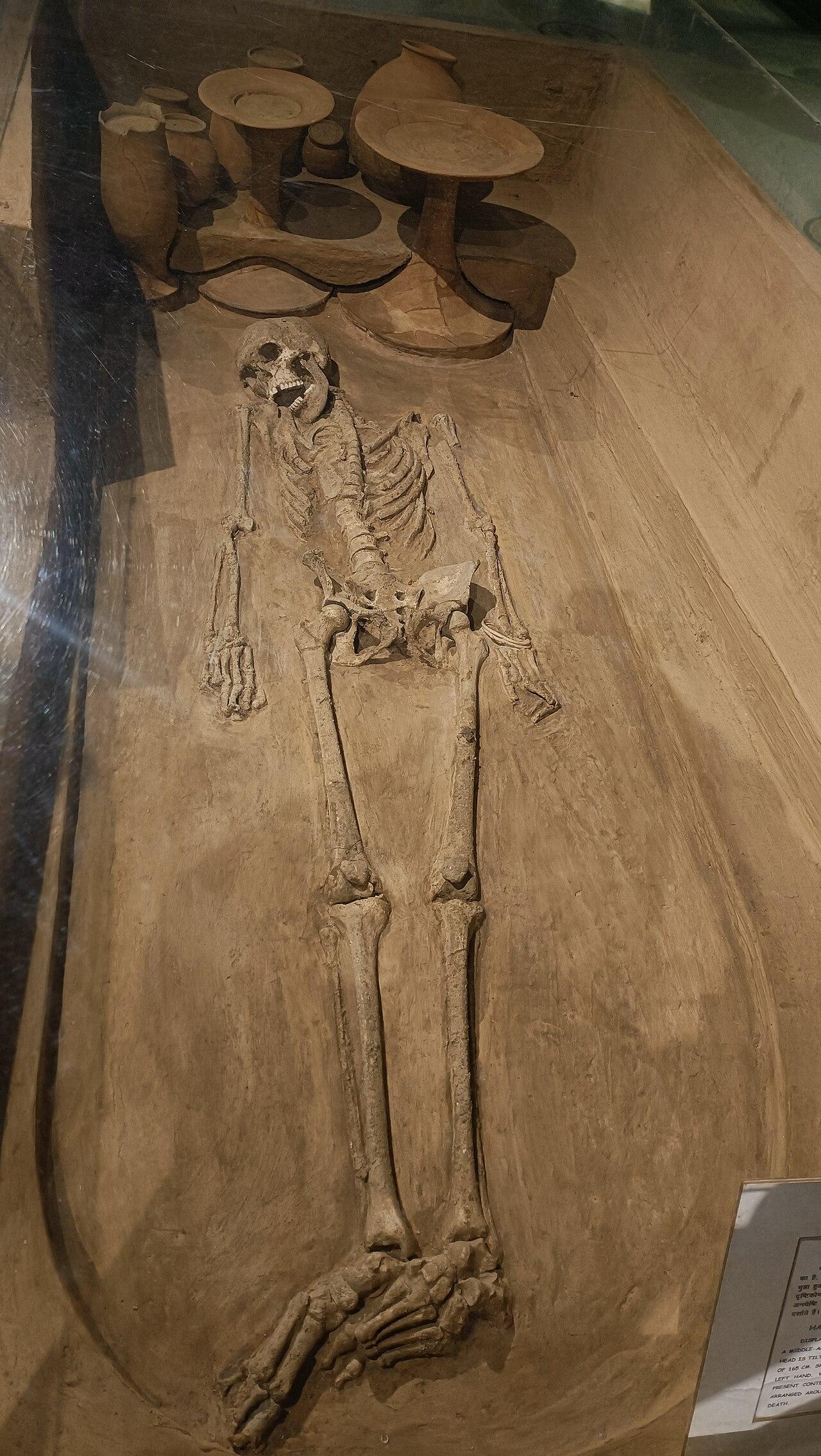
Understanding Ancient Indian DNA
The key studies and concepts, read carefully.
Sources & Further Reading
Sources & further reading
- journal articleMoorjani, P. et al. (2013). Genetic evidence for recent population mixture in India. American Journal of Human Genetics 93(3): 422–438. doi:10.1016/j.ajhg.2013.07.006