Genetic study · Nature 2009
Reconstructing Indian population history
Introduced the 'Ancestral North Indian' (ANI) and 'Ancestral South Indian' (ASI) model to describe genetic variation among present-day Indian groups.
Reading note
Genetic ancestry described here refers to statistical relationships between sampled genomes. It does not map onto any present-day ethnic, linguistic, religious, caste or national identity.Method
Research methodology
- 01Genome-wide SNP genotyping of present-day individuals
- 02Statistical modelling (f-statistics) of population relationships
What the DNA says
Main findings
- 01Most Indian groups could be modelled as mixtures of two ancestral populations, termed ANI and ASI.
- 02ANI was related to West Eurasians; ASI was not closely related to any group outside the subcontinent, with the Andamanese the most closely related population tested.
- 03Many groups showed strong signals of founder events and endogamy.
What we still don't know
Limitations
- 01Based only on present-day DNA; ANI and ASI are statistical constructs, not sampled ancient populations.
- 02Later work with ancient DNA showed that ANI and ASI were themselves mixtures.
After publication
Subsequent research and competing interpretations
- 01Moorjani et al. (2013) dated ANI–ASI mixture.
- 02Narasimhan et al. (2019) modelled ANI and ASI using ancient genomes.
Connected to Reconstructing Indian population history
Continue exploring
Genetic evidence for recent population mixture in India
Dated ANI–ASI admixture in present-day Indian groups to between about 1,900 and 4,200 years ago, followed by a reduction in mixing consistent with endogamy.
The formation of human populations in South and Central Asia
A large ancient DNA study proposing how ancestry related to Iranian-plateau groups, AASI and steppe pastoralists combined to form South Asian populations.
ANI and ASI
Two statistical reference populations proposed in 2009 to describe the main axis of genetic variation among present-day Indians.
Endogamy and population structure
Marriage within a group over many generations produces genetic structure — strong founder effects that are visible in genomic data.
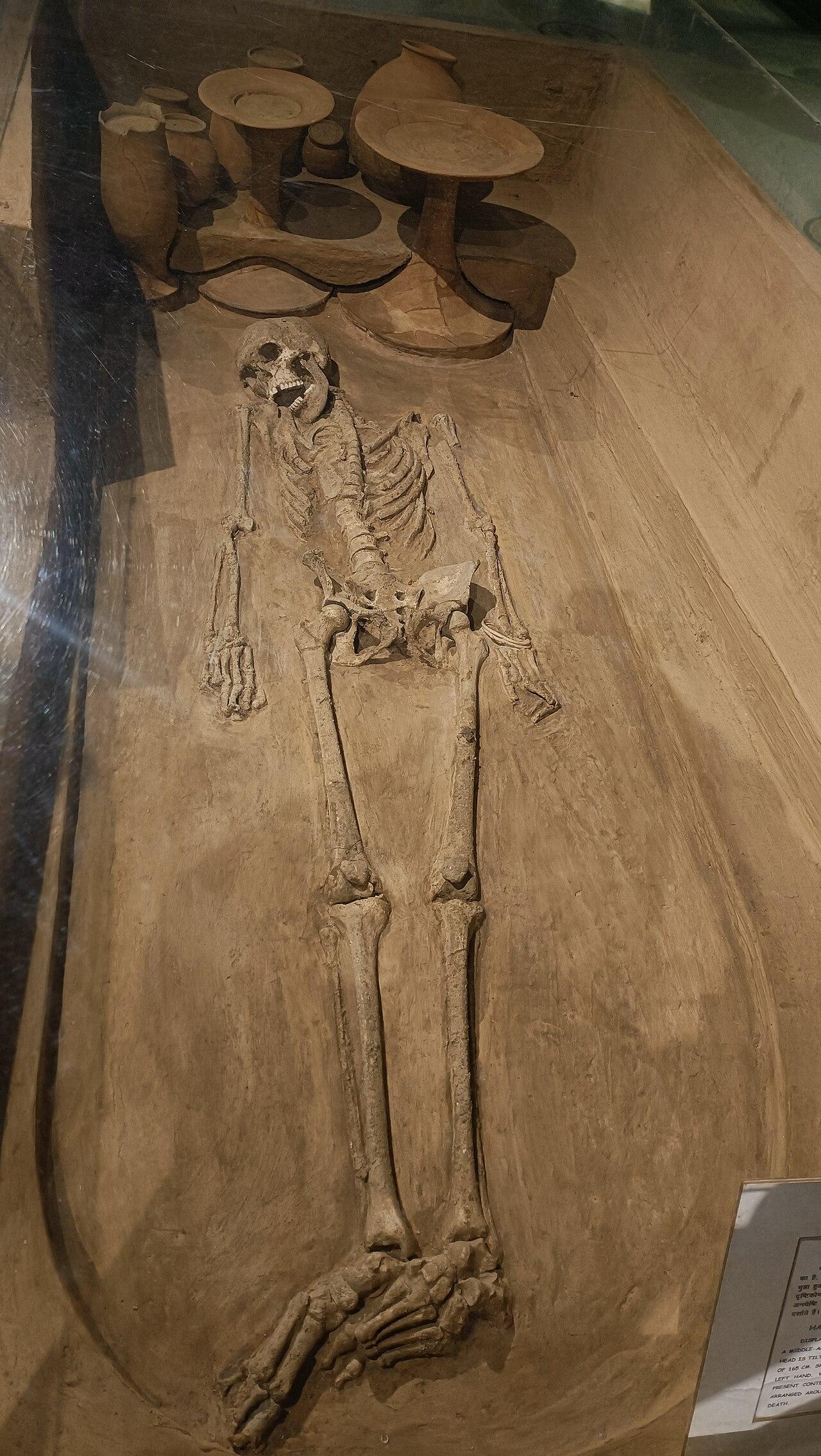
Understanding Ancient Indian DNA
The key studies and concepts, read carefully.
Sources & Further Reading
Sources & further reading
- journal articleReich, D., Thangaraj, K., Patterson, N., Price, A. L. & Singh, L. (2009). Reconstructing Indian population history. Nature 461: 489–494. doi:10.1038/nature08365