Archaeological site
Bhimbetka
Also: Bhimbetka rock shelters · Bhim Baithka
A dense cluster of sandstone rock shelters in the foothills of the Vindhyas, with stone-tool deposits reaching back to the Acheulian and paintings spanning from the Mesolithic into historical times.
The Map Check
Location and neighbouring sites
From the Trenches
Excavation history
1970s
V. S. Wakankar, V. N. Misra and colleagues
Vikram University; Deccan College
Important findings
- Acheulian stone tools in the lowest excavated deposits
- Microlithic assemblages associated with Mesolithic occupation
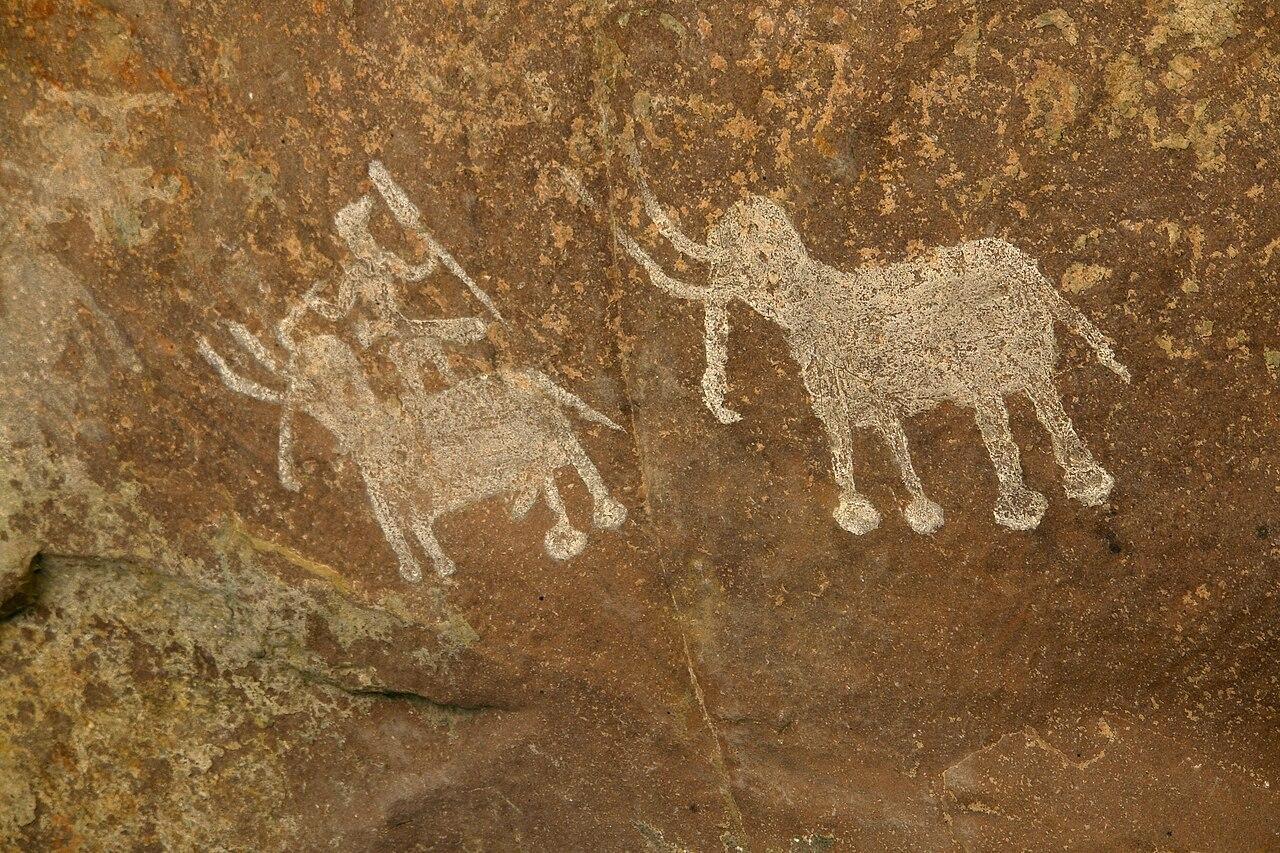
- Superimposed paintings of animals, hunting and dancing scenes in red and white pigments
- Later paintings showing riders and armed figures from historical periods
From the Trenches
A long sequence in one place
Well supportedWhat does the archaeological evidence reveal?
Bhimbetka is valuable less for any single find than for its duration. Excavated shelters preserve deposits from the Lower Palaeolithic through the Mesolithic, allowing archaeologists to follow changes in stone-tool technology in one landscape.
The paintings are the site's best-known feature. Their relative order can often be read from superimposition — later images painted over earlier ones — but assigning absolute dates to individual paintings remains difficult.
What We Still Don't Know
What we still don't know
DebatedUnresolved questions and competing interpretations
Direct dating of pigments has been limited, so the age of the earliest paintings rests largely on stylistic sequencing and associations with excavated deposits.
SourcesConingham et al. 2015
Connected to Bhimbetka
Connected to this site
Sources & Further Reading
Sources & further reading
- unescoUNESCO World Heritage Centre (2003). Rock Shelters of Bhimbetka (List no. 925). whc.unesco.org/en/list/925
- bookMathpal, Y. (1984). Prehistoric Rock Paintings of Bhimbetka, Central India. Abhinav Publications.
- bookConingham, R. & Young, R. (2015). The Archaeology of South Asia: From the Indus to Asoka, c. 6500 BCE–200 CE. Cambridge University Press.