Period 01 of 16
Prehistory and Early Human Settlements
Also: Palaeolithic · Paleolithic · Mesolithic · Stone Age
From the first toolmakers more than a million years ago to Mesolithic foragers, the subcontinent's deep past is read from stone tools, rock shelters and the sediments of ancient rivers.
Major developments
- 01Acheulian handaxe makers present in South India by around 1.5 million years ago, on published burial dating
- 02Middle Palaeolithic technologies, including Levallois methods, appear several hundred thousand years ago
- 03Microlithic toolkits spread widely in the late Pleistocene and early Holocene
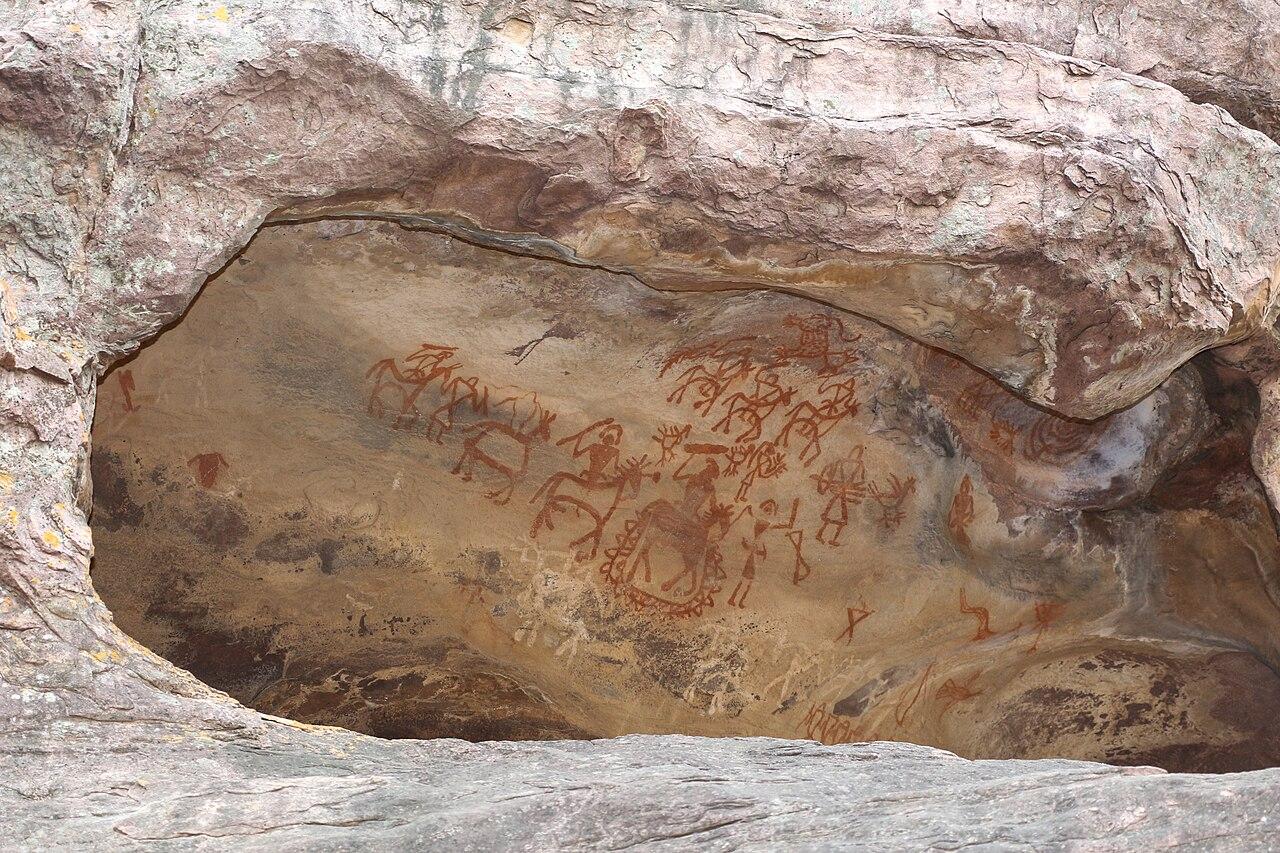
- 04Rock art traditions develop in central India
The Map Check
Where this period happened
Click a point to open its record. Boundaries at 10,000 years ago from Cliopatria (Seshat), CC BY 4.0.
From the Trenches
Reading time from stone
Well supportedWhat does the archaeological evidence reveal?
Most of what is known about the earliest inhabitants comes from stone tools. Their typology — handaxes, flake tools, microliths — provides a relative sequence; absolute dates come from methods such as cosmogenic nuclide burial dating and luminescence, which have pushed some South Indian Acheulian sites back to around 1.5 million years.
Human fossils are extremely rare in South Asia, so the question of which hominin species made the oldest tools remains open.
What We Still Don't Know
What we still don't know
DebatedUnresolved questions and competing interpretations
When anatomically modern humans first arrived, and how they related to earlier populations, is debated. Proposed dates range widely, and the volcanic ash of the Toba super-eruption (c. 74,000 years ago) has been central to arguments on both sides.
Polities & cultures
Civilisations, kingdoms and republics
From the trenches
Archaeological sites
Bhimbetka
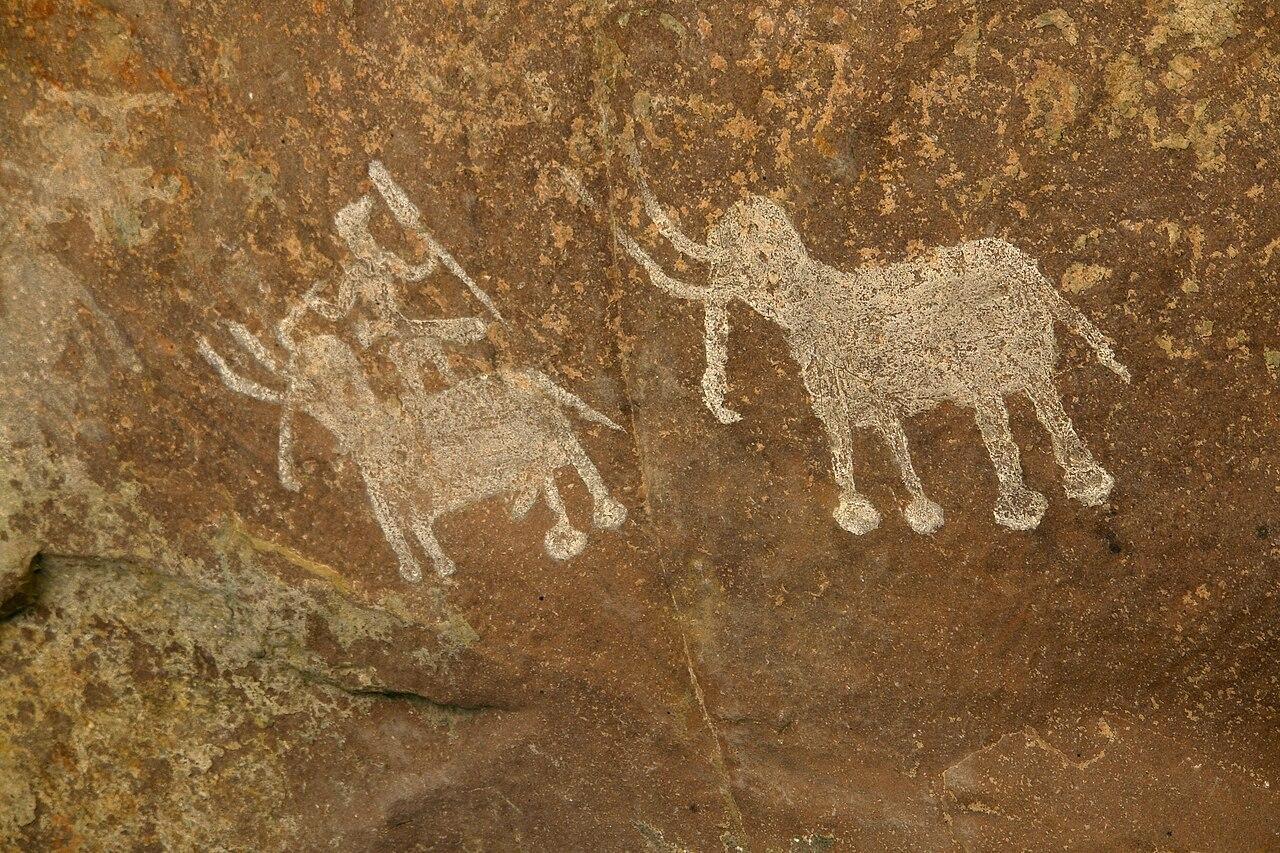
A dense cluster of sandstone rock shelters in the foothills of the Vindhyas, with stone-tool deposits reaching back to the Acheulian and paintings spanning from the Mesolithic into historical times.
Attirampakkam
An open-air Palaeolithic site near Chennai that has produced some of the oldest dated Acheulian stone tools in South Asia, and later Middle Palaeolithic assemblages.
Sarai Nahar Rai
A Mesolithic camp on an ox-bow lake in the Ganga plain with some of the earliest human burials known from South Asia — a key site for the foragers who lived in the region before farming.
Mahadaha
A Mesolithic lakeside site near Sarai Nahar Rai with numerous human burials, hearths and a butchering area.
Damdama
A Mesolithic settlement in the same lake district with dozens of human burials, some of them double burials.
Chopani-Mando
A site in the Belan valley with a long Epipalaeolithic-to-Mesolithic sequence, including round hut floors and early pottery whose dating is debated.
Fa-Hien Lena
A large rainforest cave in south-western Sri Lanka with evidence of Homo sapiens from around 48,000 years ago, including specialised hunting of monkeys and squirrels.
Batadomba-lena
A rock shelter whose human remains and food debris document modern humans living from tropical rainforest resources in the late Pleistocene.
Kota Formation (Barapasaurus)
Early Jurassic rocks of the Pranhita–Godavari valley that yielded Barapasaurus tagorei, one of the earliest known sauropod dinosaurs, from several partial skeletons.
Chronology
Events
Early sauropods in Gondwanan IndiaEventc. 190–180 million years ago(Debated)Deccan Traps eruptions and the end-Cretaceous extinctionEventc. 66 million years ago(Approximate)Whales begin on the shores of TethysEventc. 50–47 million years ago(Approximate)Apes of the SiwaliksEventc. 12.5–8 million years ago(Approximate)Acheulian toolmakers in South IndiaEventc. 1.5 million years ago(Approximate)Toba super-eruptionEventc. 74,000 years ago(Approximate)Modern humans in Sri Lanka's rainforestsEventc. 48,000 – 45,000 years ago(Approximate)Mesolithic burials in the Ganga plainEventEarly–middle Holocene (debated)(Debated)Conclusions
What the evidence supports
- Toolmakers were in South India by around 1.5 million years ago, and Acheulian technology persisted for over a million years.
- People lived across the subcontinent through the Toba eruption of about 74,000 years ago, on the evidence of Jwalapuram and Dhaba.
- By the early Holocene, foragers in the Ganga plain were burying their dead in lakeside camps, and rock art flourished at Bhimbetka.
Still open
What we still don't know
- Which hominin species made the oldest tools; when modern humans arrived; the age and species of the Narmada skull cap.
Go further back
Deep time: dinosaurs, the Deccan Traps and the Narmada skull cap →
Connected to Prehistory and Early Human Settlements
Continue exploring
Bhimbetka
A dense cluster of sandstone rock shelters in the foothills of the Vindhyas, with stone-tool deposits reaching back to the Acheulian and paintings spanning from the Mesolithic into historical times.
Attirampakkam
An open-air Palaeolithic site near Chennai that has produced some of the oldest dated Acheulian stone tools in South Asia, and later Middle Palaeolithic assemblages.
Vishnu Shridhar Wakankar
Archaeologist who brought the rock shelters of Bhimbetka to scholarly attention in 1957.
Ganga Plain Mesolithic
Forager communities of the early and middle Holocene who camped and buried their dead beside ox-bow lakes in the middle Ganga plain.
Sarai Nahar Rai
A Mesolithic camp on an ox-bow lake in the Ganga plain with some of the earliest human burials known from South Asia — a key site for the foragers who lived in the region before farming.
Mahadaha
A Mesolithic lakeside site near Sarai Nahar Rai with numerous human burials, hearths and a butchering area.
Damdama
A Mesolithic settlement in the same lake district with dozens of human burials, some of them double burials.
Chopani-Mando
A site in the Belan valley with a long Epipalaeolithic-to-Mesolithic sequence, including round hut floors and early pottery whose dating is debated.
Sources & Further Reading
Sources & further reading
- journal articlePappu, S. et al. (2011). Early Pleistocene presence of Acheulian hominins in South India. Science 331(6024): 1596–1599. doi:10.1126/science.1200183
- journal articleAkhilesh, K. et al. (2018). Early Middle Palaeolithic culture in India around 385–172 ka reframes Out of Africa models. Nature 554: 97–101. doi:10.1038/nature25444
- bookConingham, R. & Young, R. (2015). The Archaeology of South Asia: From the Indus to Asoka, c. 6500 BCE–200 CE. Cambridge University Press.