Archaeological site
Sarai Nahar Rai
A Mesolithic camp on an ox-bow lake in the Ganga plain with some of the earliest human burials known from South Asia — a key site for the foragers who lived in the region before farming.
The Map Check
Location and neighbouring sites
From the Trenches
Excavation history
1972–1973
G. R. Sharma and colleagues
University of Allahabad
Important findings
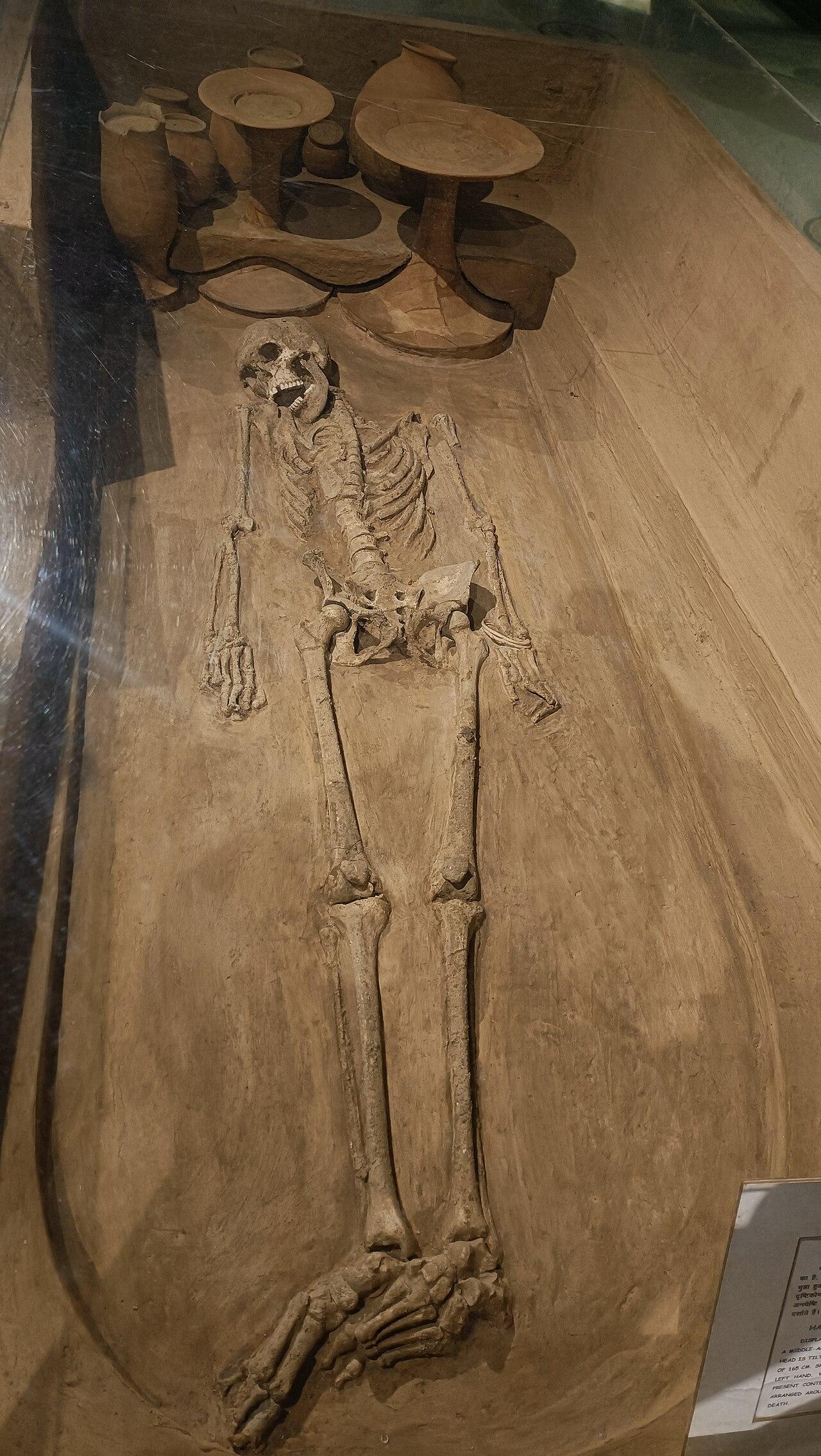
- Extended human burials within the settlement, some with grave goods
- Hearths, floors and bones of wild animals hunted around the lake
- Geometric microliths
- Skeletons of robust build and tall stature, studied morphologically
From the Trenches
Foragers of the lake country
Well supportedWhat does the archaeological evidence reveal?
Sarai Nahar Rai, with Mahadaha and Damdama nearby, belongs to a cluster of Mesolithic sites on old meander lakes in the Pratapgarh region. People here hunted, fished and gathered, buried their dead within their camps, and returned to the same places over long periods.
The skeletons are among the most studied prehistoric human remains in South Asia. Physical anthropologists have described them as tall and robust, with heavy dental wear consistent with a coarse, gritty diet.
SourcesKennedy 2000; Sharma et al. 1980
What the DNA Says
What the DNA says — and doesn't
HypothesisWhat archaeogenetics can tell us — and its limits
No ancient genome has been published from Sarai Nahar Rai or its neighbouring sites. The skeletons are therefore not direct evidence of 'AASI' ancestry, although they are sometimes described that way in popular writing.
AASI-related ancestry is a statistical construct inferred from later populations; it has never been sequenced directly. It is a reasonable hypothesis that early Holocene foragers of the Ganga plain carried such ancestry, but that hypothesis remains untested until DNA is recovered from remains like these.
SourcesNarasimhan et al. 2019
What We Still Don't Know
What we still don't know
DebatedUnresolved questions and competing interpretations
The absolute age of the burials, which needs modern dating of the bones themselves; how these foragers related to the first farmers of the Vindhyas and Ganga valley; and whether their ancestry can ever be recovered from the region's poorly preserved bone.
SourcesConingham et al. 2015
Connected to Sarai Nahar Rai
Connected to this site
Mahadaha
A Mesolithic lakeside site near Sarai Nahar Rai with numerous human burials, hearths and a butchering area.
Damdama
A Mesolithic settlement in the same lake district with dozens of human burials, some of them double burials.
Ganga Plain Mesolithic
Forager communities of the early and middle Holocene who camped and buried their dead beside ox-bow lakes in the middle Ganga plain.
AASI-related ancestry
A modelled ancestry component distantly related to present-day Andamanese and other East Asian and Australasian lineages, inferred as a deep source in South Asian populations.
Chopani-Mando
A site in the Belan valley with a long Epipalaeolithic-to-Mesolithic sequence, including round hut floors and early pottery whose dating is debated.
Mesolithic burials in the Ganga plain
Foragers at Sarai Nahar Rai, Mahadaha and Damdama bury their dead within lakeside camps.
Peopling the Subcontinent: Migrations Old and New
Foragers, farmers, steppe herders and seafarers — what genetics, language and archaeology each contribute.
Sources & Further Reading
Sources & further reading
- excavation reportSharma, G. R., Misra, V. D., Mandal, D., Misra, B. B. & Pal, J. N. (1980). Beginnings of Agriculture: Epi-Palaeolithic to Neolithic — Excavations at Chopani-Mando, Mahadaha and Mahagara. Abinash Prakashan, Allahabad.record unverified
- bookKennedy, K. A. R. (2000). God-Apes and Fossil Men: Paleoanthropology of South Asia. University of Michigan Press.
- bookConingham, R. & Young, R. (2015). The Archaeology of South Asia: From the Indus to Asoka, c. 6500 BCE–200 CE. Cambridge University Press.
- journal articleNarasimhan, V. M. et al. (2019). The formation of human populations in South and Central Asia. Science 365(6457): eaat7487. doi:10.1126/science.aat7487