Event · inscription
Ashoka's edicts inscribed
Rock and pillar edicts are set up across the empire in Prakrit (Brahmi and Kharoshthi), Greek and Aramaic.
Historical significance
The earliest securely dated writing in South Asia after the Indus script.
The Map Check
Where it happened
Supporting evidence
Sites and finds
Archaeological evidence
Connected to Ashoka's edicts inscribed
Continue exploring
Ashoka
Mauryan emperor whose inscriptions, issued across the subcontinent, are the earliest substantial body of dated writing from South Asia after the Indus script.
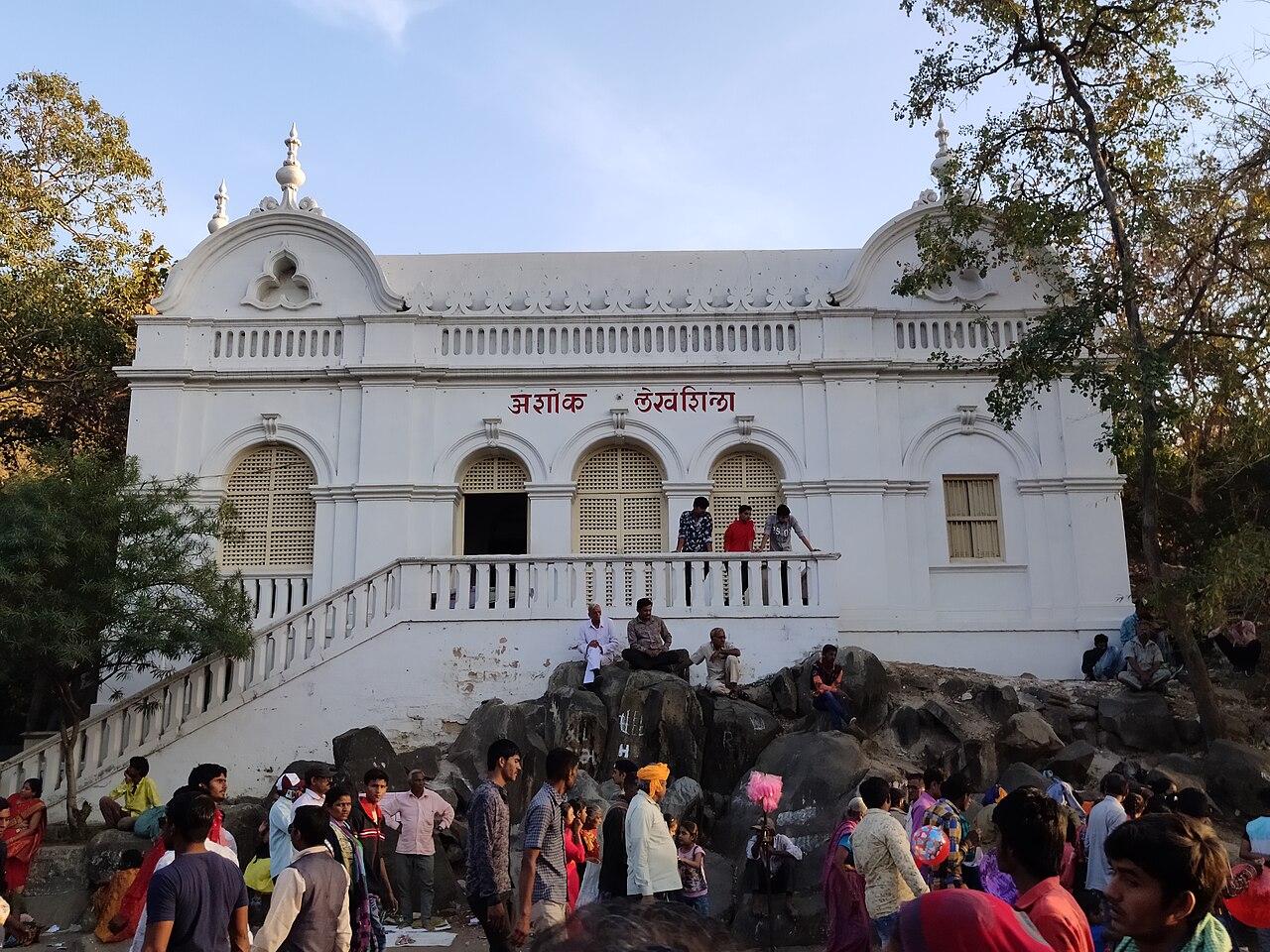
Junagadh Rock (Girnar)
A single granite boulder carrying three layers of history: Ashoka's fourteen major rock edicts, Rudradaman's Sanskrit inscription (c. 150 CE) and Skandagupta's record (mid-5th century CE).
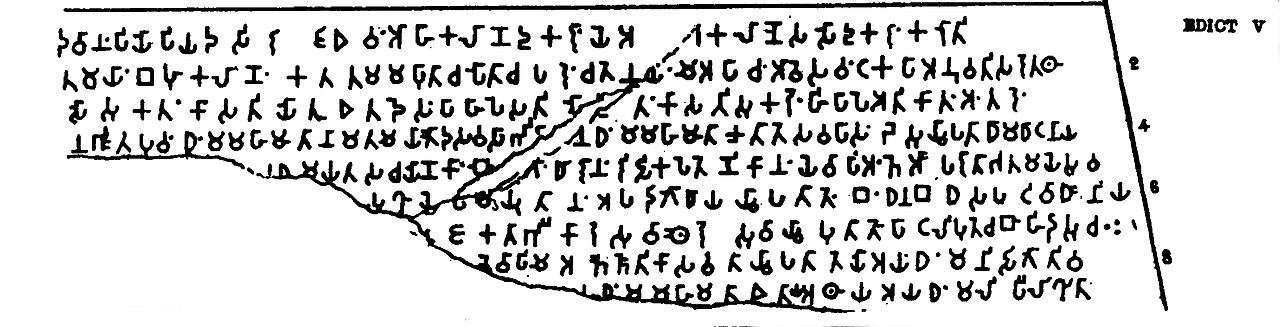
Brahmi
The script of most of Ashoka's edicts and the ancestor of nearly all later scripts of South and Southeast Asia, from Devanagari to Tamil and Thai.
Kharoshthi
A script derived from Aramaic, used in Gandhara and adjoining regions from the 3rd century BCE to around the 3rd–4th century CE.
Reading Ashoka
Ashoka's edicts as historical sources: their distribution, languages, decipherment and limits.
Sources & Further Reading
Sources & further reading
- inscription corpusHultzsch, E. (1925). Inscriptions of Asoka. Corpus Inscriptionum Indicarum, Vol. I (new edition). Clarendon Press.
- bookSalomon, R. (1998). Indian Epigraphy: A Guide to the Study of Inscriptions in Sanskrit, Prakrit, and the Other Indo-Aryan Languages. Oxford University Press.