Curated collection · 9 entries
The Rise and Decline of the Indus Civilisation
Follow the Indus world from its roots in Balochistan to its transformation after 1900 BCE.
Curated by Indophile Editorial
- 01Sitec. 7000 – 2500 BCE(Approximate)
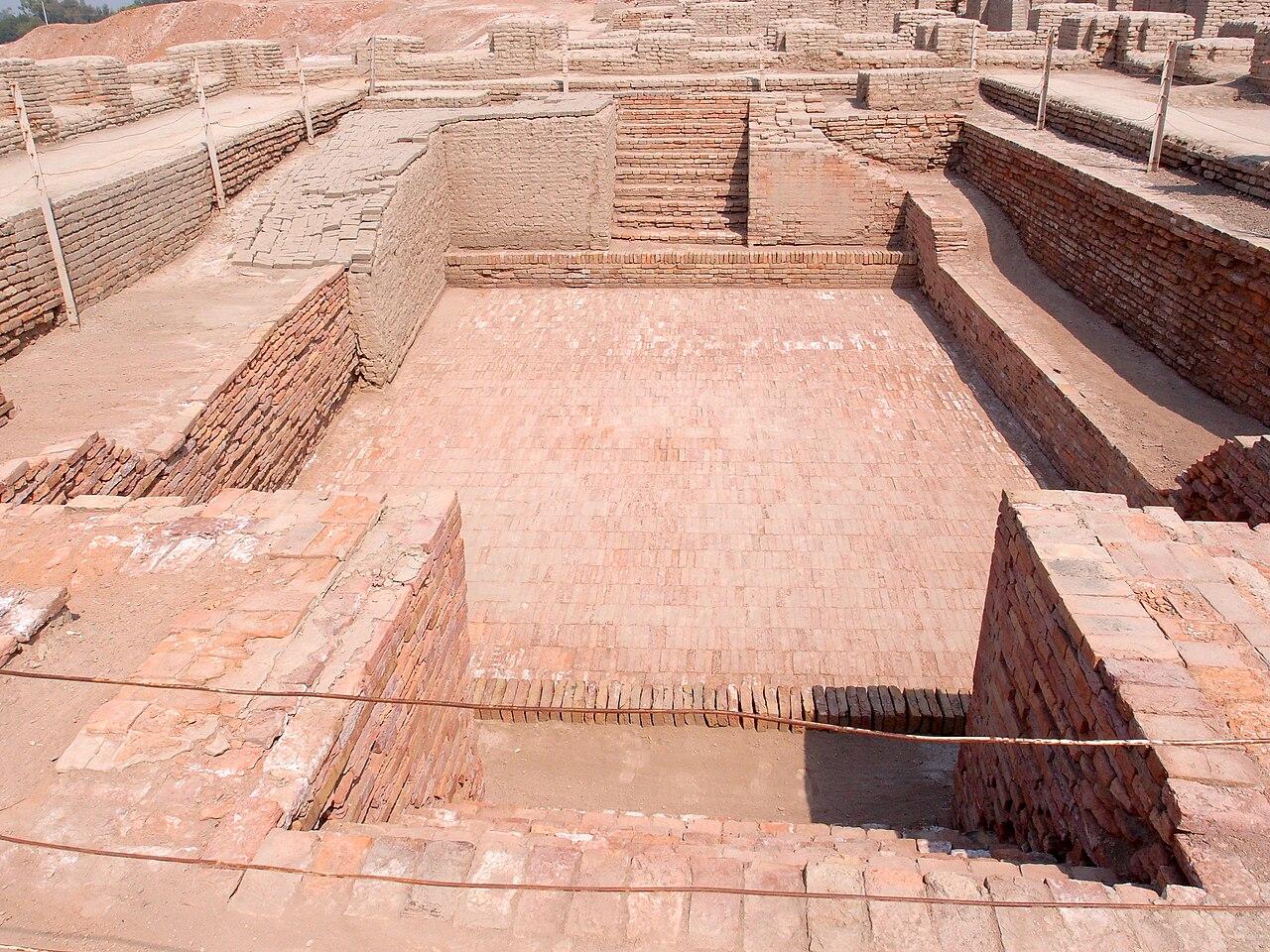
Mehrgarh
The deep roots.
A Neolithic settlement at the foot of the Bolan Pass with some of the earliest evidence in South Asia for farming, herding and permanent mud-brick architecture.
- 02Polityc. 3300 – 1300 BCE(Approximate)
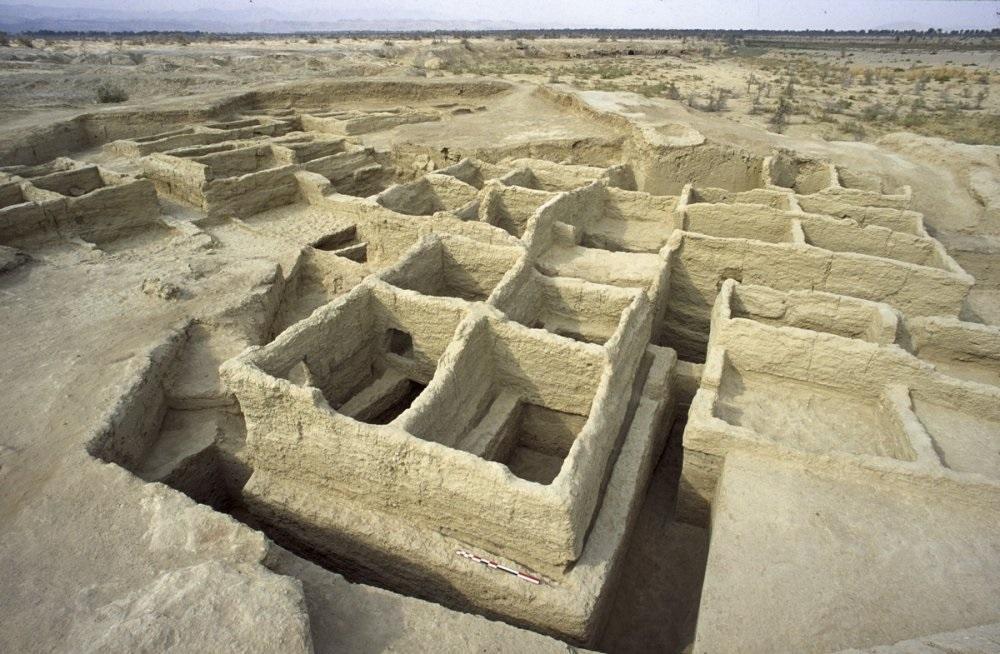
Indus Valley Civilisation
The civilisation at its height.
A Bronze Age urban tradition spanning more than a million square kilometres, known for planned cities, standardised weights, craft specialisation and an undeciphered script.
- 03Articlec. 2600 – 1900 BCE(Approximate)
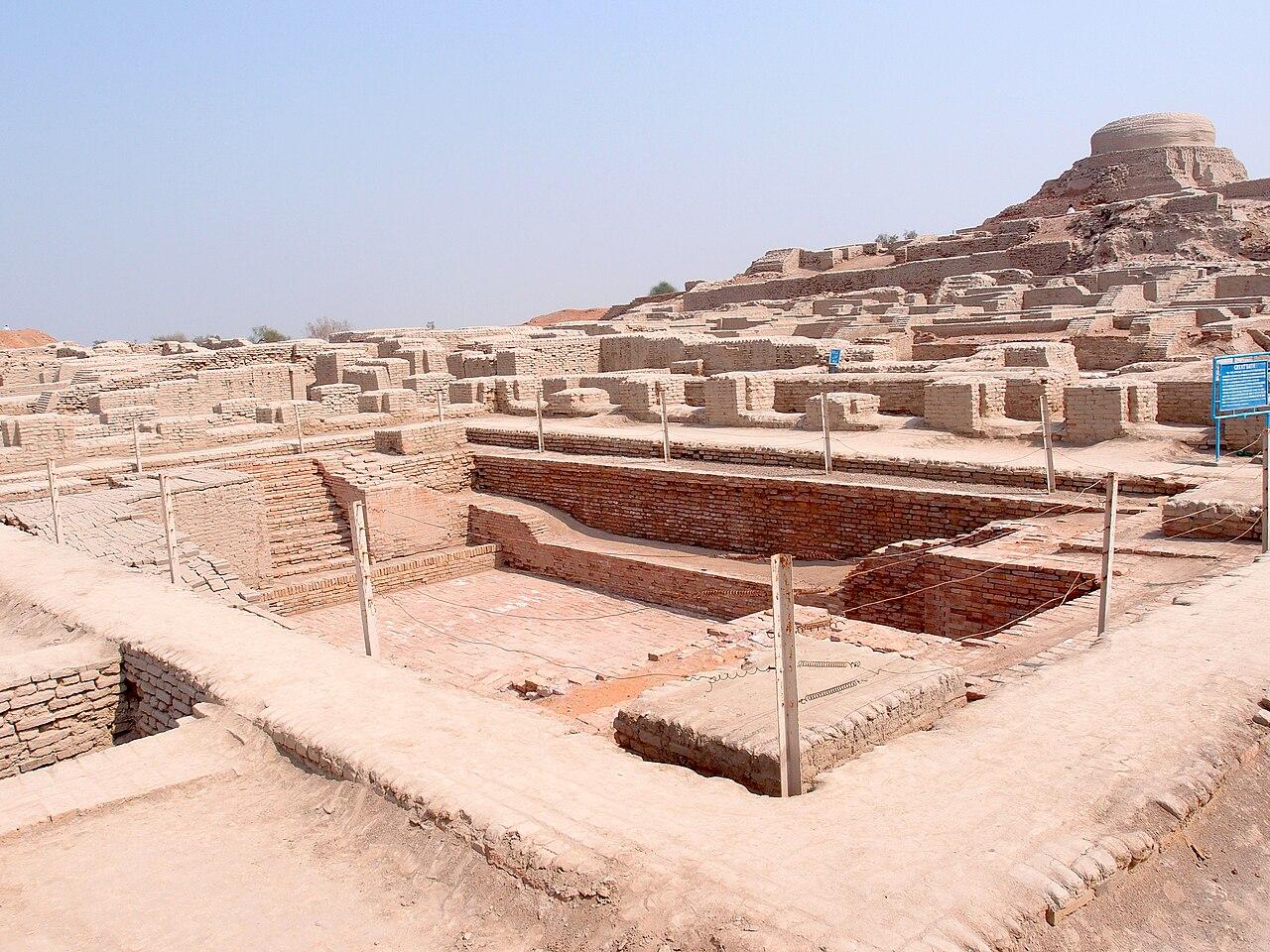
The Water Engineers of the Indus
Read: the water engineers.
Drains, wells and reservoirs at Mohenjo-daro and Dholavira, and what they reveal about Indus urban life.
- 04Sitec. 3000 – 1500 BCE(Approximate)
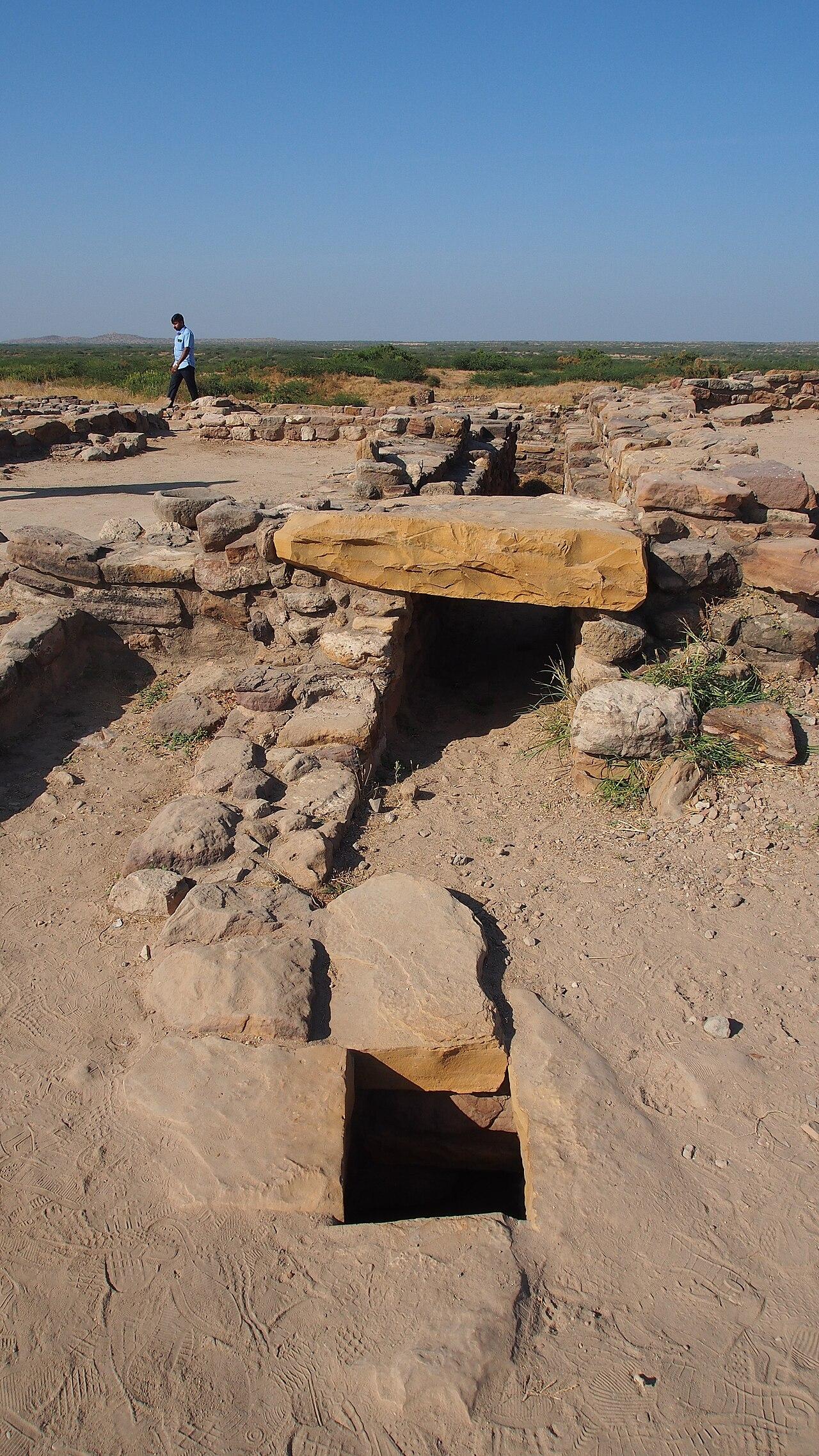
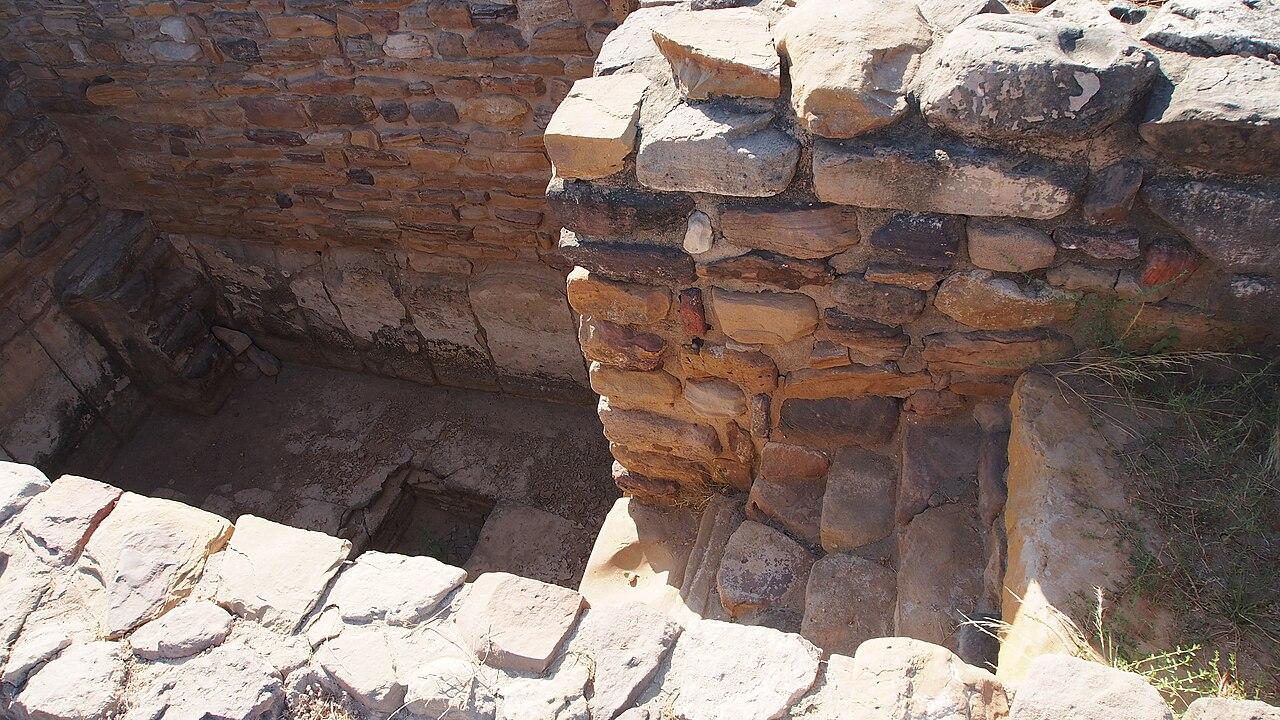
Dholavira
A city built to capture rain.
A walled Harappan city on Khadir Bet in the Rann of Kutch, notable for its stone architecture and a sophisticated system of reservoirs for capturing seasonal water.
- 05Artefactc. 2600 – 1900 BCE(Approximate)
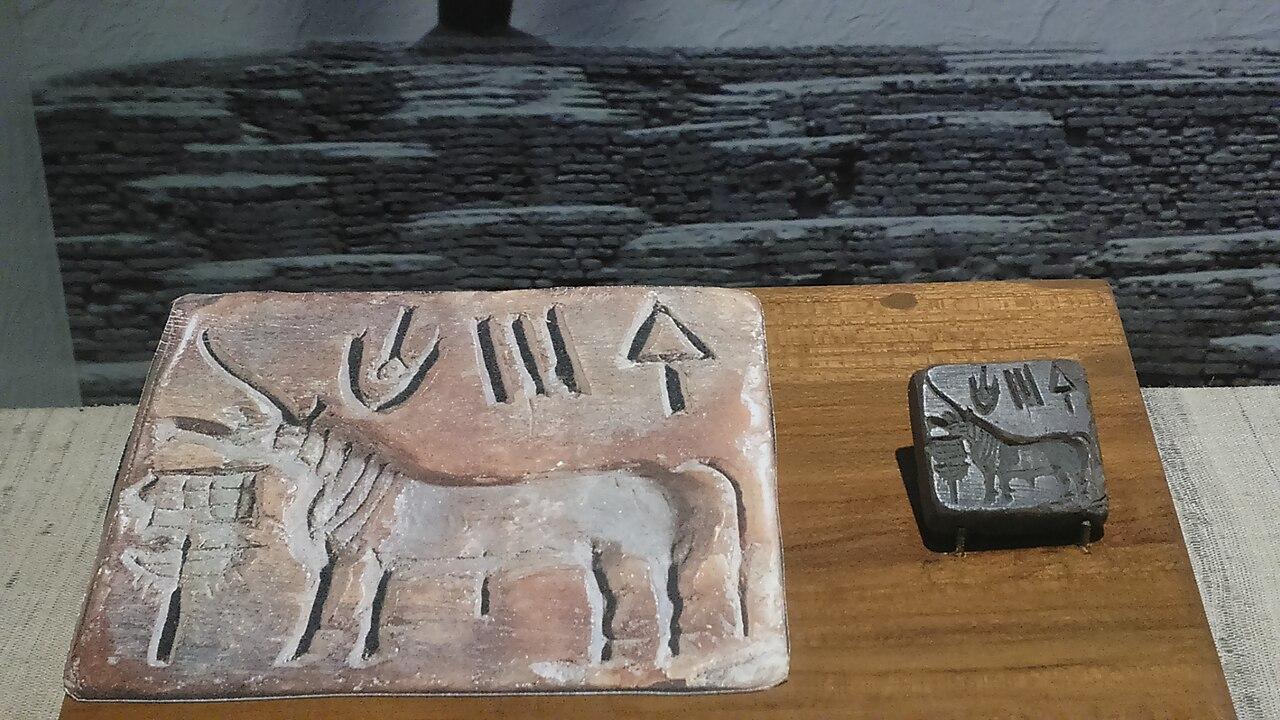
Indus 'unicorn' seal
Seals and signs.
Square steatite stamp seals showing a single-horned bovine before a stand, with a line of Indus signs above. The unicorn is the most common motif on Indus seals.
- 06Script / languagec. 2600 – 1900 BCE(Approximate)
Indus script
The undeciphered script.
Short sequences of signs on seals, tablets and pottery from the Indus civilisation. Undeciphered.
- 07Eventc. 2200 – 2000 BCE(Approximate)
Monsoon weakening ('4.2 ka event')
A weakening monsoon.
Lake records from northwest India show an abrupt weakening of the summer monsoon about 4,100 years ago.
- 08Eventc. 1900 BCE onward(Approximate)
Indus deurbanisation
The cities empty.
Large Indus cities are depopulated; script, seals and standard weights fall out of use.
- 09Articlec. 2800 – 2300 BCE(Approximate)
One Genome from Rakhigarhi: What It Can and Cannot Tell Us
Read: what one genome tells us.
A careful reading of the Rakhigarhi genome and the Indus Periphery Cline.
The Map Check
Places in this collection
Sources & Further Reading
Sources & further reading
- excavation reportJarrige, C., Jarrige, J.-F., Meadow, R. H. & Quivron, G. (eds.) (1995). Mehrgarh Field Reports 1974–1985: From Neolithic Times to the Indus Civilization. Department of Culture and Tourism, Government of Sindh.
- bookConingham, R. & Young, R. (2015). The Archaeology of South Asia: From the Indus to Asoka, c. 6500 BCE–200 CE. Cambridge University Press.
- journal articleCoppa, A. et al. (2006). Early Neolithic tradition of dentistry. Nature 440: 755–756. doi:10.1038/440755a
- bookPossehl, G. L. (2002). The Indus Civilization: A Contemporary Perspective. AltaMira Press.
- bookKenoyer, J. M. (1998). Ancient Cities of the Indus Valley Civilization. Oxford University Press.
- bookWright, R. P. (2010). The Ancient Indus: Urbanism, Economy, and Society. Cambridge University Press.
- bookParpola, A. (1994). Deciphering the Indus Script. Cambridge University Press.
- journal articleFarmer, S., Sproat, R. & Witzel, M. (2004). The Collapse of the Indus-Script Thesis: The Myth of a Literate Harappan Civilization. Electronic Journal of Vedic Studies 11(2): 19–57.
- journal articleRao, R. P. N. et al. (2009). Entropic evidence for linguistic structure in the Indus script. Science 324(5931): 1165. doi:10.1126/science.1170391
- journal articleShinde, V. et al. (2019). An Ancient Harappan Genome Lacks Ancestry from Steppe Pastoralists or Iranian Farmers. Cell 179(3): 729–735. doi:10.1016/j.cell.2019.08.048
- journal articleNarasimhan, V. M. et al. (2019). The formation of human populations in South and Central Asia. Science 365(6457): eaat7487. doi:10.1126/science.aat7487
- journal articleDixit, Y., Hodell, D. A. & Petrie, C. A. (2014). Abrupt weakening of the summer monsoon in northwest India ~4100 yr ago. Geology 42(4): 339–342. doi:10.1130/G35236.1
- journal articleGiosan, L. et al. (2012). Fluvial landscapes of the Harappan civilization. Proceedings of the National Academy of Sciences 109(26): E1688–E1694. doi:10.1073/pnas.1112743109
- journal articleSingh, A. et al. (2017). Counter-intuitive influence of Himalayan river morphodynamics on Indus Civilisation urban settlements. Nature Communications 8: 1617. doi:10.1038/s41467-017-01643-9
- excavation reportMarshall, J. (ed.) (1931). Mohenjo-daro and the Indus Civilization. Arthur Probsthain.
- unescoUNESCO World Heritage Centre (2021). Dholavira: a Harappan City (List no. 1645). whc.unesco.org/en/list/1645
- excavation reportRao, S. R. (1979). Lothal: A Harappan Port Town (1955–62), Vol. I. Memoirs of the Archaeological Survey of India 78. Archaeological Survey of India.