Subject
Religion and Philosophy
The historical development of religious and philosophical traditions.
119 connected entries
Sites · 104
Rajagriha (Rajgir)
The early capital of Magadha, ringed by hills and a long dry-stone wall, closely associated with the Buddha and Mahavira in early texts.
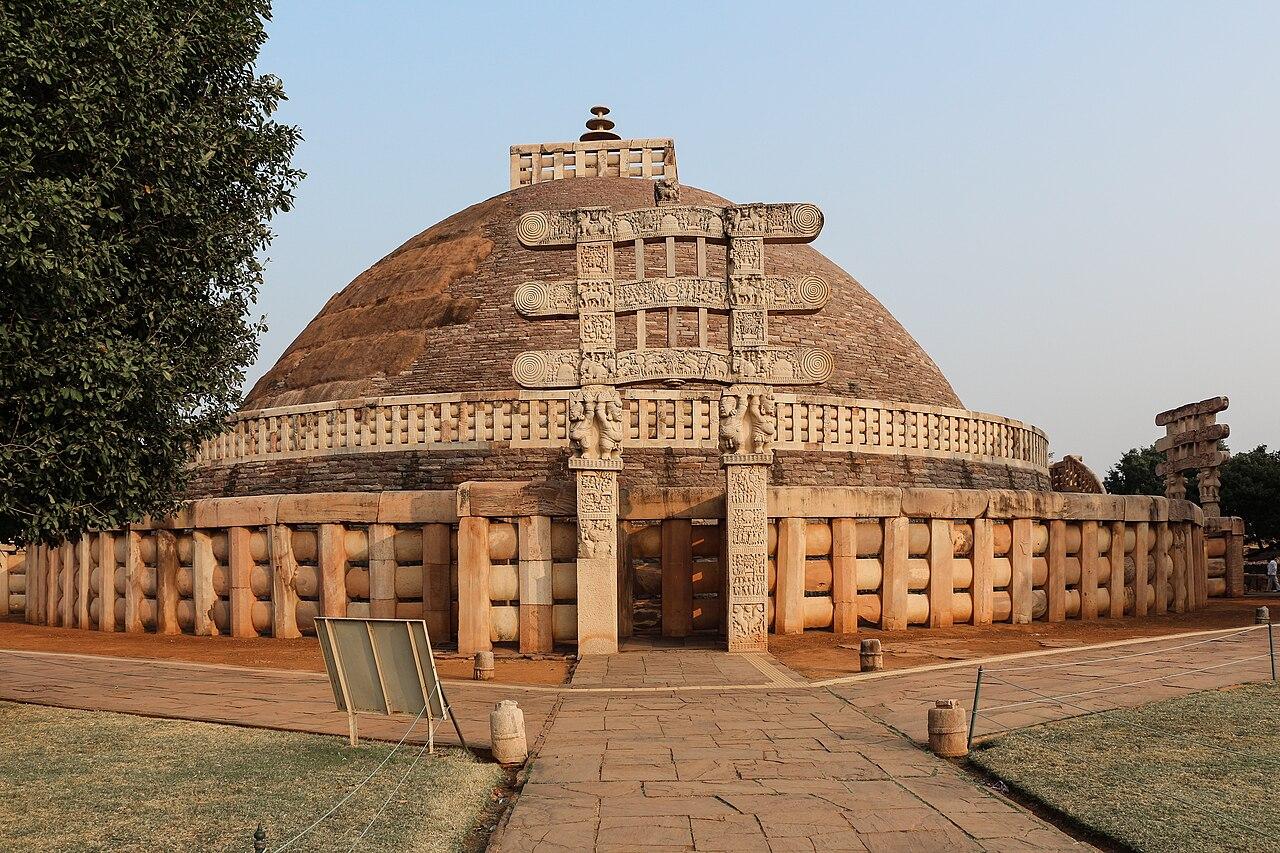
Sanchi
A hilltop Buddhist complex whose Great Stupa originated under Ashoka and was enlarged in the following centuries, with four carved gateways.
Sarnath
The place where, according to Buddhist tradition, the Buddha gave his first sermon. Site of the Ashokan pillar whose capital became India's national emblem.
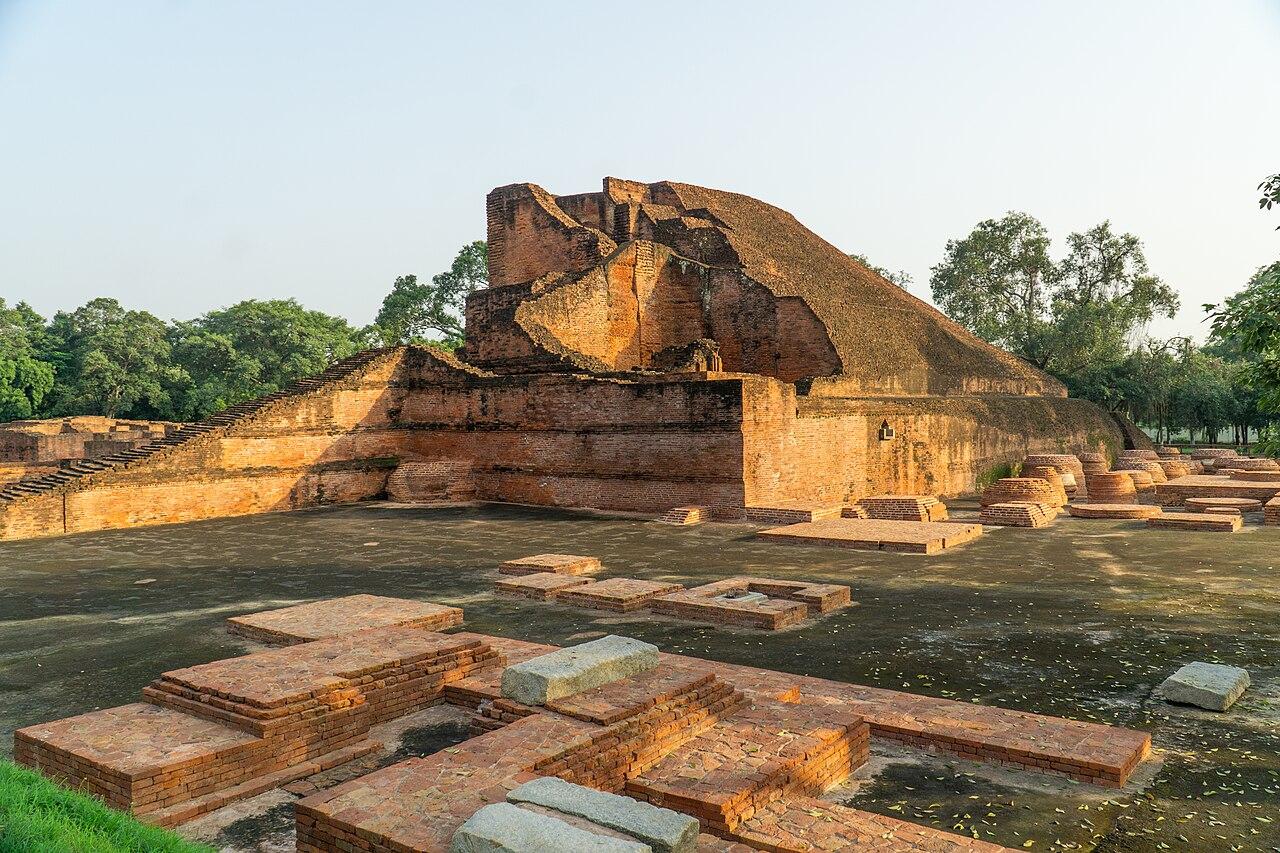
Nalanda Mahavihara
A great Buddhist monastic university that flourished from the Gupta period to the 12th century, visited by the Chinese pilgrim Xuanzang.
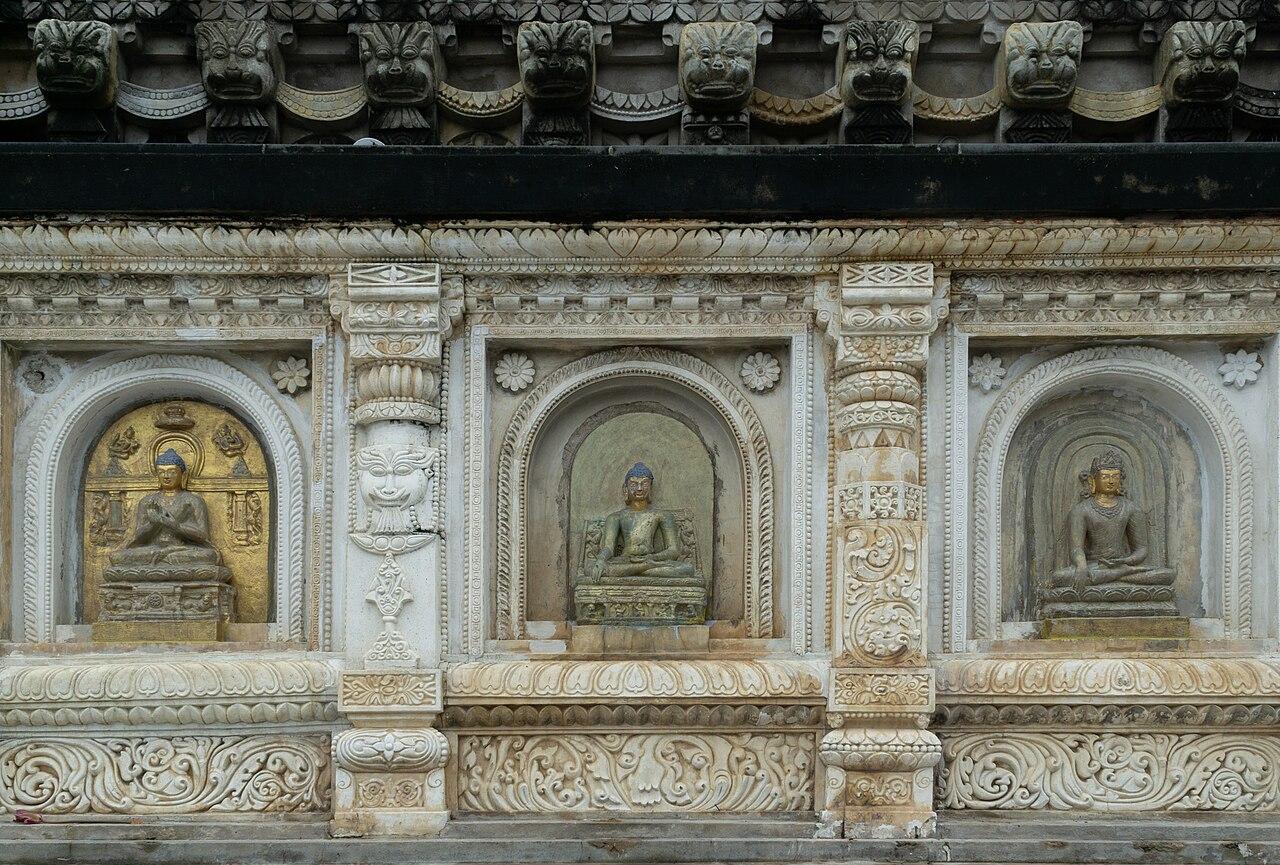
Bodh Gaya
Site of the Buddha's enlightenment in Buddhist tradition. The present brick Mahabodhi Temple dates in its core to the 5th–6th century CE.
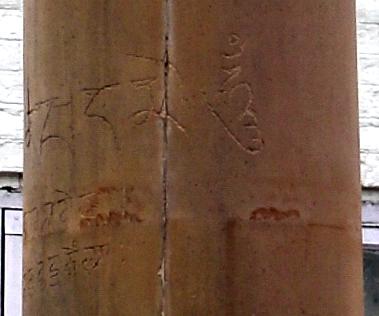
Lumbini
Birthplace of the Buddha in Buddhist tradition. An Ashokan pillar inscription records the emperor's visit and names the village as the Buddha's birthplace.
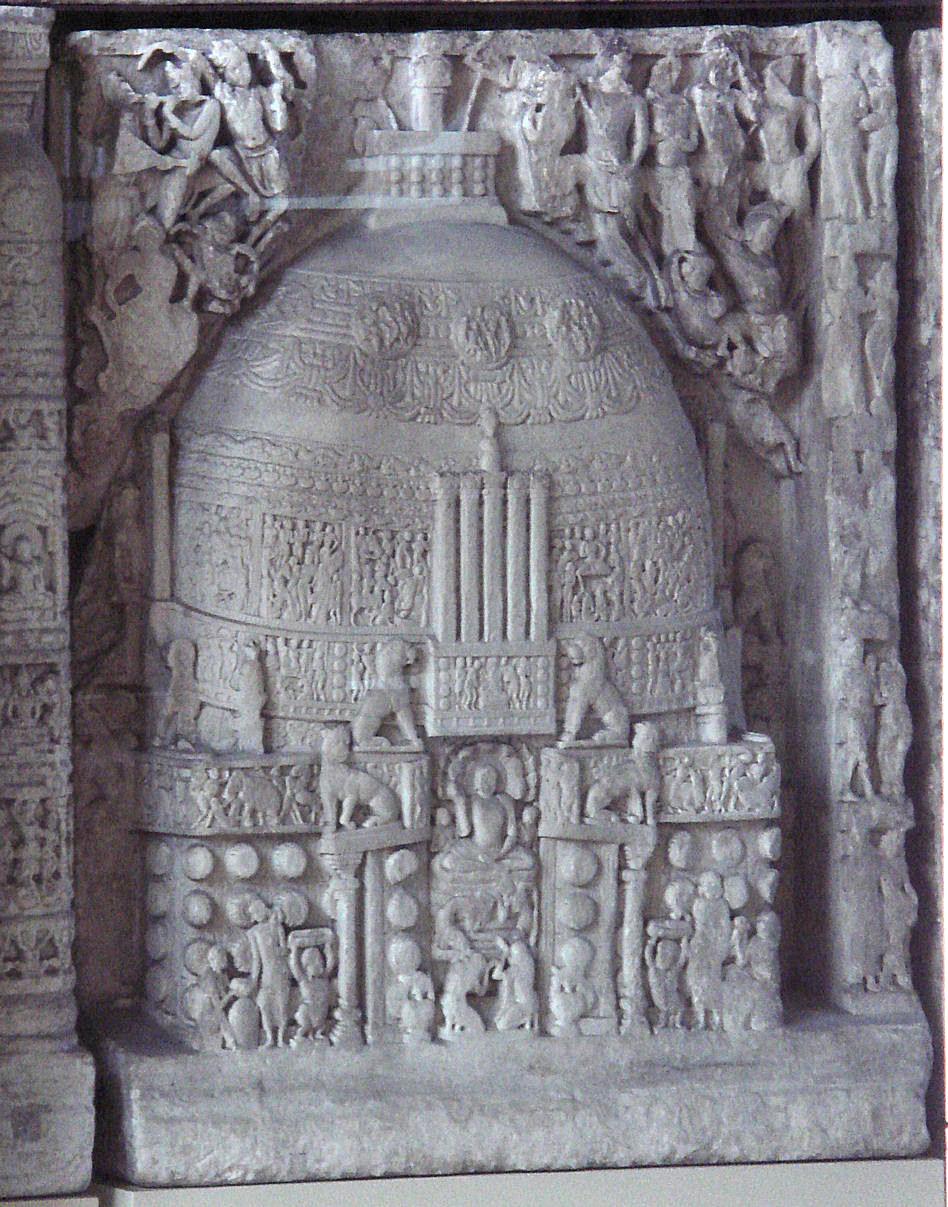
Amaravati
Site of a great stupa in the lower Krishna valley whose carved limestone reliefs are among the masterpieces of early Buddhist art.
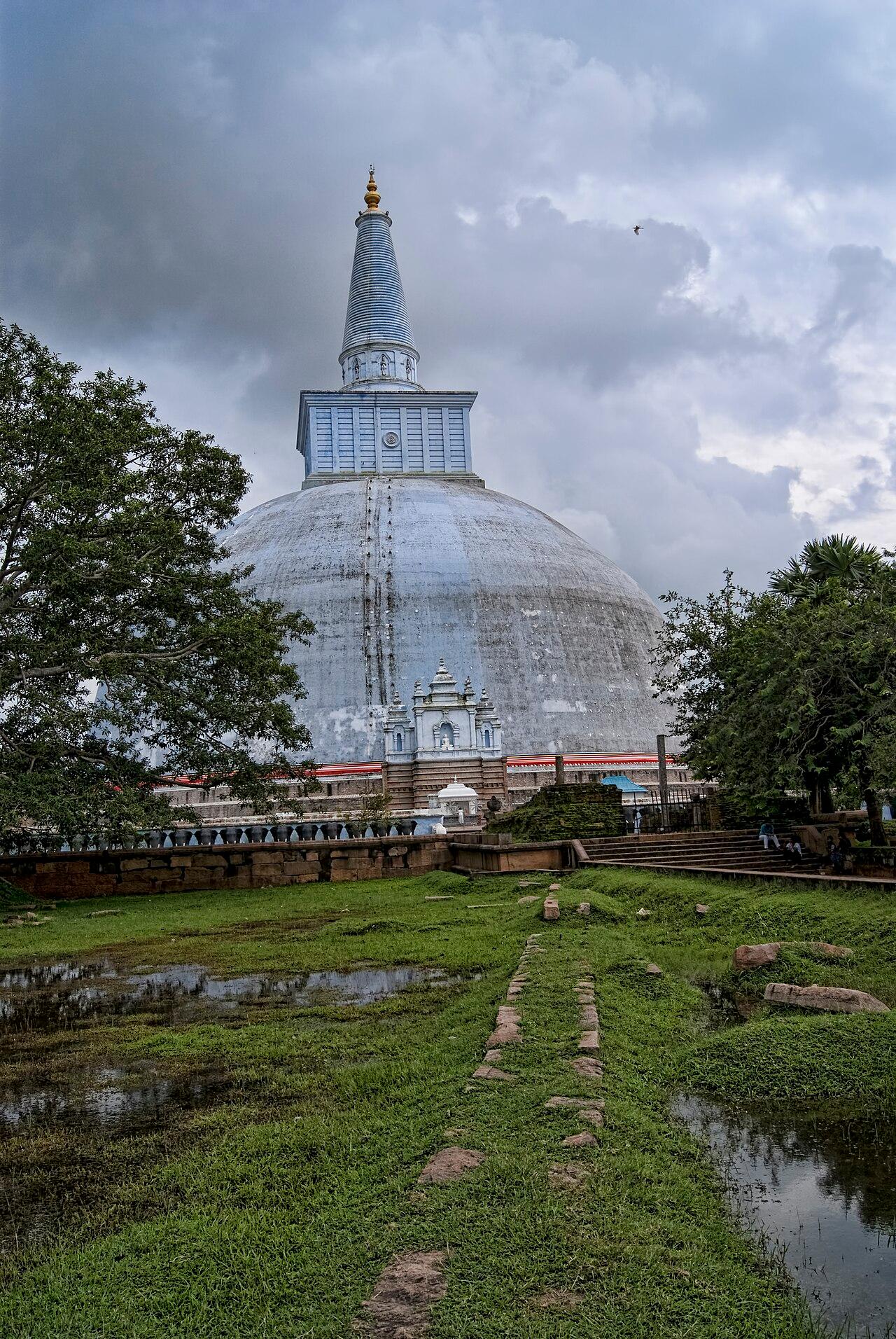
Anuradhapura
The first great capital of Sri Lanka, with monumental stupas and early Brahmi inscriptions; a centre of Theravada Buddhism.
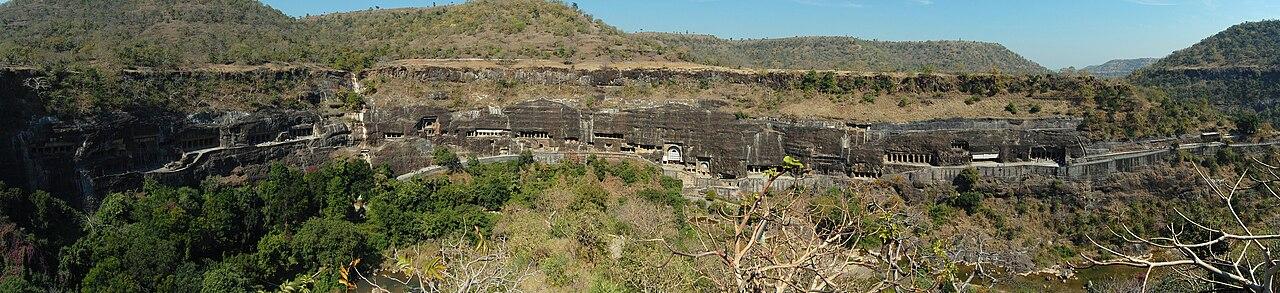
Ajanta
About thirty rock-cut Buddhist monasteries and shrines in a horseshoe gorge, made in two phases — around the 2nd–1st centuries BCE and in the later 5th century CE — with the finest surviving early Indian wall paintings.
Udayagiri Caves (Vidisha)
Rock-cut shrines near Vidisha with a monumental Varaha panel and an inscription dated in the reign of Chandragupta II.
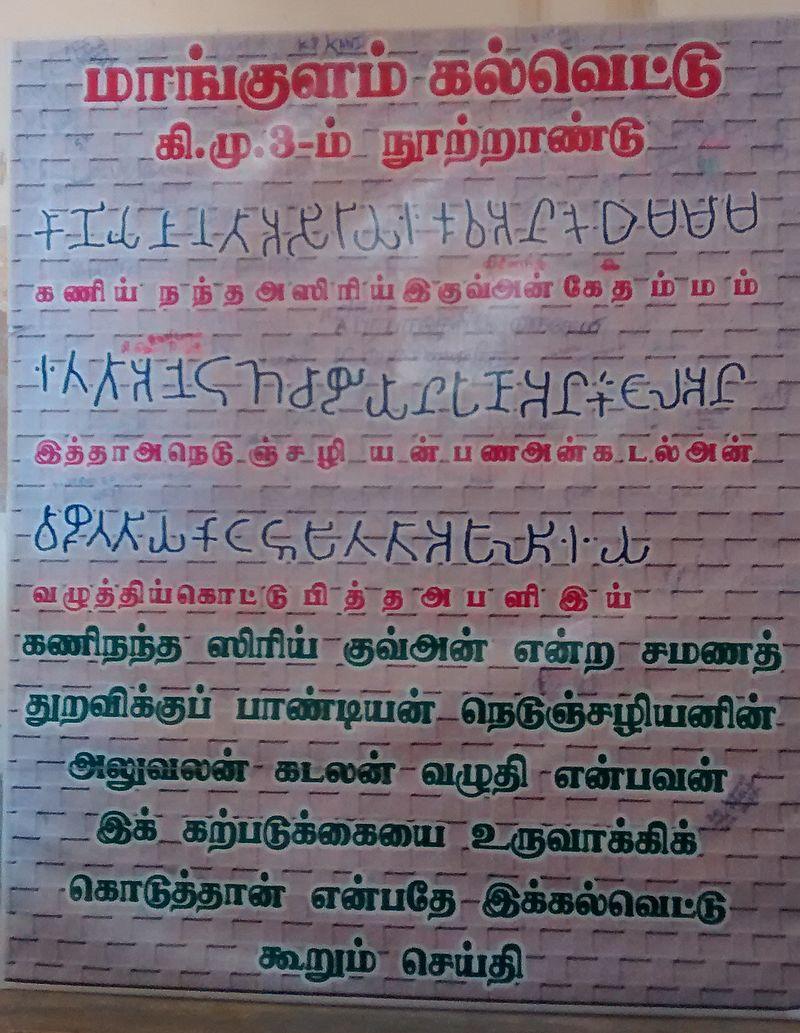
Mangulam
Natural caverns near Madurai with Tamil-Brahmi inscriptions recording gifts of rock beds to Jain monks, one naming a Pandya king Nedunchezhiyan.
Ellora
Thirty-four rock-cut monasteries and temples — Buddhist, Hindu and Jain — cut side by side into a basalt escarpment between about 600 and 1000 CE, including the monolithic Kailasa temple.
Polonnaruwa
Sri Lanka's capital in the 11th–13th centuries, with Chola-period Hindu shrines, Parakramabahu I's palace and the Gal Vihara rock-cut Buddhas.
Mihintale
A hill near Anuradhapura that the Sri Lankan chronicles identify as the place where the monk Mahinda, son of Ashoka, introduced Buddhism in the 3rd century BCE.
Kandy
The last royal capital of Sri Lanka, seat of the Temple of the Tooth Relic.
Vikramashila
A great Buddhist monastery founded under the Pala king Dharmapala.
Somapura Mahavihara (Paharpur)
One of the largest monasteries south of the Himalaya, built under the Palas.
Ratnagiri (Odisha)
A Buddhist monastic complex with fine stone sculpture.
Tabo Monastery
A Himalayan monastery associated with the translator Rinchen Zangpo.
Bharhut
A stupa whose carved railing, now largely in Kolkata, carries labelled narrative reliefs.
Karla chaitya
The largest rock-cut Buddhist chaitya hall in South Asia.
Nagarjunakonda
Monasteries and stupas of the Ikshvaku capital Vijayapuri, now largely submerged by a reservoir.
Kanaganahalli
A stupa site with a rare inscribed portrait labelled as Ashoka.
Barabar caves
Polished rock-cut chambers dedicated by Ashoka to the Ajivika ascetics.
Shravanabelagola
A major Jain centre; tradition links Chandragupta Maurya with it, and the Gommateshvara colossus dates to c. 983.
Udayagiri and Khandagiri caves
Jain rock-cut cells, including the Hathigumpha cave with Kharavela's inscription.
Dilwara temples, Mount Abu
Marble Jain temples built by ministers of the Chaulukya kings.
Shatrunjaya (Palitana)
A hill of hundreds of Jain temples, one of the most sacred Jain pilgrimage sites.
Sittanavasal
A Jain cave with early inscribed rock beds and later painted ceilings.
Moodabidri
A Jain centre of coastal Karnataka known for its 'thousand-pillared' temple.
Deogarh (Dashavatara temple)
One of the earliest surviving stone temples of north India.
Bhitargaon brick temple
A rare surviving early brick temple with terracotta panels.
Mamallapuram
Pallava rock-cut shrines, monolithic rathas, the 'Descent of the Ganga' relief and the Shore Temple.
Lingaraja temple, Bhubaneswar
The largest temple of Bhubaneswar's temple city.
Konark Sun Temple
A temple conceived as the chariot of the Sun, built under Narasimhadeva I of the Eastern Gangas.
Jagannatha temple, Puri
The great temple of Jagannatha, begun under Anantavarman Chodaganga.
Khajuraho
Hindu and Jain temples of the Chandelas.
Meenakshi temple, Madurai
A vast temple complex largely rebuilt under the Nayakas of Madurai.
Srirangam
A major Vaishnava temple-town with seven concentric enclosures.
Somnath
A Shiva temple whose repeated destruction and rebuilding became a charged historical symbol.
Kashi Vishwanath, Varanasi
The present temple was built by Ahilyabai Holkar; earlier temples on or near the site were destroyed and rebuilt.
Tirumala Venkateswara
A hill temple heavily patronised under Vijayanagara.
Martand Sun Temple
A Sun temple attributed to Lalitaditya Muktapida of the Karkota dynasty.
Ramappa (Rudreshwara) temple
A Kakatiya-period temple built by the general Recherla Rudra, famous for its floating bricks and bracket figures.
Chidambaram Nataraja
The temple of Shiva as Nataraja, lord of the dance.
Kamakhya
A major Shakta temple on Nilachal hill, rebuilt under the Koch king Naranarayana.
Pashupatinath
The principal Shiva temple of the Kathmandu valley.
Banbhore mosque
Among the earliest known mosques in South Asia, at the port identified with Daybul.
Cheraman Juma Masjid
Kerala tradition makes this the first mosque in India; its earliest dates are not independently established.
Qutb complex
The Quwwat al-Islam mosque and Qutb Minar, begun after the Ghurid conquest.
Dargah of Muinuddin Chishti, Ajmer
The shrine of the founder of the Chishti Sufi order in South Asia.
Dargah of Nizamuddin Auliya, Delhi
Shrine of the Chishti saint Nizamuddin; the poet Amir Khusrau is buried nearby.
Data Darbar, Lahore
Shrine of Ali Hujwiri, author of the Kashf al-Mahjub, one of the earliest Persian Sufi treatises.
Shrine of Shah Jalal, Sylhet
Shrine of the saint associated by tradition with the conquest of Sylhet.
Sixty Dome Mosque, Bagerhat
The great mosque of Khan Jahan's settlement in the Sundarbans fringe.
Jama Masjid, Ahmedabad
The congregational mosque of the Gujarat sultans.
Gol Gumbaz, Bijapur
The tomb of Muhammad Adil Shah, crowned by one of the largest domes of the pre-modern world.
Jama Masjid, Delhi
Shah Jahan's congregational mosque in Shahjahanabad.
Badshahi Mosque, Lahore
Aurangzeb's great mosque facing the Lahore fort.
Charminar, Hyderabad
The monumental gateway-mosque at the heart of the Qutb Shahi city of Hyderabad.
Nankana Sahib
The birthplace of Guru Nanak, founder of Sikhism.
Kartarpur Sahib
The settlement where Guru Nanak spent his last years and the first Sikh community took shape.
Harmandir Sahib, Amritsar
The central Sikh shrine, where the Adi Granth was installed in 1604.
Anandpur Sahib
Where Guru Gobind Singh inaugurated the Khalsa in 1699.
Takht Sri Patna Sahib
Birthplace of the tenth Sikh Guru.
Basilica of Bom Jesus, Goa
A Jesuit church of Portuguese Goa holding the relics of Francis Xavier.
St Francis Church, Kochi
One of the oldest European-built churches in India; Vasco da Gama was first buried here.
St Thomas tradition, Kodungallur
Kerala's Syrian Christians trace their church to the apostle Thomas; the tradition is not independently attested, but Christian communities in Kerala are documented by the 9th century (Tharisapalli plates).
Sanjan
Where, according to the Qissa-i Sanjan, Zoroastrian refugees from Iran first settled.
Iranshah Atash Behram, Udvada
The oldest continuously burning Zoroastrian sacred fire in India.
Paradesi Synagogue, Kochi
The synagogue of the 'Paradesi' Jews of Cochin.
Kushinagar
Place of the Buddha's death in the Malla country, visited by Faxian and Xuanzang. The main stupa was enlarged, and the large reclining Buddha image set up, in the Gupta period; the site was identified again in the 19th century.
Piprahwa stupa
Brick stupa opened in 1898, which yielded a soapstone reliquary with a Brahmi inscription naming relics of the Buddha and the Shakyas. It is one of two candidates for ancient Kapilavastu; the other is Tilaurakot in Nepal.
Tilaurakot
Walled early historic town on the Banganga river, the Nepali candidate for Kapilavastu, the Shakya capital where the Buddha grew up. The identification is disputed with Piprahwa.
Bhaja caves
Early rock-cut monastery in the Western Ghats. Its apsidal prayer hall keeps timber ribs set into the stone vault, showing how such halls copied wooden buildings.
Nasik caves (Pandavleni)
Rock-cut monastery whose inscriptions record gifts by the Western Kshatrapa Nahapana's family and by the Satavahanas, including the eulogy of Gautamiputra Satakarni set up by his mother Gautami Balashri.
Kanheri caves
More than a hundred rock-cut cells, halls and cisterns on a basalt hill behind the old ports of the Konkan. Donors' inscriptions span roughly a thousand years of monastic life.
Bamiyan
Cliff of monastic caves on the road across the Hindu Kush, with two colossal standing Buddhas cut into the rock. Xuanzang described them around 630. The Taliban destroyed both statues in March 2001.
Mainamati (Shalban Vihara)
Low ridge of Buddhist monasteries and stupas in the old region of Samatata. Shalban Vihara, the largest, is a square of cells around a cruciform shrine.
Dambulla cave temple
Five cave shrines under an overhanging rock, filled with Buddha images and painted ceilings. The chronicles credit King Vattagamani Abhaya with the foundation; most of the painting visible now was renewed in the Kandyan period.
Elephanta caves
Rock-cut Shiva temple on an island in Mumbai harbour, centred on a three-headed bust of Shiva between five and six metres high. It is usually dated to the mid-6th century; who paid for it is debated.
Avantipur temples
Two stone temples, one to Vishnu and one to Shiva, founded by Avantivarman, first king of the Utpala line of Kashmir, at his new town on the Jhelum.
Uttaramerur
Brahmin village whose temple walls carry two inscriptions from the reign of Parantaka I Chola. They set out how the village assembly chose the members of its committees by drawing lots, and who was disqualified.
Gangaikondacholapuram
Capital and great Shiva temple founded by Rajendra I Chola after his army's expedition to the Ganga, from which the city takes its name.
Bhojpur temple
Unfinished Shiva temple with a very large polished linga, attributed to the Paramara king Bhoja. Builders' drawings engraved on the nearby rock and an earthen ramp show how it was being raised.
Keshava temple, Somanathapura
Triple-shrined Vishnu temple on a star-shaped platform, built by Somanatha, a general of the Hoysala king Narasimha III. It is the most complete of the later Hoysala temples.
Govind Dev temple, Vrindavan
Red sandstone Krishna temple built by Raja Man Singh of Amber, a leading noble of Akbar's court. Its vaulted hall uses the building methods of the imperial workshops.
Adhai Din ka Jhonpra
Congregational mosque begun under Qutb-ud-din Aibak soon after the Ghurid conquest of Ajmer, reusing temple columns; Iltutmish added the arched screen with its Arabic inscriptions.
Shrine of Baba Farid, Pakpattan
Tomb of the Chishti shaikh Farid-ud-din Ganj-i Shakar at old Ajodhan on the Sutlej. The shrine tied the surrounding pastoral clans to it over centuries, and verses attributed to Farid are preserved in the Sikh scripture.
Dargah of Gisu Daraz
Shrine of the Chishti shaikh Muhammad Husaini Gisu Daraz, who left Delhi at the time of Timur's invasion, settled in the Bahmani capital and died there in 1422.
Mandu
Hill-top capital of the Malwa sultans above the Narmada valley: the Jami mosque, the marble tomb of Hoshang Shah and the Jahaz Mahal palace set between two tanks.
Madrasa of Mahmud Gawan
College founded by Mahmud Gawan, the Persian merchant who became chief minister of the Bahmani sultanate. Its plan and tiled front follow Iranian and Central Asian models.
Champaner–Pavagadh
Mahmud Begada of Gujarat took the hill fort of Pavagadh in 1484 and built a new capital at its foot, with a large Jami mosque. Humayun sacked the city in 1535 and the court returned to Ahmedabad.
Gaur (Lakhnauti)
Ruined capital of the Bengal sultans on an old course of the Ganga, with brick gateways and mosques including the Bara Sona mosque of 1526. The city was abandoned in the later 16th century.
Tomb of Sher Shah, Sasaram
Octagonal domed tomb of Sher Shah Sur, set on a stepped platform in the middle of an artificial lake.
Akbar's tomb, Sikandra
Tiered, open-topped tomb of Akbar in a walled four-part garden, finished under Jahangir.
Tomb of Itimad-ud-Daula
Built by Nur Jahan for her father Mirza Ghiyas Beg, Jahangir's chief minister. It is faced in white marble inlaid with coloured stones, a technique carried further at the Taj Mahal.
Shalimar Gardens, Lahore
Mughal garden on three descending terraces with canals, cascades and pavilions, built for Shah Jahan.
Bibi ka Maqbara
Tomb of Dilras Banu Begum, wife of Aurangzeb, modelled on the Taj Mahal at a smaller scale.
Minaret of Jam
Brick minaret about 65 metres high in a remote valley of Ghur, bearing the name of the Ghurid sultan Ghiyas-ud-din Muhammad. It may mark the site of Firuzkuh, the summer capital of the Ghurid dynasty whose armies conquered north India.
Goindwal
Seat of Guru Amar Das, the third Guru, who had a stepped well dug here and organised the growing community into local seats.
Tarn Taran
Town and large sacred tank founded by Guru Arjan in the Majha country south of Amritsar.
Damdama Sahib, Talwandi Sabo
Where Guru Gobind Singh stayed for some months in 1706 after leaving Anandpur. It is one of the five takhts, the seats of authority of the Sikh community.
Hazur Sahib, Nanded
Place on the Godavari where Guru Gobind Singh died in October 1708, having declared that the line of personal Gurus would end with him. One of the five takhts.
Persons · 11
Siddhartha Gautama, the Buddha
Founder of Buddhism. Born, according to tradition and Ashoka's Lumbini inscription, at Lumbini; his dates are debated.
Vardhamana Mahavira
The 24th tirthankara of the Jain tradition and a contemporary of the Buddha in the middle Ganga valley.
Faxian
Chinese Buddhist monk who travelled through South Asia c. 399–414 CE in search of monastic texts.
Xuanzang
Chinese monk and translator who spent more than a decade in South Asia in the 7th century and studied at Nalanda.
Shankara
Philosopher of Advaita Vedanta whose commentaries on the Upanishads, the Bhagavad Gita and the Brahmasutras shaped later Hindu thought.
Ramanuja
Vaishnava theologian of Srirangam whose qualified non-dualism (Vishishtadvaita) gave philosophical form to devotion to Vishnu.
Basava
Twelfth-century reformer and poet at the Kalachuri court of Kalyana, central to the Virashaiva (Lingayat) movement and its Kannada vachana poetry.
Kabir
Weaver-poet of Benares whose verses reject the authority of both Brahmin and mulla in favour of devotion to a formless god.
Guru Nanak
First Guru of the Sikh tradition (1469–1539), whose hymns open the Adi Granth.
Mirabai
Rajput princess and devotional poet of Krishna, whose songs are among the most widely sung in north India.
Tulsidas
Poet whose Awadhi Ramcharitmanas, begun in 1574, became the most influential telling of the Rama story in north India.
Routes · 2
Faxian's journey, 399 – c. 412 CE
The Chinese monk Faxian came overland through Khotan and the mountains to Gandhara, visited the places of the Buddha's life in the Ganga plain, copied monastic texts at Pataliputra, and sailed from Tamralipti to Sri Lanka and home by sea. The line joins places his own record names; the legs between them are drawn straight.
Xuanzang's journey, c. 629 – 645 CE
Xuanzang entered through Samarkand, Balkh and Bamiyan, spent years in Kashmir and at Nalanda, and travelled down the east coast as far as Kanchipuram before returning north through the western Deccan and leaving by the Pamirs. His record is the fullest description of the subcontinent in the 7th century. The line follows his outward and southward journey through places he names; the return is not drawn.