Subject
Trade and Maritime Networks
Commerce over land and sea.
33 connected entries
Articles · 1
Politys · 4
Satavahana Dynasty
A Deccan dynasty whose inscriptions, coins and patronage of Buddhist sites mark the political consolidation of the peninsula between the Narmada and the Krishna.
Kushan Empire
An empire of Central Asian origin that controlled Bactria, Gandhara and the Ganga plain, linking the Silk Road with Indian trade networks.
Early Cheras
The muvendar lineage of the western coast, associated with the pepper trade through ports such as Muziris.
Imperial Cholas
A Tamil dynasty that from the 9th century built a powerful state in the Kaveri delta, with naval expeditions to Sri Lanka and Southeast Asia.
Sites · 11
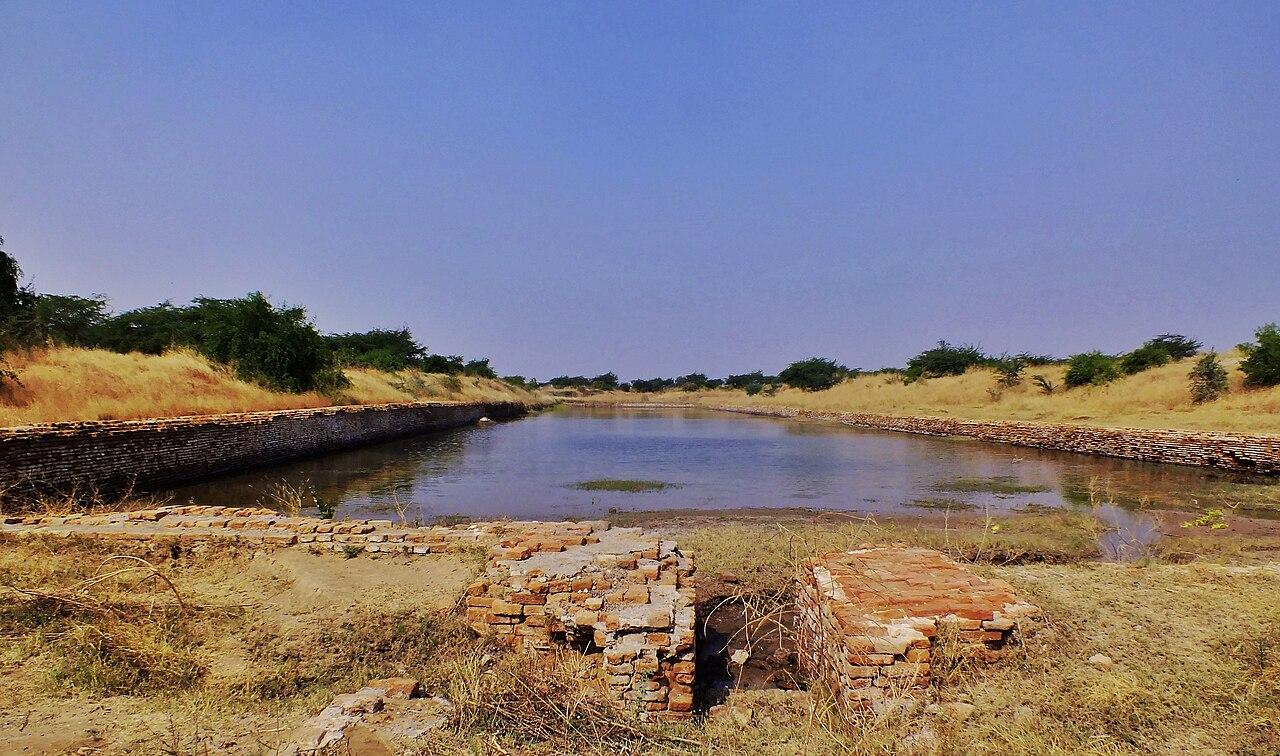
Lothal
A small Harappan town near the Gulf of Khambhat with a bead-making quarter and a large brick basin interpreted by its excavator as a dockyard.
Shortughai
A Harappan settlement far to the north, near the Amu Darya — usually interpreted as a trading outpost linked to lapis lazuli sources in Badakhshan.
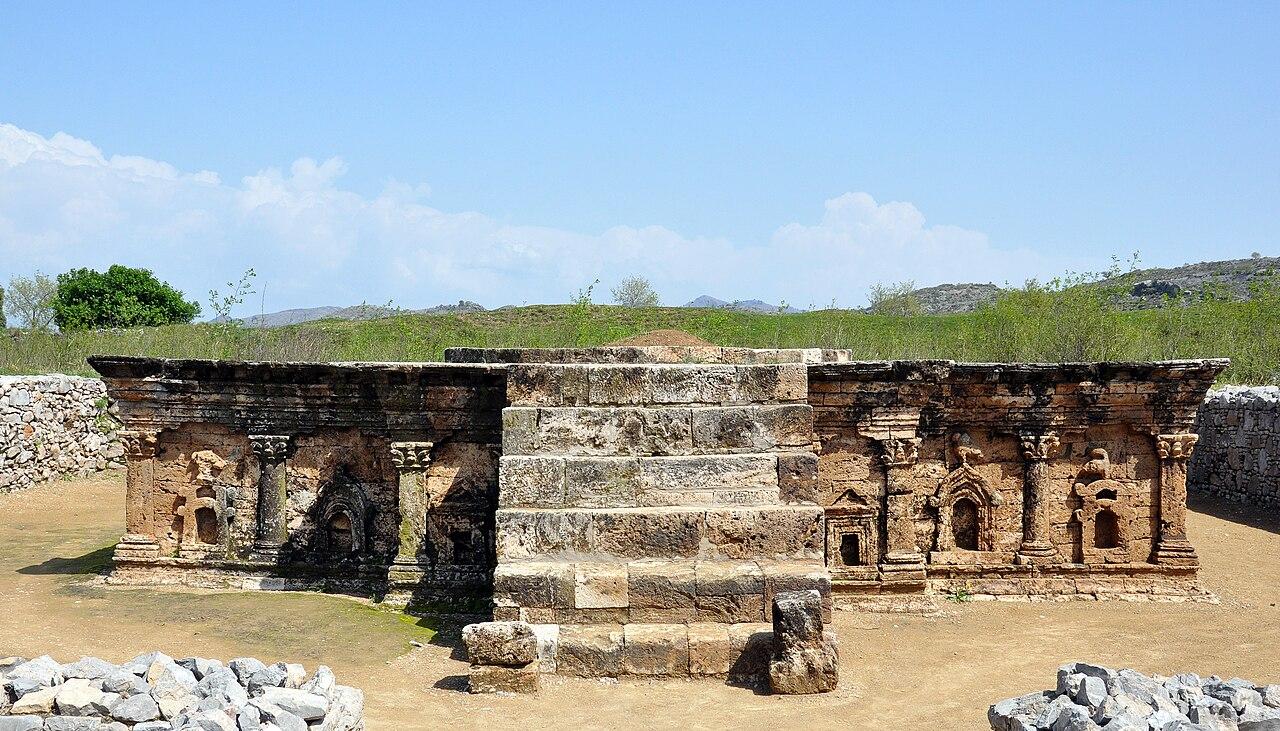
Taxila
A cluster of cities and Buddhist monasteries at the crossroads of South and Central Asia, successively under Achaemenid, Mauryan, Indo-Greek, Saka-Parthian and Kushan rule.
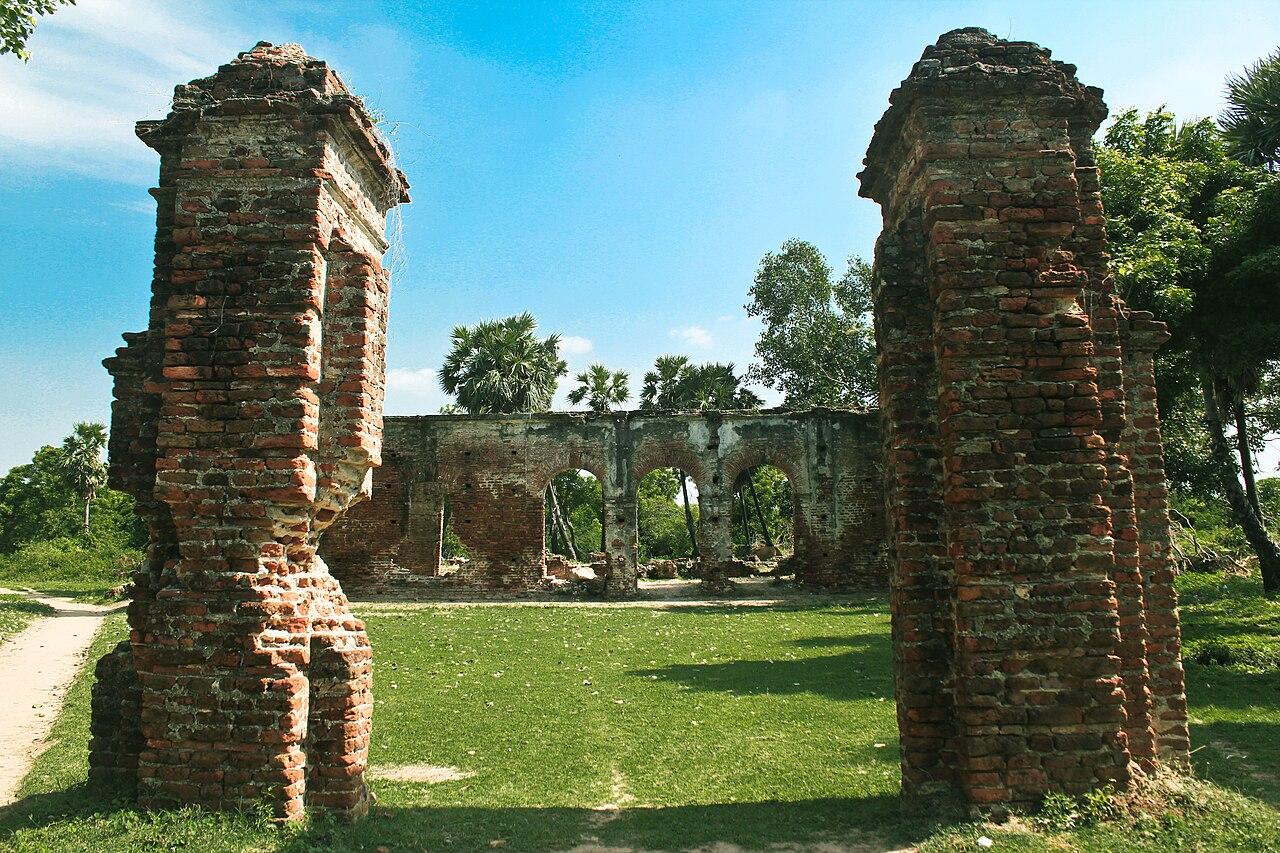
Arikamedu
A coastal settlement on the Ariyankuppam river where Mediterranean pottery and amphorae document trade with the Roman world, alongside a long-lived local bead industry.
Muziris (Pattanam?)
A major pepper port on the Malabar coast named in Greek, Latin and Tamil sources. Excavations at Pattanam have been proposed as its location, an identification still discussed.
Barygaza (Bharuch)
Port at the mouth of the Narmada described in the Periplus of the Erythraean Sea as a major entrepôt for western India.
Tamralipti (Tamluk)
Port near the mouth of the Ganga, from which the pilgrim Faxian sailed to Sri Lanka in the early 5th century CE.
Kodumanal
An Iron Age industrial village on the Noyyal with iron-smelting, gemstone (beryl and quartz) working, megalithic cist burials and Tamil-Brahmi inscribed sherds.
Korkai
The early port of the Pandyas, famed for pearl fishing and named by Greek writers; its former shoreline now lies inland.
Alagankulam
A port near the mouth of the Vaigai with Roman amphora sherds, rouletted ware and Tamil-Brahmi graffiti — the sea outlet of the Keeladi hinterland.
Mantai
A port in north-western Sri Lanka facing India across the Palk Strait, occupied from the late centuries BCE into the medieval period.
Artefacts · 2
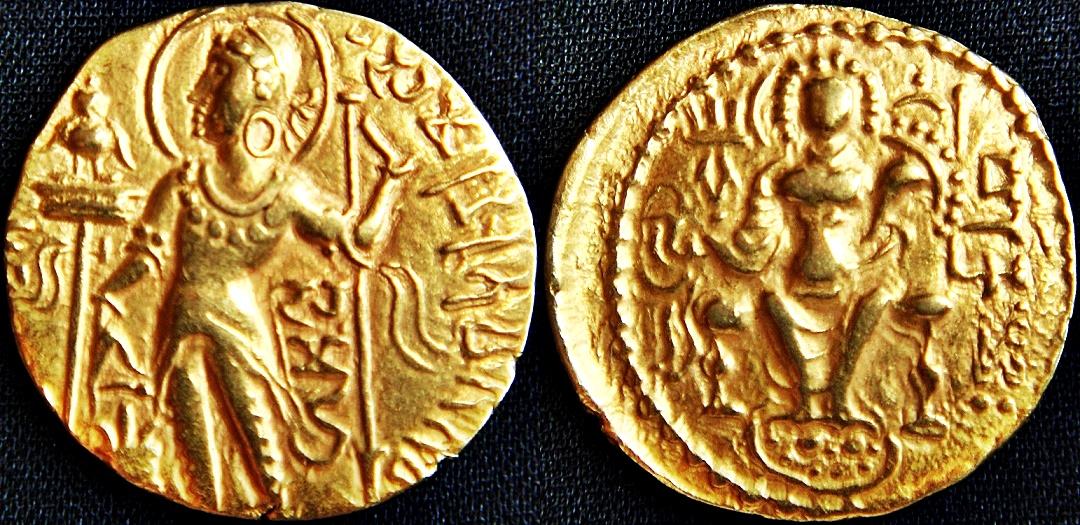
Gold coin of Samudragupta
A gold dinara of the 'javelin' (standard) type, showing the king holding a standard and making an offering at an altar.
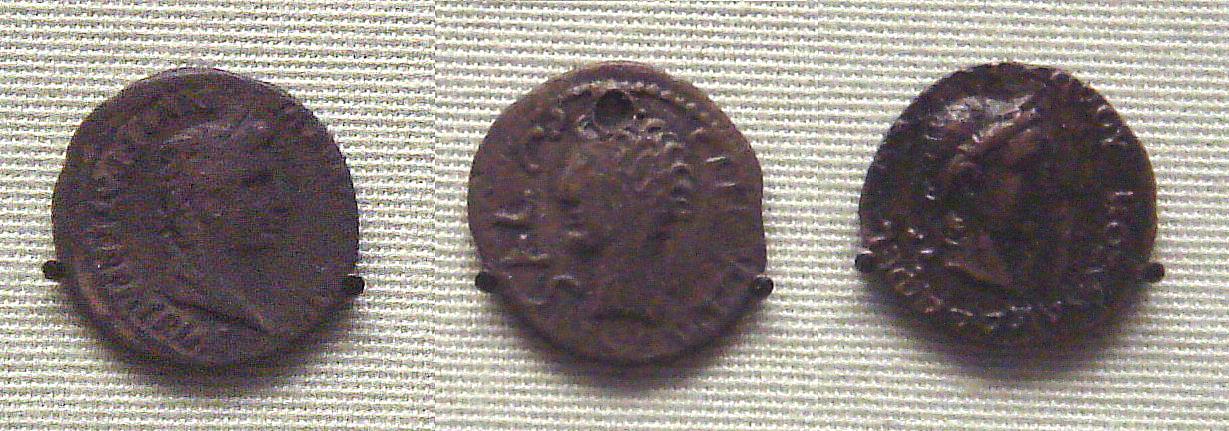
Roman denarius found in India
Roman silver coins of Augustus and Tiberius are found in hoards in South India; local imitations and Kushan coins copying Roman types also circulated.
Concepts · 1
Routes · 13
Uttarapatha (Northern Route)
The overland corridor linking Gandhara and the Punjab with the Ganga valley and the Bay of Bengal.
Dakshinapatha (Southern Route)
Routes linking the Ganga valley via Ujjayini to the Deccan and the western ports.
Monsoon route to the Red Sea
Seasonal sailing between Egyptian Red Sea ports and western Indian and Malabar ports, described in the 1st-century Periplus of the Erythraean Sea.
Monsoon route to Malabar
The southern branch of the monsoon trade, reaching pepper ports such as Muziris directly across the Arabian Sea.
Harappan–Gulf maritime contact
Sea contact between the Indus region, the Gulf (Dilmun, Magan) and Mesopotamia, documented by Indus seals and beads found abroad and by Mesopotamian references to Meluhha.
Taxila–Bactria connection
Routes across the Hindu Kush connecting Gandhara with Bactria and the wider network later called the Silk Roads.
Austronesian sea routes (schematic)
Schematic: Austronesian seafaring from Island Southeast Asia across the Bay of Bengal and the Indian Ocean, reaching Madagascar by the 1st millennium CE.
Ibn Battuta in South Asia, 1333 – c. 1346 CE
The Moroccan traveller reached the Indus in 1333 and served for some years as a judge at the court of Muhammad bin Tughluq in Delhi. Sent as envoy to China in 1341 or 1342, he went by Daulatabad and Cambay to Calicut, lost his ships there, and spent time in the Maldives, Sri Lanka, Madurai and Bengal, where he visited Shah Jalal at Sylhet, before sailing on to Sumatra. The line is simplified: it leaves out his second stay in the Maldives, and sea legs are drawn straight.
The imperial highway from Bengal to Kabul
Sher Shah Sur rebuilt the old northern road from Sonargaon in Bengal to the Indus in the 1540s, with rest-houses at regular stages; the Mughals carried it on to Kabul and lined it with distance markers, and the British remade it as the Grand Trunk Road. It follows much the same corridor as the ancient Uttarapatha.
Ports of the Periplus, 1st century CE
The coasting voyage described by a Greek-speaking merchant of Egypt in the Periplus of the Erythraean Sea: from Barbarikon at the mouth of the Indus to Barygaza, the Konkan ports, Muziris and the pepper coast, round Cape Comorin to the Coromandel ports and on towards the Ganga. Several of the ports are not securely located on the ground; the line joins the usual identifications.
Chola expedition to Srivijaya, c. 1025 CE
Schematic: the sea lane between the Coromandel coast and the Straits of Malacca, along which Rajendra I Chola sent a fleet that raided Kadaram (Kedah) and other ports of Srivijaya. His inscriptions list the places taken. The same lane carried Tamil merchant guilds to Sumatra and the Malay peninsula.
The Portuguese sea route to India, from 1498 CE
Schematic: Vasco da Gama crossed the Arabian Sea from Malindi to Calicut in 1498 with a pilot taken on in East Africa. Later fleets made for Cochin and, after its capture in 1510, for Goa, which became the seat of the Portuguese Estado da India.
Lapis lazuli from Badakhshan (schematic)
Schematic: lapis lazuli from the mines of Badakhshan reached the Indus cities and travelled on to Mesopotamia. The Harappan outpost at Shortughai on the Oxus, far north of the Indus plain, lies close to the source. The passes actually used are not known.